
Last updated November 21, 2026
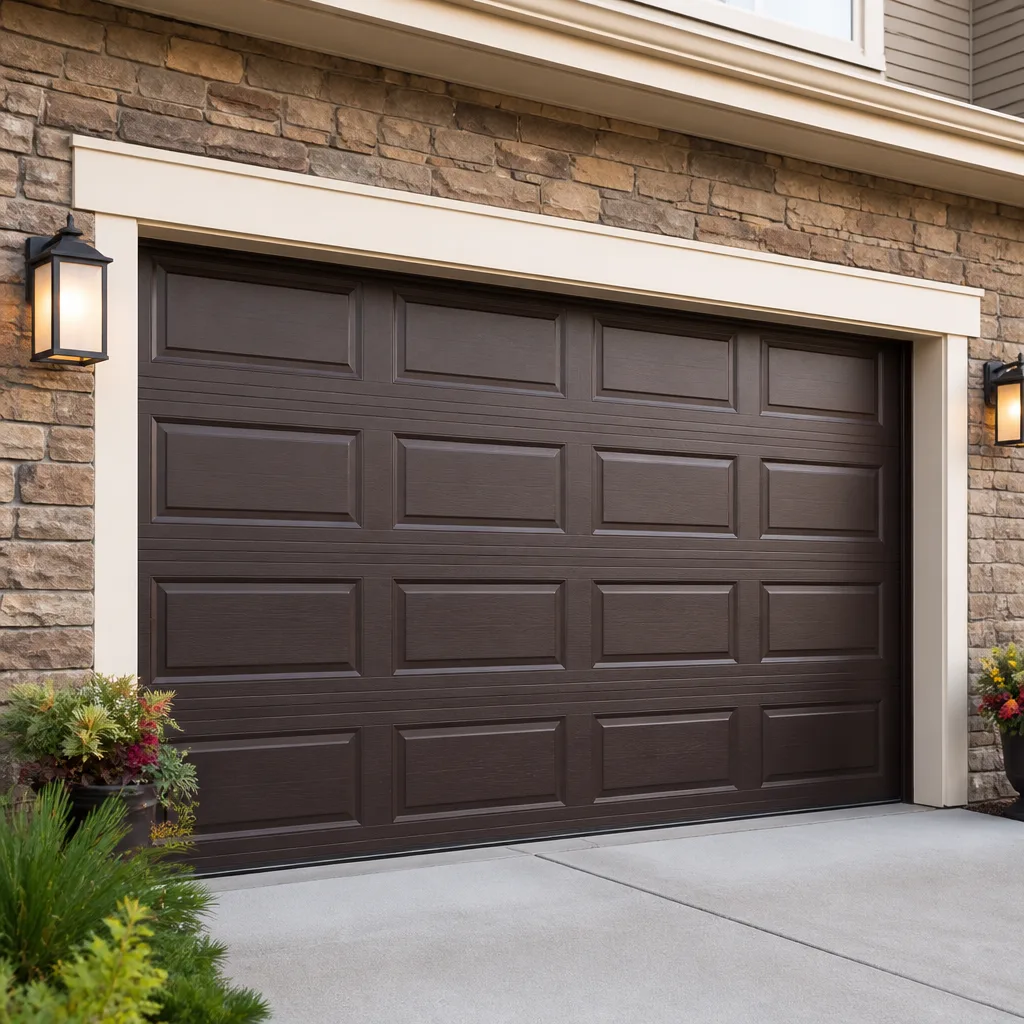 Raised-panel steel
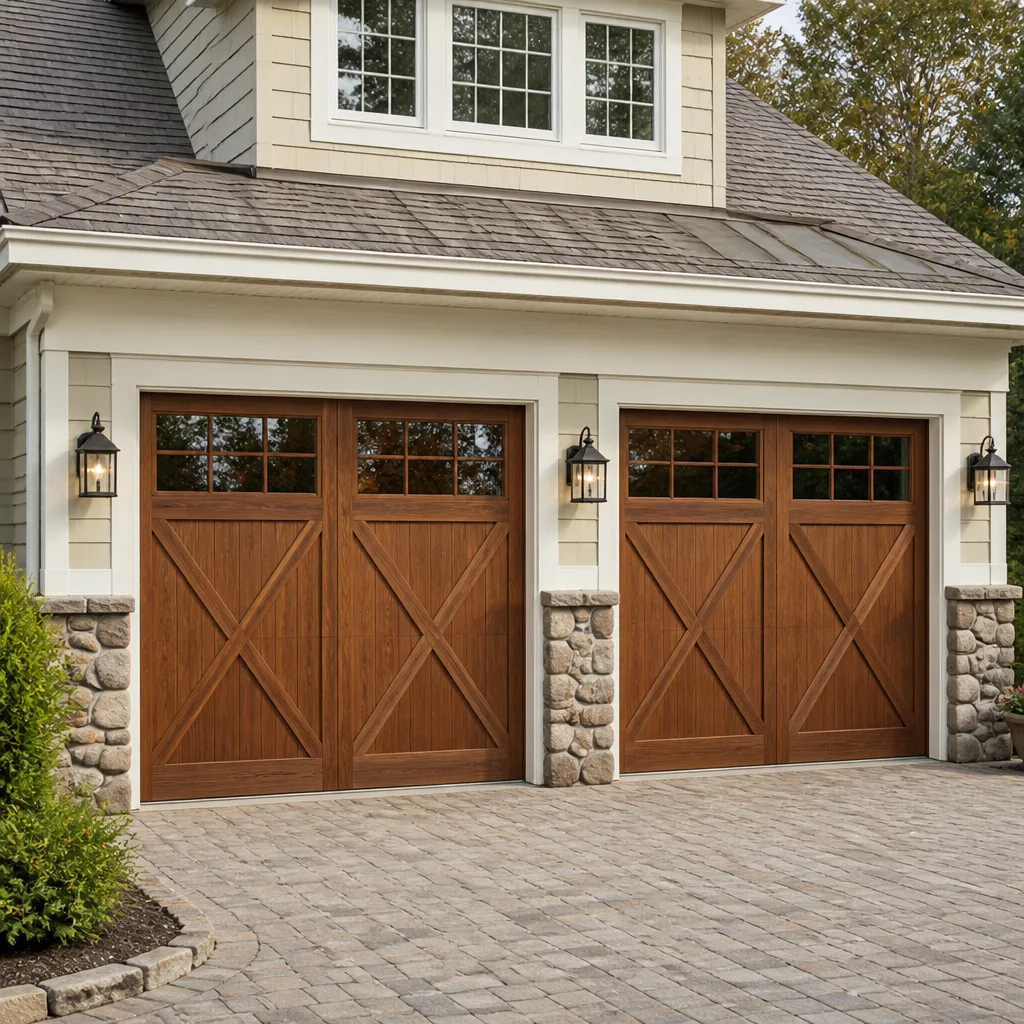 Carriage house
 Modern flush
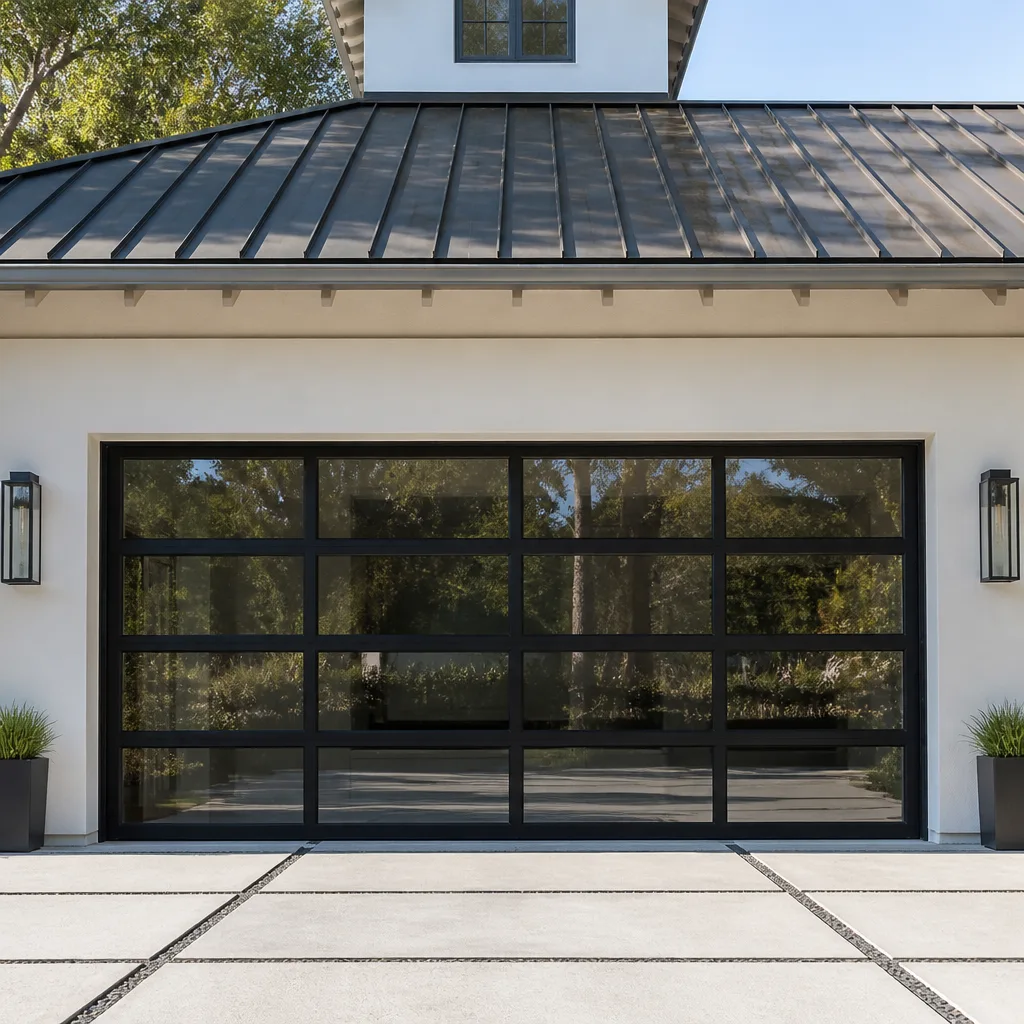 Full-view glass
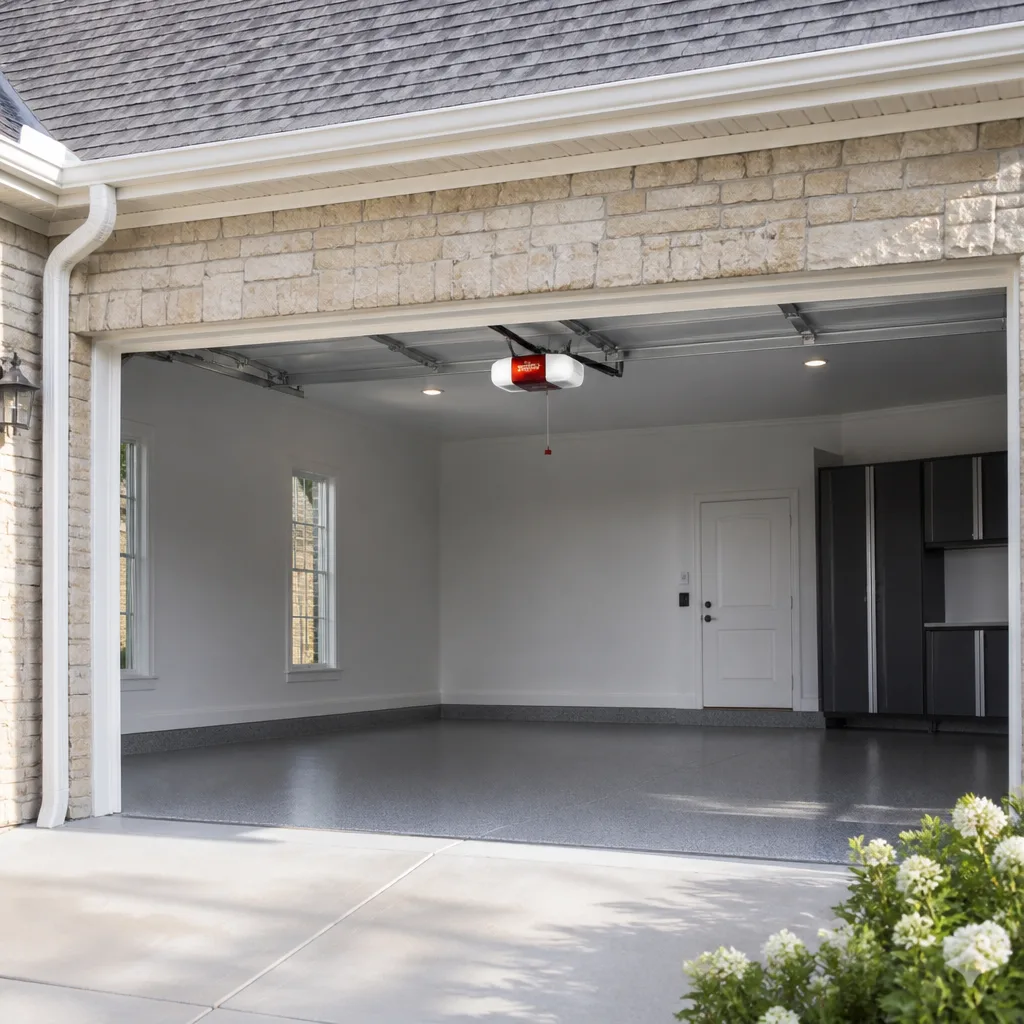 LiftMaster openers
 Chamberlain openers
Full 25-point door and opener safety check with every visit - springs, cables, rollers, tracks, and your LiftMaster or Chamberlain opener included
You get a price before we start. It does not change when the pro arrives.
Get your free estimateGarage Door Emergency Preparedness Guide for Port Orange Homes
Most Port Orange homeowners prepare for a garage door emergency the same way they prepare for a fire drill: they plan to figure it out when it happens. That works right up until the moment it doesn’t. The counterintuitive part is that the scariest failures here aren’t the dramatic ones. A door that won’t budge with the car trapped inside, a door stuck open in a squall, a snapped spring that leaves you stranded before work – these are the calls that fill our line, and nearly all of them were preventable with an hour of prep. This guide covers both kinds of failure Port Orange homes face, storm-related and mechanical, and gives you specific steps to be ready for either.
Quick Answer
A garage door emergency in Port Orange falls into one of two categories: storm-related (wind, power loss, impact) or mechanical (springs, cables, openers, tracks). Preparation for each is different. The single most valuable thing you can do is learn and practice the manual release on your specific opener, because after a tropical storm knocks out power, a door you can’t release traps your car and your escape route. The second is knowing when a failure is a call-a-professional situation – torsion springs and cables always are – versus something safe to handle yourself. We answer 24/7 and dispatch technicians from 7am to 7pm, Sunday through Friday, so help is not far when a door lets you down.
Styles & brands we work with
- Raised-panel steel
- Carriage house
- Modern flush
- Full-view glass
- LiftMaster openers
- Chamberlain openers
Table of Contents
- The Two Kinds of Garage Door Emergencies in Port Orange
- How to Release Your Garage Door By Hand (and the Mistake That Jams It)
- Preparing Your Door Before a Storm: What Bracing Actually Means
- A Broken Spring With the Car Inside: The First 10 Minutes
- Does a Battery Backup Opener Help During Power Outages?
- The Emergency Checklist to Keep in Your Garage
- Everyday Mechanical Failures and What They Mean
- A Simple Pre-Season Maintenance Routine
The Two Kinds of Garage Door Emergencies in Port Orange
Emergency calls in Port Orange tend to sort into two buckets, and treating them the same is where homeowners get into trouble. One is storm-driven. Volusia County sits in a part of Florida where tropical systems are a routine summer and fall reality, and a garage door is one of the most wind-exposed openings on a house. Power loss during and after a storm is common, and that turns an electric door into dead weight unless you know how to release it. The other bucket is mechanical: the everyday wear that a spring or cable gives out on its own schedule, storm or no storm.
The preparation for each is genuinely different, which is why a single “be ready for anything” message doesn’t help much.
- Storm failures usually involve wind pressure on the door, impact from debris, or a loss of power that strands the opener carriage. Your prep here is about securing the door and knowing how to operate it without electricity.
- Mechanical failures usually involve torsion springs, extension springs, cables, rollers, or the opener motor and logic board. Your prep here is about knowing the warning signs, keeping the car movable, and having a number to call.
- A third, quieter category is the door left half-open or off-track after a minor impact – a car bumper, a bike, a ladder. It looks like a small problem and can become a dangerous one if someone tries to force it.
We work on the systems Port Orange homeowners already have, across eight major brands – LiftMaster, Chamberlain, Genie, Clopay, Amarr, Wayne Dalton, Craftsman, and Raynor – so knowing which bucket your problem belongs to starts with knowing your equipment. Take a photo of the opener label and the door’s brand plate this week; you’ll thank yourself later.
How to Release Your Garage Door By Hand (and the Mistake That Jams It)
Every automatic garage door has a manual release, and almost nobody has practiced using it. That’s the gap. When the power is out and you need to get a car out, the release is a cord (or a lever on some models) hanging from the opener carriage. Pull it and the door disconnects from the motor so you can lift it by hand. The trouble is that pulling it at the wrong angle – sideways, sharply, or while the door is under tension mid-travel – jams the carriage instead of releasing it, and then you’ve got a door that’s neither automatic nor manually usable.
Here’s how it goes for the common brands in Port Orange homes. The mechanics are similar, but the cord position and the reset differ enough that checking your own door once is worth the minute.
- Close the door fully first. Releasing a door that’s partway up puts the full weight on the spring, and it can drop. Always start from the fully closed position, or fully open if the door is already up.
- Locate the release cord. On most LiftMaster and Chamberlain openers it’s a red-handled cord hanging from the trolley. Genie and Craftsman units use a similar cord or a small lever near the carriage. Wayne Dalton and Raynor systems can differ, so look before you pull.
- Pull straight down, once, firmly. Not sideways, not at an angle toward the wall. A single smooth downward pull disengages the carriage. If it doesn’t release, don’t yank harder – that’s the move that jams it.
- Lift the door slowly by hand. A well-balanced door should lift with modest effort. If it feels heavy or won’t stay up, stop – that’s a sign of a spring or balance problem, and forcing it risks injury.
- Prop it open if you must leave it. Never leave a manually opened door unsecured; it can come down on its own.
- Re-engage by pulling the cord again and running the opener. Once power is back, pull the release cord to reconnect the carriage, then cycle the opener once to confirm it catches.
If the carriage is already jammed – the door won’t reconnect and won’t move freely – that’s a job for a technician. Forcing it can bend the trolley or the arm. Our garage door opener repair service covers exactly this kind of stuck-carriage situation, and we can usually sort it on the first visit.
Preparing Your Door Before a Storm: What Bracing Actually Means
“Bracing” a garage door sounds like something you do with a two-by-four and some muscle. It isn’t. A garage door is a large, flat, relatively light panel assembly, and in high wind the weak point is the door itself flexing and failing, not the frame. Real bracing is structural: it reinforces the door and the tracks so the panel resists wind pressure rather than bowing inward and letting go. That’s a job for a qualified technician who knows your door’s make and rating, not a weekend improvisation.
What you can safely do yourself before a storm is different:
- Confirm the door is fully closed and latched. A door that’s slightly open is far more vulnerable to wind getting under it. Make sure it seals at the bottom.
- Clear the tracks of debris. Sand, leaves, and small branches in the track can jam the door when you need it most. A quick sweep and a visual check take minutes.
- Test the reversal safety feature. Put a roll of paper towels under the closing door; it should reverse on contact. If it doesn’t, get it serviced before storm season.
- Check the weather seal and bottom panel. A torn seal lets water and wind in; a dented or loose bottom panel on a Clopay or Amarr door can be a weak point in wind.
- Store nothing against the door. A car parked against the inside of the door is a myth of protection, not protection. It doesn’t add structural strength and it can block you from operating the door if you need to.
We’ve seen plenty of Port Orange doors after a storm where the door itself was fine but debris in the tracks or a failed reversal test turned a survivable event into a stuck door. A short checklist run-through before the season pays for itself.
If your door has visible damage – a bent track, a cracked panel, a door that’s hard to close – have it looked at before the next system rolls through. Our garage door repair service handles that kind of pre-storm assessment, and the estimate is free.
A Broken Spring With the Car Inside: The First 10 Minutes
Torsion springs are the big coiled springs mounted above the door on a metal shaft. When one breaks, you hear a sharp bang and the door suddenly feels incredibly heavy – because the spring was doing the lifting, and now it isn’t. This is one of the most safety-critical parts of the whole system, and it’s the reason we tell every homeowner the same thing: springs are dangerous and this is not a DIY job. A broken spring is under extreme tension even after it fails, and a still-intact mating spring on a two-spring system is even more so.
If a spring breaks with the car inside, here’s what to do in the first ten minutes:
- Don’t try to lift the door by hand. Without the spring’s counterbalance, a garage door can weigh hundreds of pounds. Attempting to lift it can cause serious injury.
- Keep people and pets clear. The door may be sitting unevenly, and a partially open door with a broken spring can drop.
- If the door is fully closed and the car is trapped, call for help before doing anything else. We can talk you through whether a safe manual operation is even possible on your system.
- If the door is already fully open and the car is free, leave it open and call. Don’t run the opener; the motor may strain or the door may come down crooked.
- Don’t touch the springs or cables. Winding and unwinding a torsion spring requires specialized tools and training. This is where professionals earn their keep.
Our technicians have up to 14 years of experience, and spring work is a named specialty for us because it’s the repair that most rewards hands-on mechanical skill. If you suspect a broken spring, call us. Our garage door spring repair handles the diagnosis and the replacement, and we’ll quote the price before any work begins.
Does a Battery Backup Opener Help During Power Outages?
Yes, and in Port Orange it’s worth considering. A battery backup opener keeps the door working for a period after the power goes out, so you don’t have to manually release it just to get the car out. For households where the garage is the main entry, or where someone relies on the car during an outage, that’s a real difference. The catch is that not all openers have this feature, and the ones that do need their batteries maintained.
Which systems work without manual intervention during an outage:
- Openers with a built-in battery backup (several LiftMaster and Chamberlain models, and some Genie units) will cycle the door a limited number of times on battery. That’s usually enough to get a car in or out.
- Openers without backup require manual release, which is why the practice in the previous section matters.
- Smart-home compatible openers can let you check door status and receive alerts from your phone, which is helpful when you’re away and a storm rolls through.
If you’re not sure what you have, look at the opener label. If it’s an older unit without backup, we can advise whether adding a battery backup or replacing the opener makes more sense for your situation. We work on LiftMaster, Chamberlain, Genie, and Craftsman openers, legacy and modern Wi-Fi-enabled alike, so we can give you a straight answer rather than pushing a new unit you don’t need.
The Emergency Checklist to Keep in Your Garage
When a technician arrives on an emergency call, there’s information they need that homeowners almost never have ready. Having it on hand shortens the diagnosis and gets you back to normal faster. Keep a simple folder or a note taped inside the garage with these details:
- Opener brand and model number. From the label on the motor unit. This alone can save diagnostic time.
- Door brand and model if visible – Clopay, Amarr, Wayne Dalton, and others stamp or label their panels.
- Approximate install year of the door and opener, if you know it, so the technician knows roughly how old the springs and rollers are.
- Any recent symptoms – a door that’s been sluggish, noisy, or slow to reverse.
- Spring type – torsion or extension, and how many springs.
- Whether the car is trapped inside when you call, since that changes the urgency and what we advise you to do before we arrive.
- Your contact number and gate or access code if applicable, so the technician isn’t stuck outside.
We keep this simple because these are the details that let us bring the right parts and knowledge the first time. If your door is one of the brands we service – and the list is broad – we’ll know what we’re walking into. When you call, we answer 24/7, and dispatch runs 7am to 7pm, Sunday through Friday. A call outside dispatch hours is booked into the next opening.
Everyday Mechanical Failures and What They Mean
Not every emergency is a storm. Most of the calls we get are mechanical, and they tend to give some warning. Knowing what the warning means tells you whether to keep using the door or stop.
- Loud bang from above the door, door suddenly heavy: broken torsion spring. Stop using the door and call.
- Door goes up crooked or one side lags: a stretched or broken cable, or a failing roller. Don’t keep cycling it.
- Opener runs but door doesn’t move: a broken carriage or a stripped gear in the opener. The motor is fine; the connection between motor and door isn’t.
- Door reverses immediately or won’t close: a misaligned safety sensor, a logic board issue, or an obstruction. Sometimes a quick sensor check solves it; sometimes it’s the opener.
- Grinding or scraping: worn rollers or dry hinges. This can usually wait for a scheduled visit, but it wears the door faster if ignored.
When it’s an opener problem – the motor, the sensors, the logic board, the remote – our garage door opener repair covers all of it. When it’s the door itself, a panel, a track, or a roller, our garage door repair is where to start.
A Simple Pre-Season Maintenance Routine
An hour once or twice a year, timed to the start of storm season, prevents a lot of emergencies. This is a visual and functional check, not a teardown. If anything looks wrong, stop and call.
- Lubricate rollers, hinges, and tracks. A light application of a proper garage door lubricant keeps things quiet and moving.
- Test the reversal feature. Roll of paper towels under the closing door – it should reverse. Repeat monthly during storm season.
- Look at the springs. A visible gap in a torsion spring means it’s broken. Don’t touch; call.
- Check cables for fraying or slack. Any visible damage means a professional inspection.
- Tighten visible hardware. Brackets, hinges, and the track bolts, gently, without over-tightening.
- Clean the tracks and check alignment. The door should run smoothly without wobbling.
- Test the manual release. Once. So you know how it feels before you need it in an outage.
If anything during that routine gives you pause, a free estimate visit from our team can confirm whether it’s nothing or something that should be handled now. We’d rather tell you it’s fine than have you find out during a storm.
Common Mistakes to Avoid
- Pulling the manual release sideways or hard. It jams the carriage. A single straight downward pull is what releases it.
- Parking a car against the inside of the door “for bracing.” It doesn’t add structural strength and it can block your exit if the door fails.
- Trying to lift a door with a broken spring. It can weigh hundreds of pounds without the spring’s counterbalance. Call, don’t lift.
- Ignoring a door that reverses on its own or closes crooked. These are early warnings, and they tend to get worse, not better.
- Not knowing the opener brand before calling. It lengthens the visit and sometimes means a second trip for a part.
- Running the opener on a door that’s visibly off-track. It can bend the door and turn a repair into a replacement.
- Waiting for the storm to be close before checking the door. Prep takes an hour. Do it before the season, not during the warning.
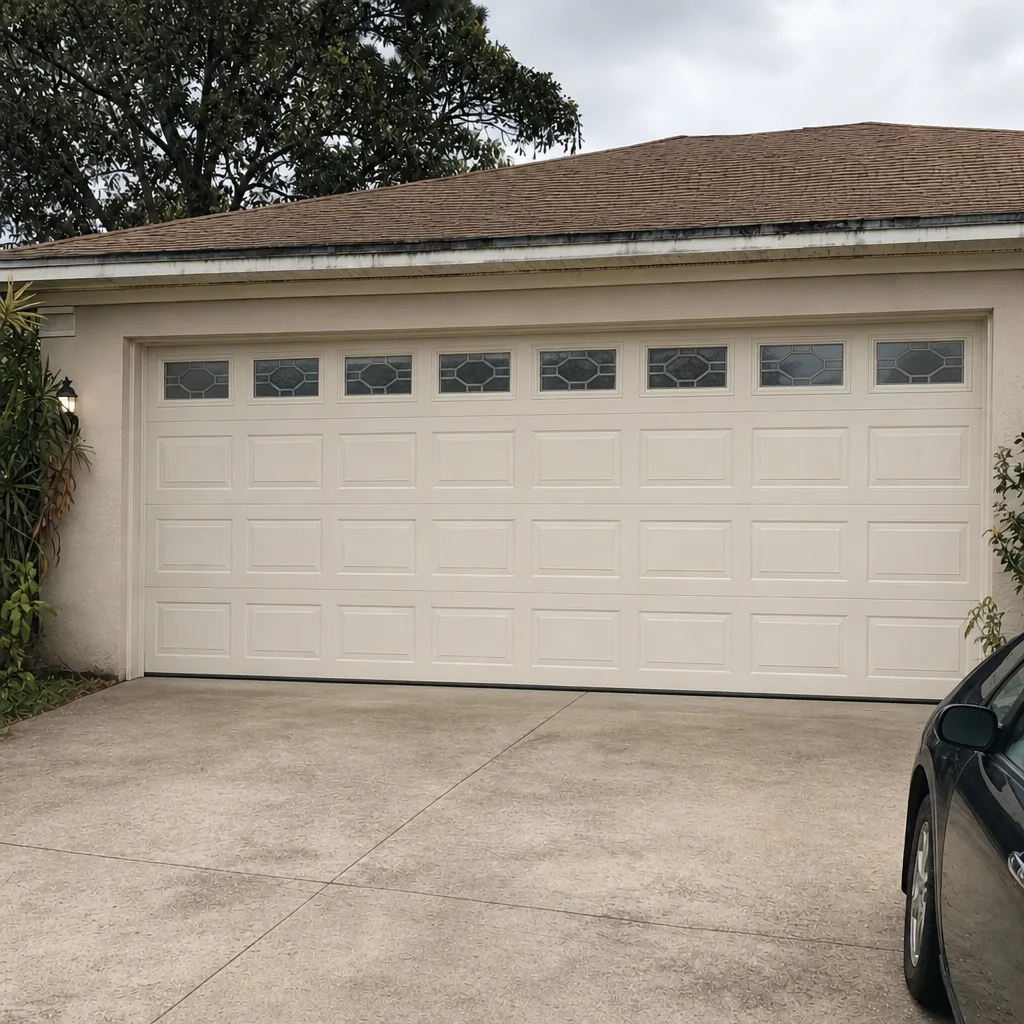
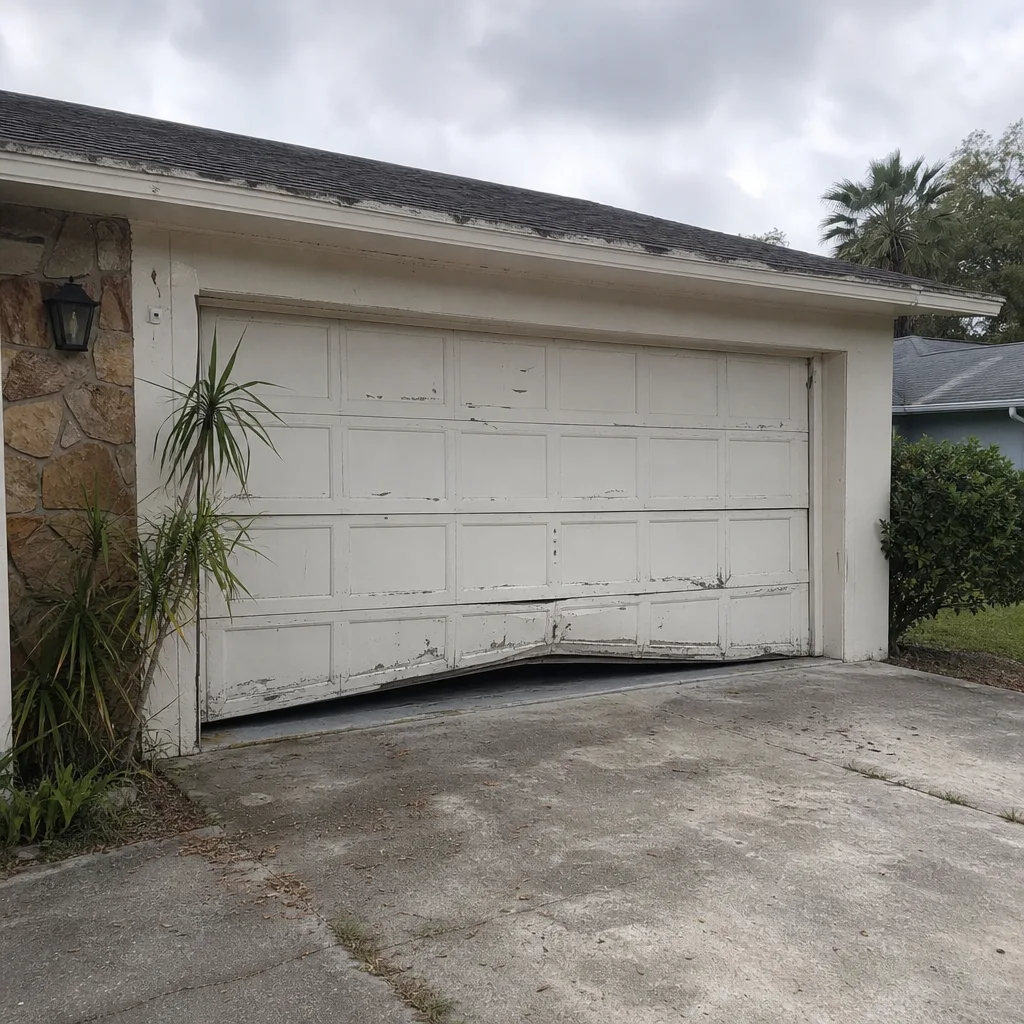
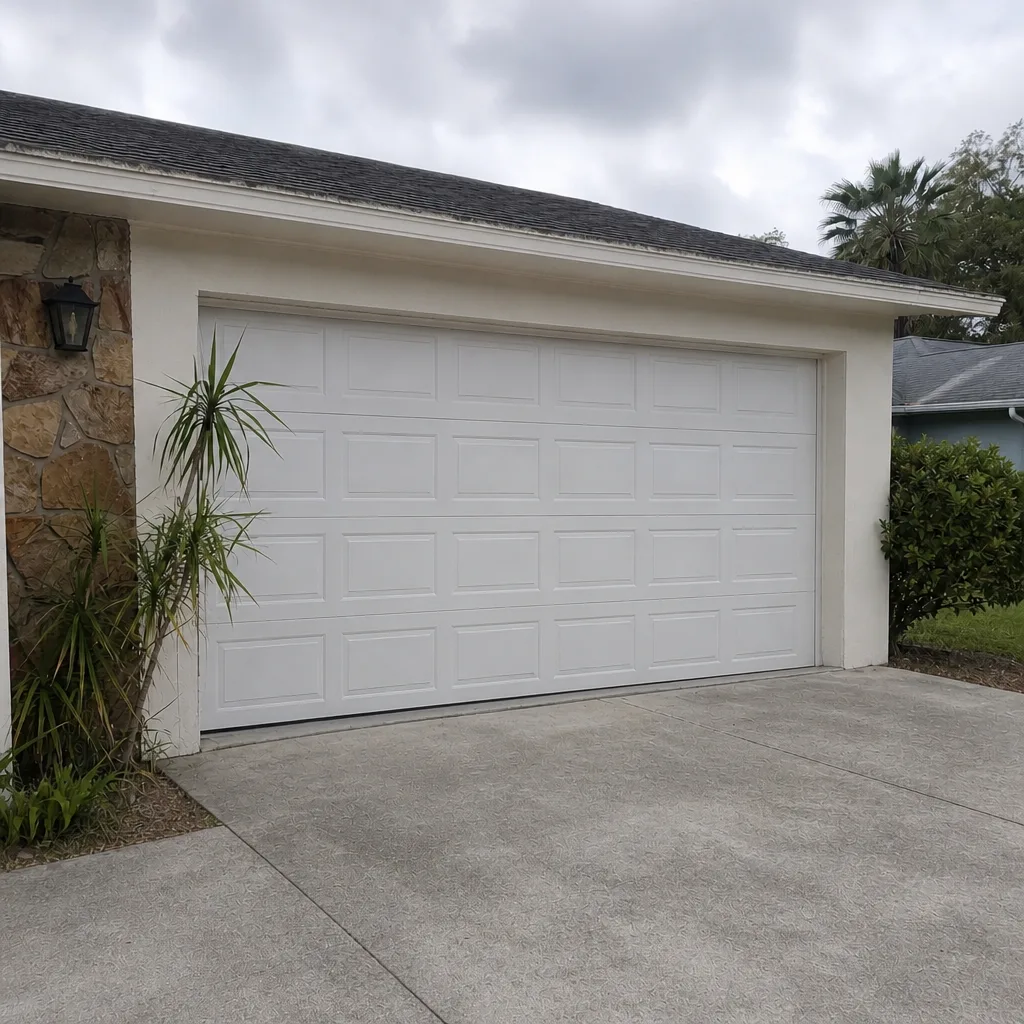
See the difference
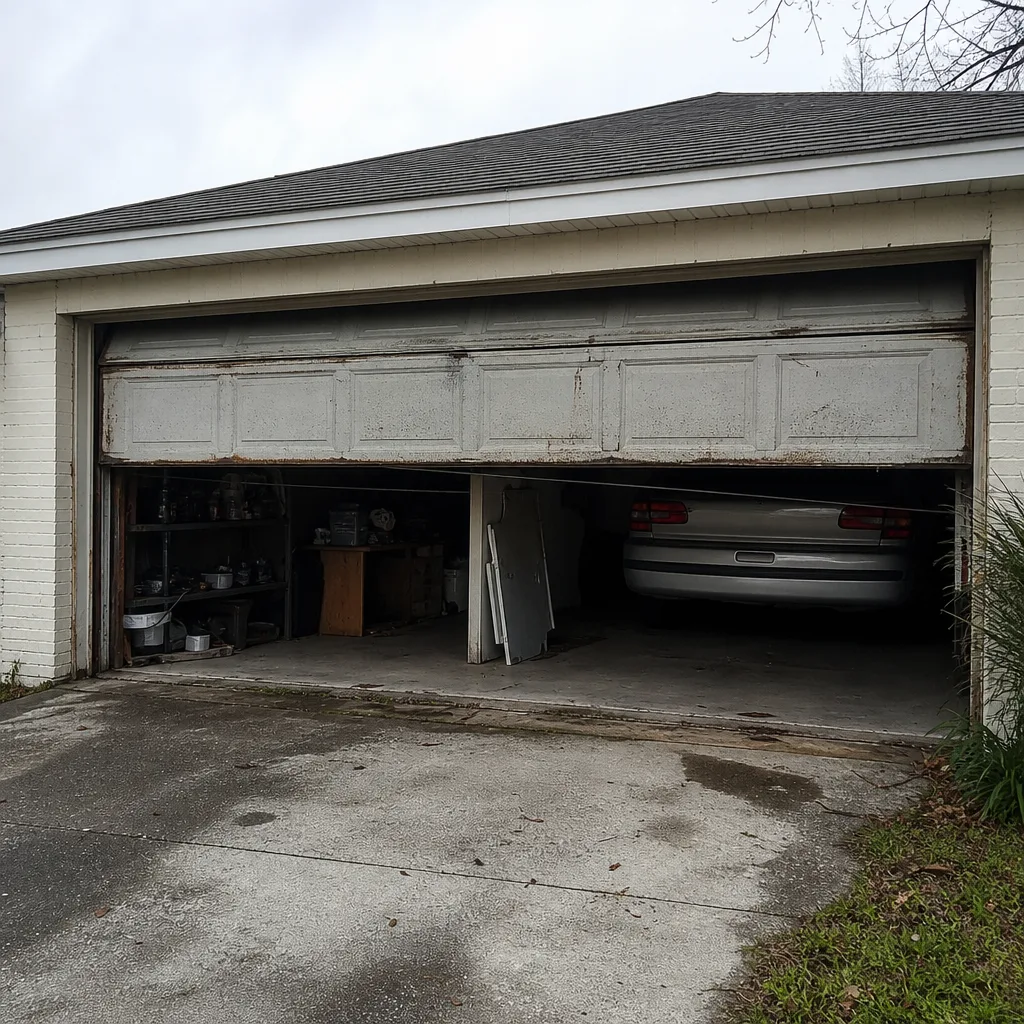 Before
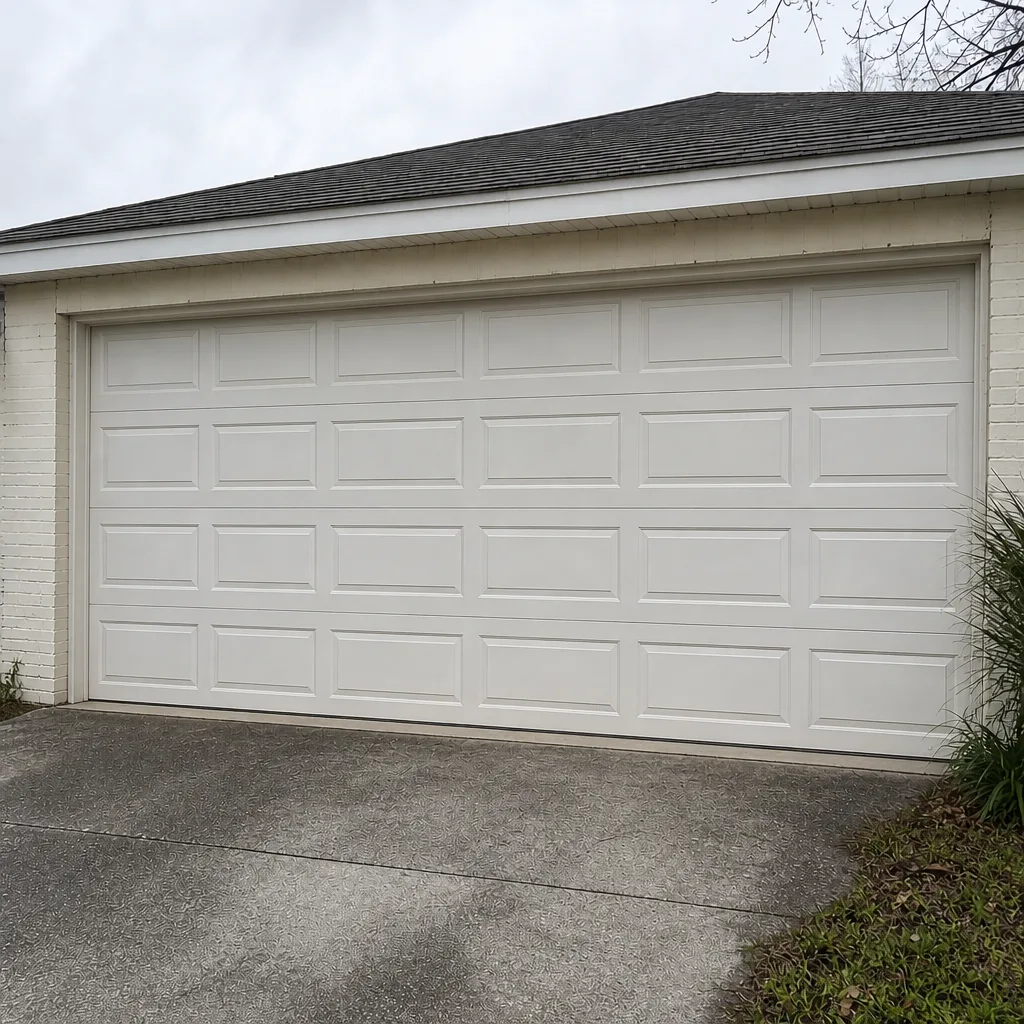 After
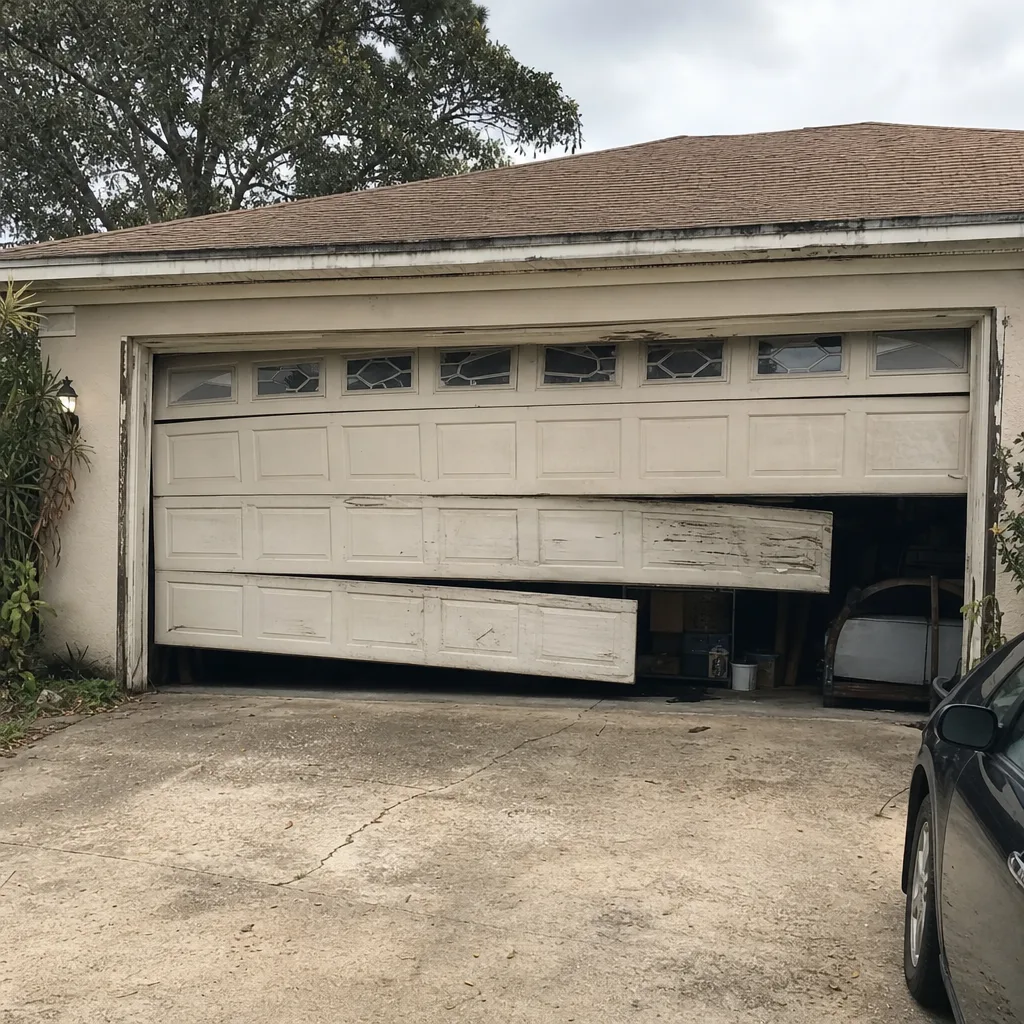 Before
 After
 Before
 After
When to Call a Professional
Call us when a spring breaks, a cable frays, the door is off-track, the opener won’t reverse, or the manual release jams. These are all situations where a professional visit is the safe and faster route. Spring and cable work especially are never DIY; the tension stored in those parts is enough to cause serious injury, and we mean that plainly rather than as a sales line. Port Orange Garage Door Repair Co offers free estimates in Port Orange. Call (877) 492-2561. We answer 24/7, and fast dispatch runs from 7am to 7pm, Sunday through Friday. The price is quoted and agreed before any work starts, so you know the number before we begin. From the opener motor to the bottom panel, we handle the whole door.
Frequently Asked Questions
You’ll usually hear a sharp bang and the door will suddenly feel extremely heavy. A visible gap in a torsion spring, or a door that won’t lift without enormous effort, confirms it. Don’t try to lift the door yourself – call (877) 492-2561 and we’ll walk you through what’s safe before we arrive.
Yes, if the release works properly. Pull the release cord straight down, once, firmly, and lift the door by hand from the closed position. If it doesn’t release cleanly or the door is too heavy to lift, stop and call us – forcing it jams the carriage or risks injury.
They do, for a limited number of cycles – enough to get a car in or out. Not every opener has backup, so check your label. If yours doesn’t, we can advise whether adding backup or replacing the opener is the better move for your home.
Keep people and pets away from the moving parts and don’t run the opener. If the door is stable and fully open, leave it and call us; we can advise on securing it or booking a visit. If it’s sagging or off-track, stay clear and call – don’t attempt to force it closed.
The written estimate sets the price. We quote and agree on the work before it starts, so a bigger-than-expected invoice isn’t part of the process. Call (877) 492-2561 for an exact quote – estimates are free.
The local professionals we connect you with are licensed and insured as their state requires. They service systems from LiftMaster, Chamberlain, Genie, Clopay, Amarr, Wayne Dalton, Craftsman, and Raynor, so the brand you already own is one they know. Our technicians have up to 14 years of experience.
The Bottom Line
Port Orange garage door emergencies come in two flavors, storm and mechanical, and the prep for each is different. For storms, the winning move is knowing your manual release, keeping the tracks clean, and testing the reversal feature before the season – not bracing with a car. For mechanical failures, it’s recognizing the signs early and knowing that springs and cables are always a professional call. An hour of practice and a labeled folder in the garage covers most of it. When something does go wrong, you’ll already know what to do. Call (877) 492-2561. We answer 24/7. Fast dispatch from 7am to 7pm, Sunday through Friday.
For the full range of services, including garage door repair, garage door opener repair, and garage door spring repair, our team at Port Orange Garage Door Repair Co is here to help Port Orange homeowners get their doors working safely. Call (877) 492-2561 for a free estimate.
Written by the team at Port Orange Garage Door Repair Co.