
Last updated November 21, 2026
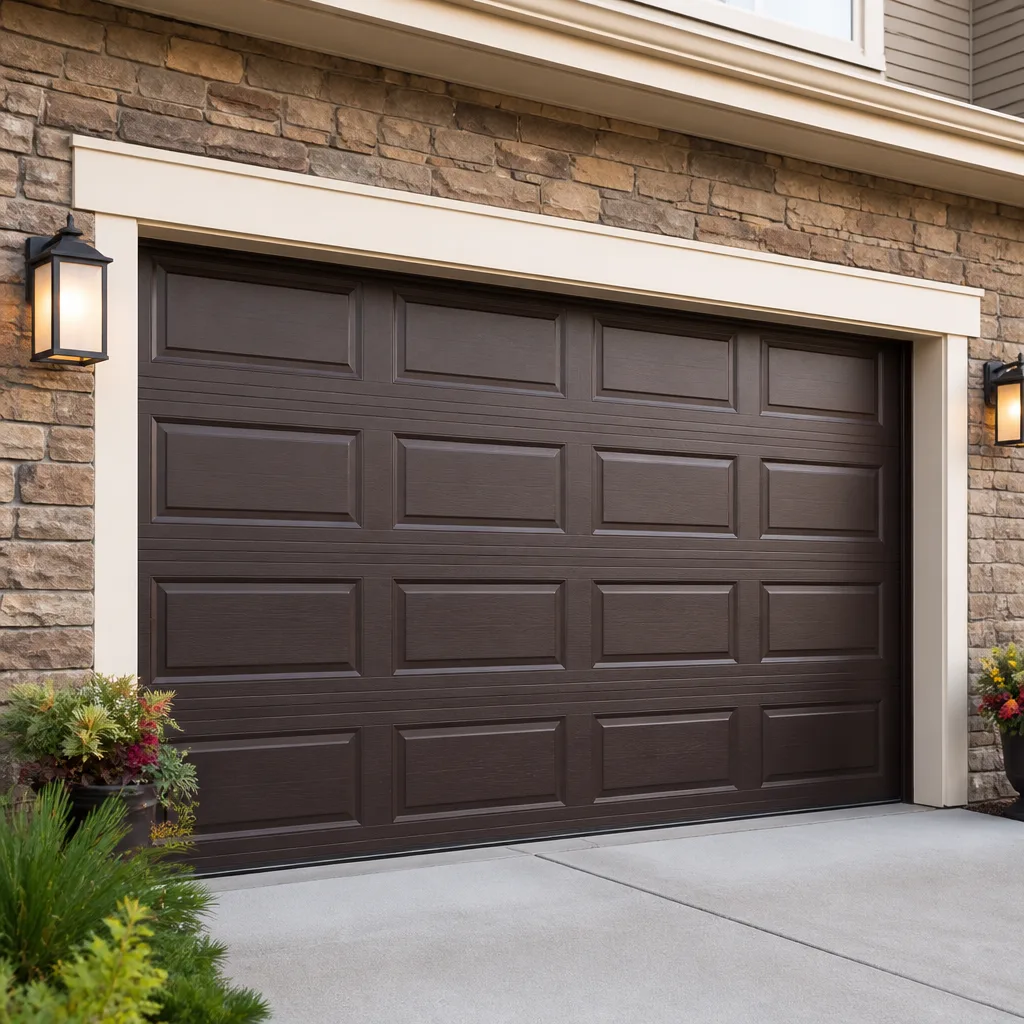 Raised-panel steel
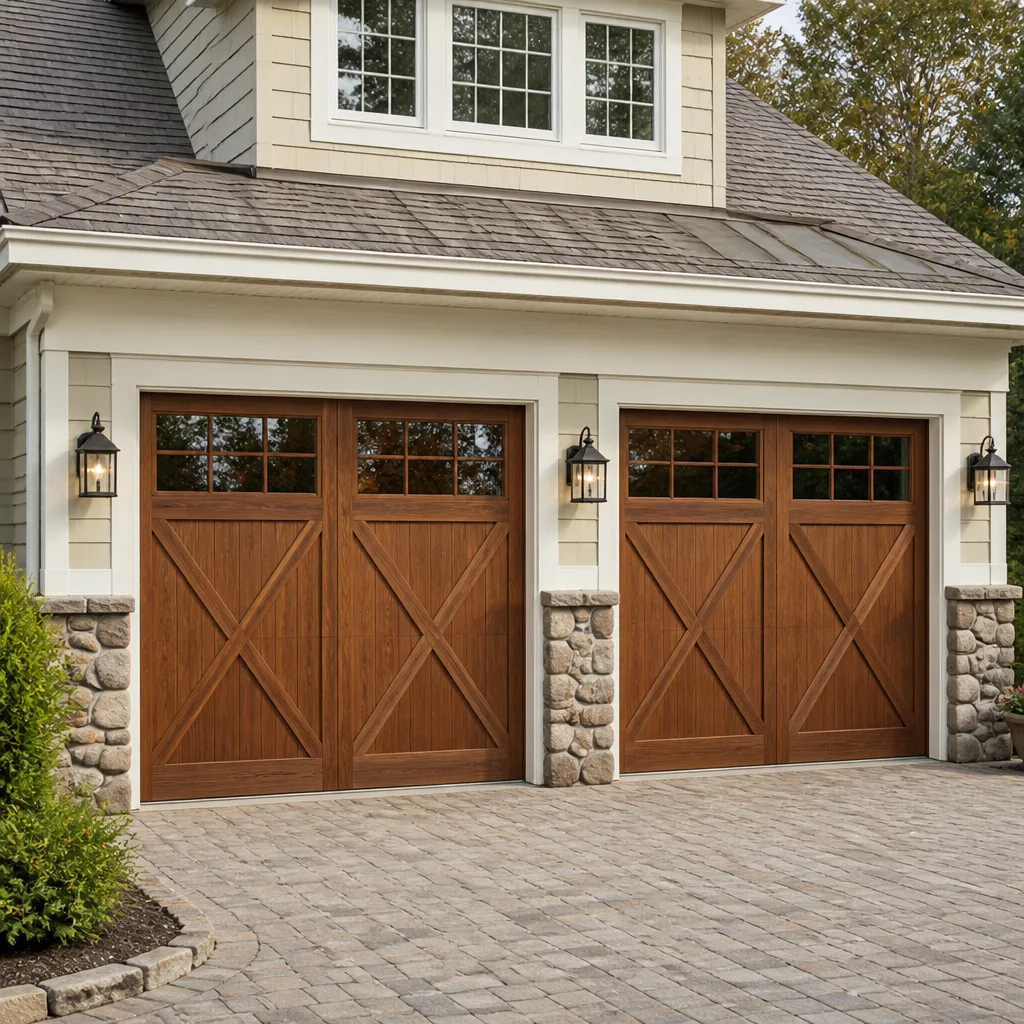 Carriage house
 Modern flush
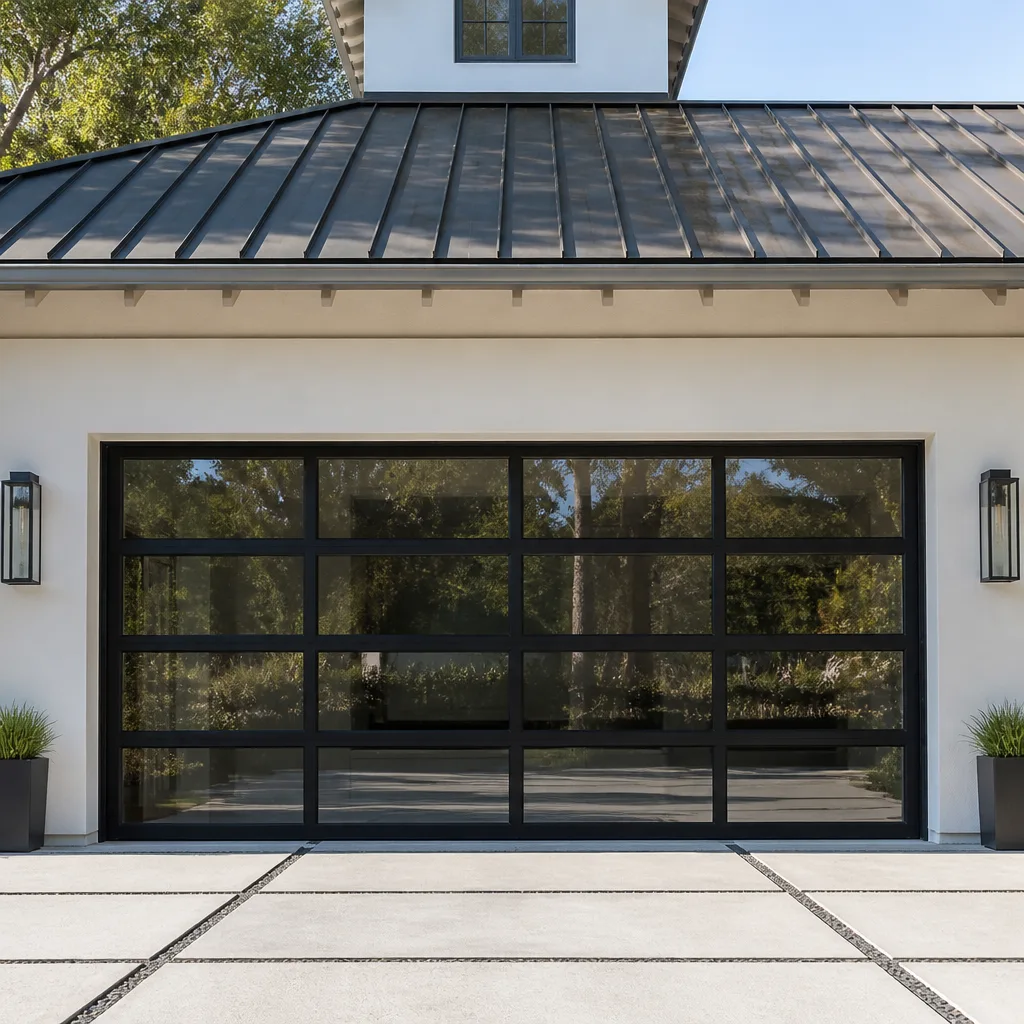 Full-view glass
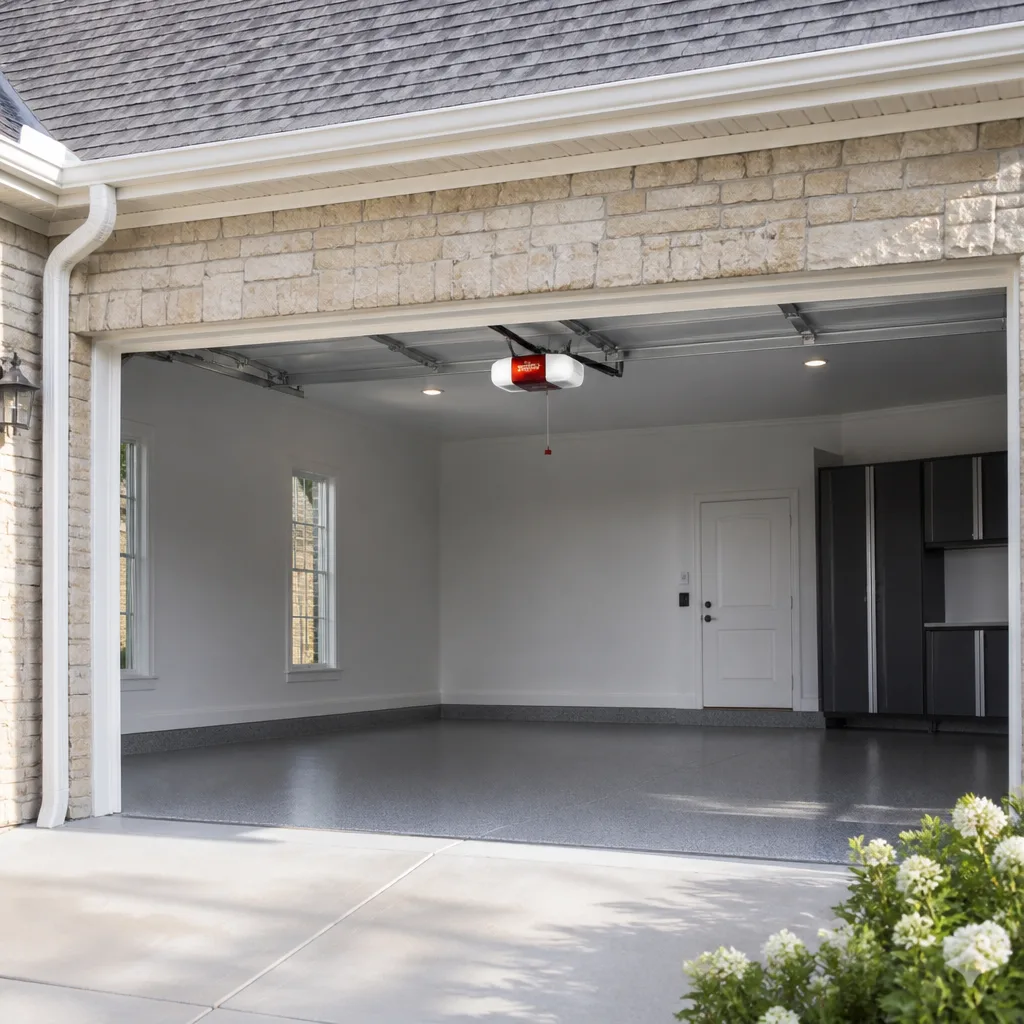 LiftMaster openers
 Chamberlain openers
Full 25-point door and opener safety check with every visit - springs, cables, rollers, tracks, and your LiftMaster or Chamberlain opener included
You get a price before we start. It does not change when the pro arrives.
Get your free estimateGarage Door Repair Troubleshooting in Port Orange: Common Problems and How to Fix Them
A garage door that “just stopped working” is almost never a single failure. In most cases one worn part triggers a chain reaction that makes three things look broken at once. That’s why so many homeowners in Port Orange replace a remote that was never the problem, or pay for a tune-up on a door whose real issue is a stretched spring. We see the same pattern week after week: the symptom gets fixed, the cause stays put, and the door fails again. This guide maps the symptoms you can actually see to the mechanical failures causing them, so you can spend money on the right repair instead of guessing. By the end you’ll know what’s safe to check yourself, what never is, and how to describe the problem so the first estimate is the accurate one.
Quick Answer
Most garage door problems in Port Orange trace back to one of four root causes: a worn torsion spring, a misaligned safety sensor, a stripped opener gear, or an off-track roller or panel. The trick is that a single spring failure can make the door look like it has three separate problems at once. Start by pulling the manual release to find out whether the fault lives in the opener or in the door’s mechanics. Anything involving springs, cables, or the torsion assembly is not a DIY job.
Key Takeaways
- One worn part usually produces several symptoms. Treat them as clues, not separate repairs.
- The manual release test tells you in about five seconds whether your opener or your door is at fault.
- Lubrication and sensor alignment are safe to handle yourself. Springs and cables are not.
- Humidity in Central Florida works on metal parts year-round, and springs are the first to suffer.
- A clear description of the symptom gets you a correct quote on the first call.
Styles & brands we work with
- Raised-panel steel
- Carriage house
- Modern flush
- Full-view glass
- LiftMaster openers
- Chamberlain openers
Table of Contents
- Which Symptom Points to Which Part?
- The Five-Second Manual Release Test
- Why Port Orange Humidity Wears Parts Differently
- Which Fixes Are Safe to Do Yourself?
- Springs and Cables: The Repairs You Should Never Attempt
- How to Describe Your Problem So the Quote Is Right
- Storm and Impact Damage After a Rough Afternoon
- Repair or Replace? How to Decide
Which Symptom Points to Which Part?
Troubleshooting starts with the symptom, not the part. A noisy door, a slow door, a stuck door, and a door that reverses all lead to different components. Match what you hear and see to the list below before anyone touches the door.
- Loud banging or a snap, then nothing moves: a torsion spring has broken. This is the most common reason a door suddenly won’t lift at all.
- Grinding or scraping while moving: dry or seized rollers, a worn hinge, or a track that has drifted out of alignment.
- Door rises a few inches and stops: usually a spring that’s lost tension, or a logic board in the opener that’s cutting power early.
- Door closes then reverses immediately: a safety sensor problem, a misaligned photo eye, or something blocking the safety beam.
- Opener motor hums but the door doesn’t move: a stripped gear inside the opener, or a broken torsion spring the motor can’t fight.
- Door sags on one side and looks crooked: a snapped or slack cable on that side, or a roller that has come out of its track.
- Remote works sometimes, not others: weak battery, antenna issue, or interference. Rarely a mechanical failure.
Notice how often one symptom shows up under two different parts. That’s the trap. A door that lifts a few inches and stops could be a spring or a logic board, and only a physical check tells you which. We’ve seen homeowners replace an opener when the real culprit was a tired spring the whole time. In our experience, a stripped gear inside a LiftMaster or Chamberlain unit produces almost the exact same symptom as a broken spring: the motor runs, the door doesn’t. The difference is the motor sound and whether the door has any lift force left in it.
If your door reverses, don’t replace the opener first. The safety sensor is almost always the cause, and you can rule it in or out in under a minute. Call us if you want a same-day diagnostic on the exact fault. Call (877) 492-2561. We answer 24/7. Fast dispatch from 7am to 7pm, Sunday through Friday.
The Five-Second Manual Release Test
Before you spend a dollar, find out whether the problem is in the opener or in the door itself. The manual release cord does exactly that. It’s the emergency disconnect that lets you lift the door by hand, and pulling it takes about five seconds.
- Close the door fully. The springs are under the least tension when the door is down.
- Find the release cord, usually hanging from the opener rail with a handle at the end.
- Pull it toward the door and listen for the click that decouples the opener carriage.
- With the door disconnected, lift it by hand about a foot. If it moves smoothly and stays where you leave it, the opener is likely your fault. If it’s heavy, won’t move, or crashes back down, the door’s mechanicals are the problem.
- Reconnect the carriage by lifting the door until it re-engages, then test the opener once.
What the test tells you:
- The door lifts easily by hand: the springs, cables, and tracks are healthy. Your opener motor, logic board, or safety sensors are the problem.
- The door is too heavy to lift, or won’t stay up: a spring has lost tension or broken. This is a door problem regardless of what the opener does.
- The door drags or binds on one side: a roller is stuck, a track is bent, or a cable is slack. Stop and call a technician: never force a binding door open by hand.
This single test saves more wasted money than anything else in this guide. It tells a technician in one sentence whether you’re facing a spring repair or an opener repair. It also keeps you from paying for the wrong one. If you’d rather have a trained eye on it, a garage door opener repair visit starts with the same test.
Why Port Orange Humidity Wears Parts Differently
Port Orange sits in the humid subtropical belt of Central Florida, and that climate shortens the working life of several garage door components. Humidity here isn’t a seasonal nuisance; it’s a constant. It affects hardware year-round, and it pushes certain parts toward failure faster than homeowners from drier climates expect.
The parts that suffer most:
- Torsion springs. Moisture in the air encourages surface corrosion, and a spring’s coils are thin steel. Corrosion creates stress points where a spring can fail before its rated cycle count runs out.
- Rollers and hinges. Steel rollers rust and seize, which increases friction on the track and loads the springs harder than they were designed for. Nylon rollers resist this better but still need lubrication.
- Track and fastener rust. Rust creeping along the track changes how smoothly the door travels, and a track that’s out of true wears rollers rapidly.
- Wood and composite bottom panels. The bottom section sits closest to the slab, where moisture tends to pool after rain. Wood door bottoms absorb that moisture and start to swell or rot if the finish isn’t maintained.
- Seals and weatherstripping. The rubber seal on the bottom of the door hardens under sun and humidity, cracks, and lets in pests, heat, and rainwater.
Inland Florida homes face the same sun and heat, but the added humidity here makes corrosion the bigger threat to metal parts. That’s why we recommend a yearly inspection of the springs and rollers rather than waiting for a failure. It’s the cheapest way to stay ahead of a breakdown. Our technicians have up to 14 years of experience and know how springs behave in Port Orange’s air versus what a national parts chart might predict. Call (877) 492-2561. We answer 24/7. Fast dispatch from 7am to 7pm, Sunday through Friday.
Which Fixes Are Safe to Do Yourself?
Two categories: things a careful homeowner can absolutely do, and things nobody should touch without training. Know the line before you start. Ruling out a problem by hand beats guessing with a tool every time.
Safe to handle yourself
- Sensor alignment. The two photo eyes at the base of the track point at each other. If the door reverses on its way down, check that each lens is clean, unobstructed, and pointing at its partner.
- Lubrication. A light lubricant on the springs, rollers, and hinges eases friction and quiets a grinding door. Use one made for garage door hardware. WD-40 is a penetrant, not a lubricant, and won’t hold up here.
- Remote battery replacement. A dead battery in a LiftMaster or Genie remote sends false signals that mimic a failing opener. Swap the battery before assuming the motor is dying.
- Clearing obstructions. A bag handle, a garden tool, or a cobweb across the sensor beam will make a door reverse as reliably as any mechanical fault.
- Visual inspection. Look for rust, a crooked door, or a frayed cable. You can find the problem without touching it.
Not safe: leave these alone
- Torsion springs of any kind.
- Cables and their tension.
- The torsion shaft and its drums.
- Panel replacement on a door with a live spring assembly.
- Track adjustment on a door that won’t close flat.
Sensor alignment and lubrication solve a surprising share of “broken door” calls. The rest need a technician. If you’ve handled the safe fixes and the door still misbehaves, the next step is a proper diagnosis. Call (877) 492-2561. We answer 24/7. Fast dispatch from 7am to 7pm, Sunday through Friday.
Springs and Cables: The Repairs You Should Never Attempt
We say this plainly because it matters: springs are dangerous, and this is not a DIY job. A torsion spring holds the entire weight of your door under tension. When it releases, it releases hard. The tools and technique required to wind and unwind that tension are the reason this repair is a trained, professional task.
What makes spring work different from other repairs:
- Stored energy. A door that weighs a few hundred pounds is balanced by a spring wound to withstand that load. The spring must be de-tensioned with the right bars, in the right order, before anything is removed.
- No safe shortcut. Cables, drums, and the torsion shaft all work together, and a mistake in one throws the whole balance off.
- Corrosion raises the stakes. In Port Orange’s humidity, a corroded spring can fail with less warning than a fresh one. That’s another reason to inspect rather than test by force.
When a spring breaks, don’t stand under the door, don’t try to “help” it up by hand, and don’t attempt to lift it with a car jack. Leave it down, keep the area clear, and call. A technician can assess whether the spring failed alone or took a cable or drum with it. The spring is the most mechanically demanding and safety-critical part of the whole system, which is why it’s one of our core services and why we treat it as a job for a trained hand. Our garage door spring repair starts with a full inspection of the torsion assembly.
Modern spring replacements are selected for door weight and cycle life. Ask how many cycles the new spring is rated for, and what that rating means for a door you use every day. Call (877) 492-2561. We answer 24/7. Fast dispatch from 7am to 7pm, Sunday through Friday.
How to Describe Your Problem So the Quote Is Right
The better you describe the symptom, the closer the first quote lands to the final bill. A vague “my door is broken” leaves a technician guessing. A precise description lets them bring the right part on the first visit. That’s how you avoid the bait-and-switch estimate that so many homeowners get from a shop that guesses wrong.
What to have ready when you call:
- What the door does. “It opens a foot then stops” is worth ten “it doesn’t work” calls.
- What the door sounds like. A snap, a grind, a hum with no movement, or silence. Each points elsewhere.
- Whether the manual release changes anything. The result of the five-second test is the single most useful detail you can give.
- The door’s brand and the opener’s brand. Clopay and Amarr doors, and LiftMaster and Chamberlain openers, each have known failure points, and the brand narrows the diagnosis fast.
- How old the door or opener is, if you know. Age helps a technician predict whether you’re looking at a wear item or a component near the end of its life.
- Whether the safety sensors show a steady light. A blinking or dark sensor means a sensor problem before anyone looks at the motor.
A good technician will ask most of these on the phone and give a range, not a firm number, before seeing the door. A written estimate then sets the actual price once the door is inspected. You should always agree on that estimate before any work begins. Call (877) 492-2561. We answer 24/7. Fast dispatch from 7am to 7pm, Sunday through Friday.
Storm and Impact Damage After a Rough Afternoon
Central Florida gets thunderstorms that bring wind and debris, so door damage here is more often about impact than about ice or snow. Hail is uncommon in Port Orange, so you’re far more likely to deal with a limb strike, a blown-over trash can, or wind rattling a loose panel than with a hail dent. Knowing what a storm does to a door tells you what to check first.
After a storm, check these in order:
- Panel alignment. A dropped branch can bend a panel or knock a roller out of its track, which leaves the door crooked.
- Track straightness. Wind pushing against an open door can bow the vertical sections. A bowed track makes a smooth door bind.
- Bottom seal. Debris can tear the seal and let water sit against the bottom panel.
- Opener operation. A power surge from a nearby strike can scramble an opener’s logic board. If the motor hums and refuses to move, suspect the electronics.
- Sensor position. Wind shakes the brackets, and a sensor knocked a few degrees off-line reverses the door on the next close.
If the door is off its track after a storm, don’t force it down. Forcing a bent door can turn a panel repair into a full replacement. Call for a same-day visit and we’ll tell you whether it’s a track fix or a panel swap. Call (877) 492-2561. We answer 24/7. Fast dispatch from 7am to 7pm, Sunday through Friday.
Repair or Replace? How to Decide
Replacement isn’t automatically the right answer, and repair isn’t always the cheaper path. The honest decision usually turns on three things: how many issues are active at once, how old the door is, and whether the parts that are failing are wear items or structural. As a full-service shop, we can honestly assess both options because we install doors and we repair them. There’s no conflict either way.
Lean toward repair when:
- The door is otherwise solid and just one component failed (a spring, an opener, a pair of rollers).
- The tracks are straight and the panels are intact.
- The opener is modern and worth keeping, even if it needs a logic board or gear replacement.
Consider replacement when:
- Several panels are dented or the bottom section has rot.
- The door has come off its tracks repeatedly, which usually signals structural wear in the hinges and framing.
- The opener is at the end of its useful life and the door itself is over a decade old.
Replacement work in Port Orange is measured and scheduled rather than same-day, so a free measure and a written quote is the first step. Above all: fix the cause, not the symptom. Replacing an opener because the door was crooked won’t solve anything. If you’re not sure which way to go, garage door repair starts with a diagnosis, not a sales pitch.
Common Mistakes to Avoid
- Replacing the opener when a spring is broken. A motor that hums without moving can be either problem. Run the manual release test before you buy anything; most homeowners get this backward, and it’s the most common mistake we see in Port Orange.
- Winding a torsion spring yourself. No YouTube video substitutes for the safety bars and training, and a released spring is a genuine hazard. Call a professional before you touch it.
- Spraying WD-40 on the springs and calling it done. WD-40 is a water displacer, not a garage door lubricant. A proper lubricant holds up longer in Port Orange’s humidity.
- Ignoring a reversing door. A door that reverses on close is a safety sensor warning, not a quirk. Fixing it is cheap; ignoring it isn’t.
- Forcing a crooked door down by hand. A door off its track can be realigned; a door forced closed often needs new panels.
- Accepting a firm phone quote without a written estimate. A price shouldn’t be finalized until someone has seen the door. Insist on a written estimate agreed before any work starts.
- Skipping a yearly inspection. In Port Orange’s climate, corrosion moves quietly. A yearly check catches a failing spring before it strands you.
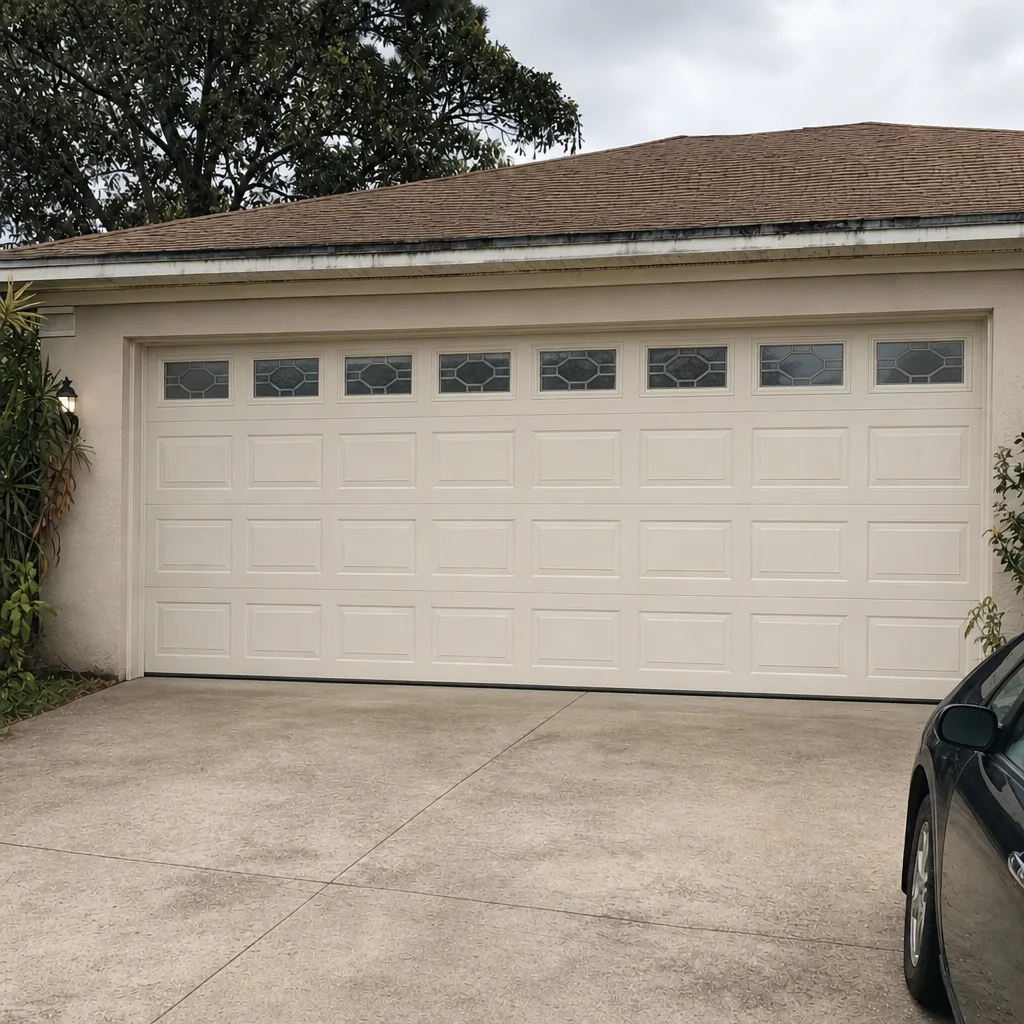
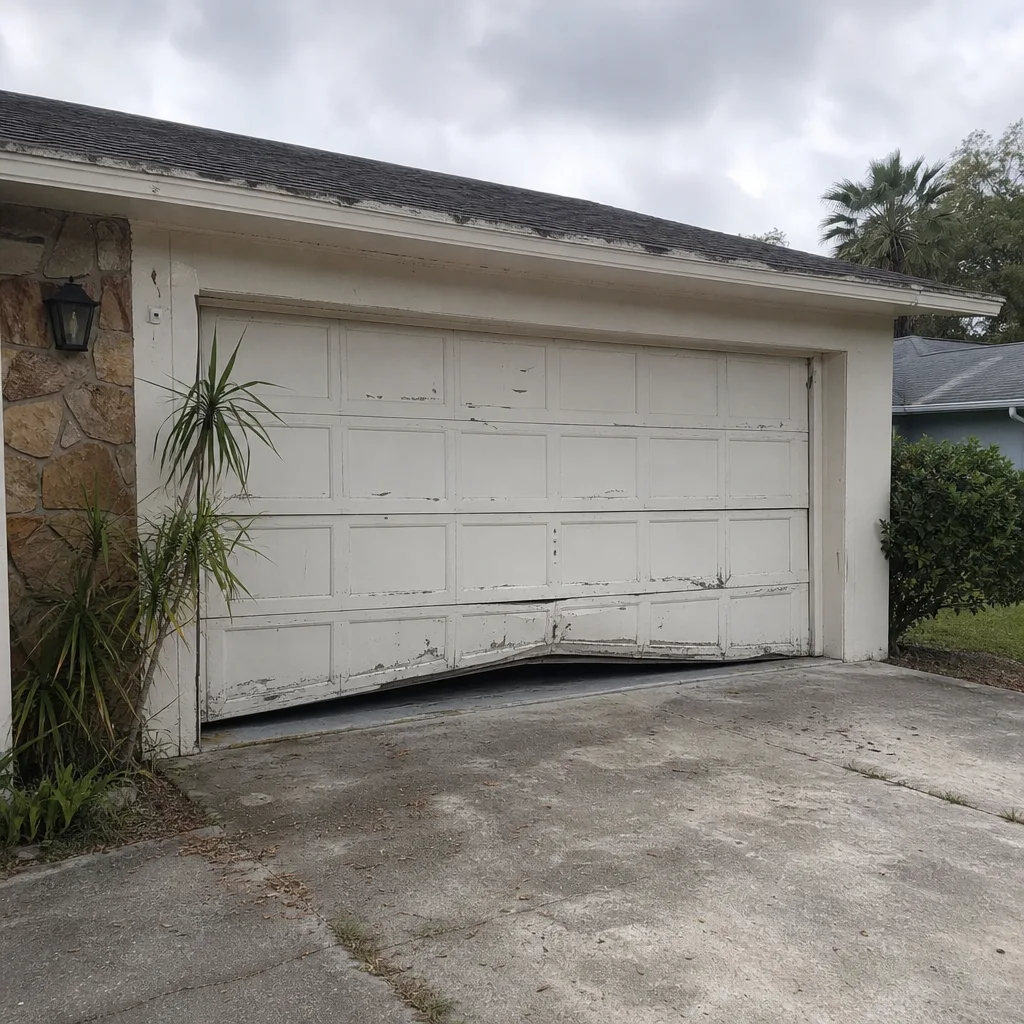
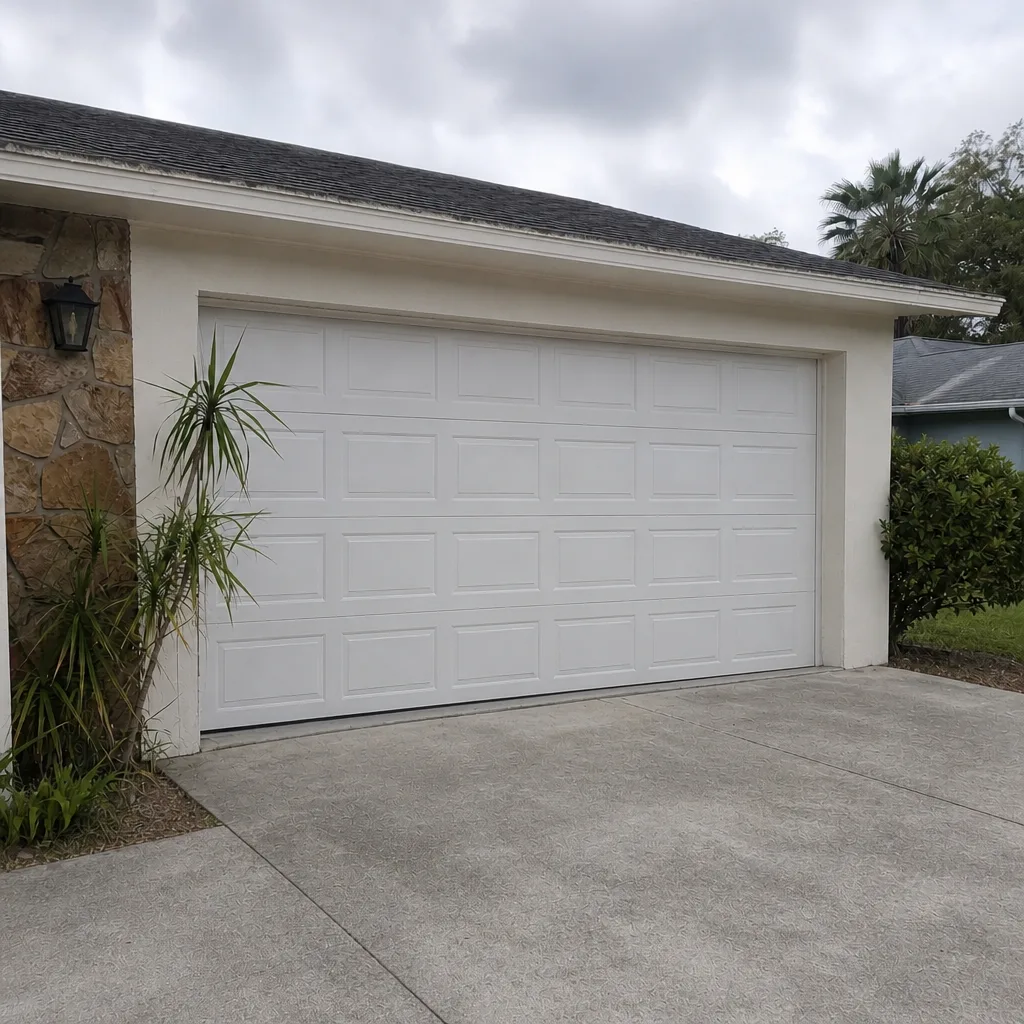
See the difference
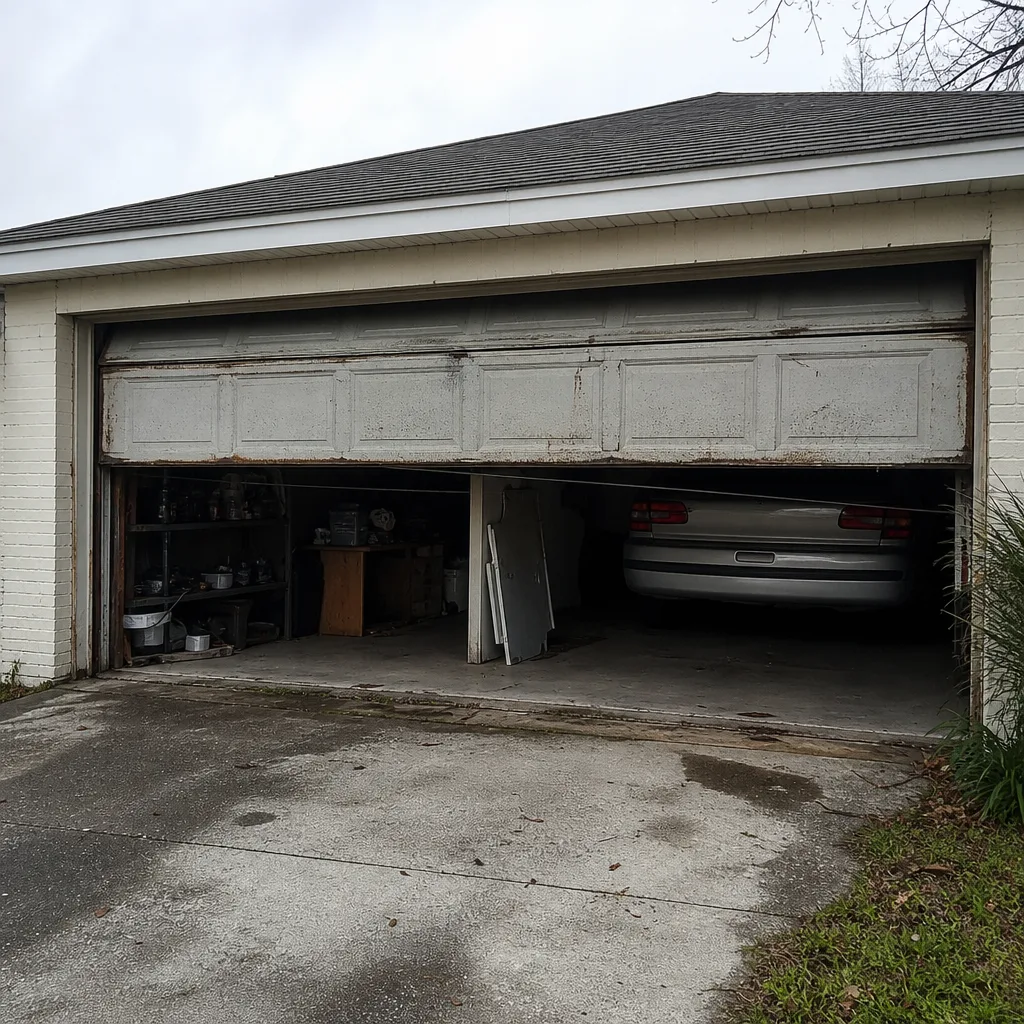 Before
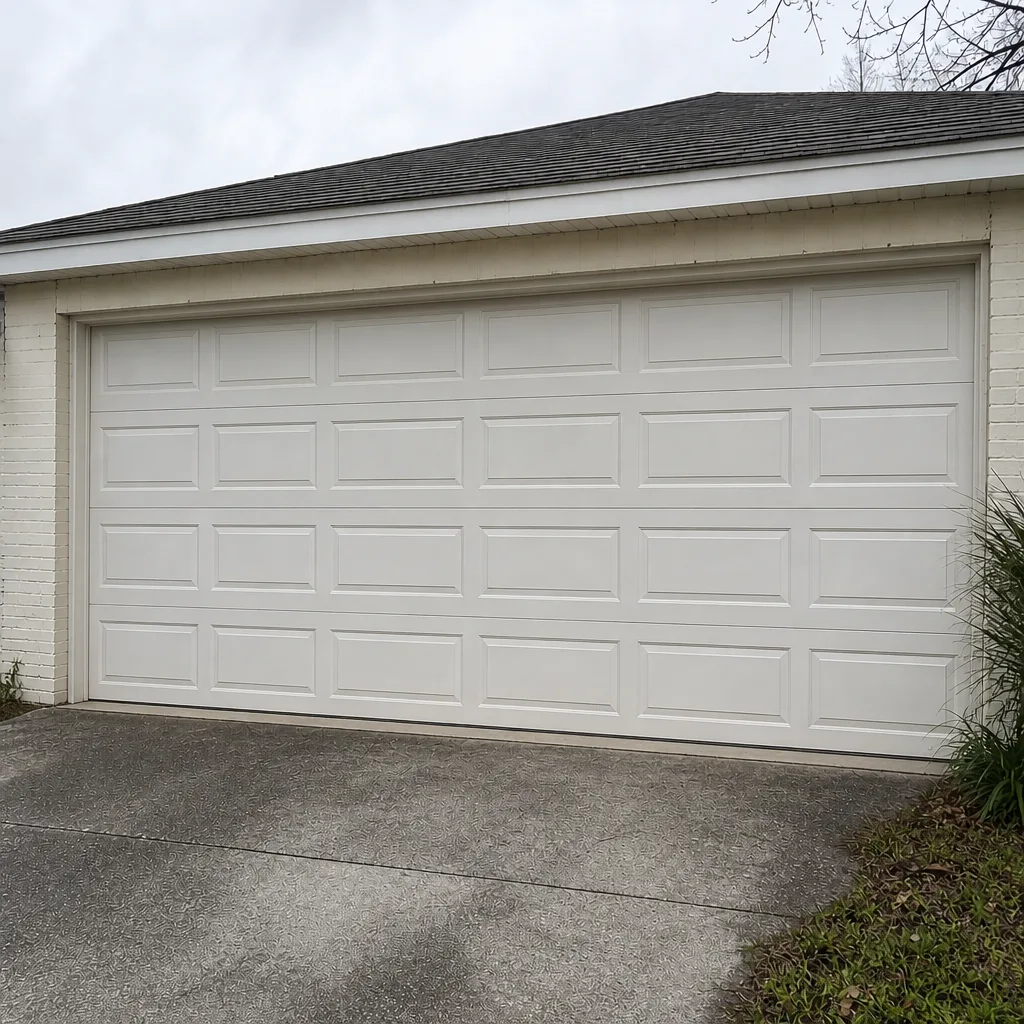 After
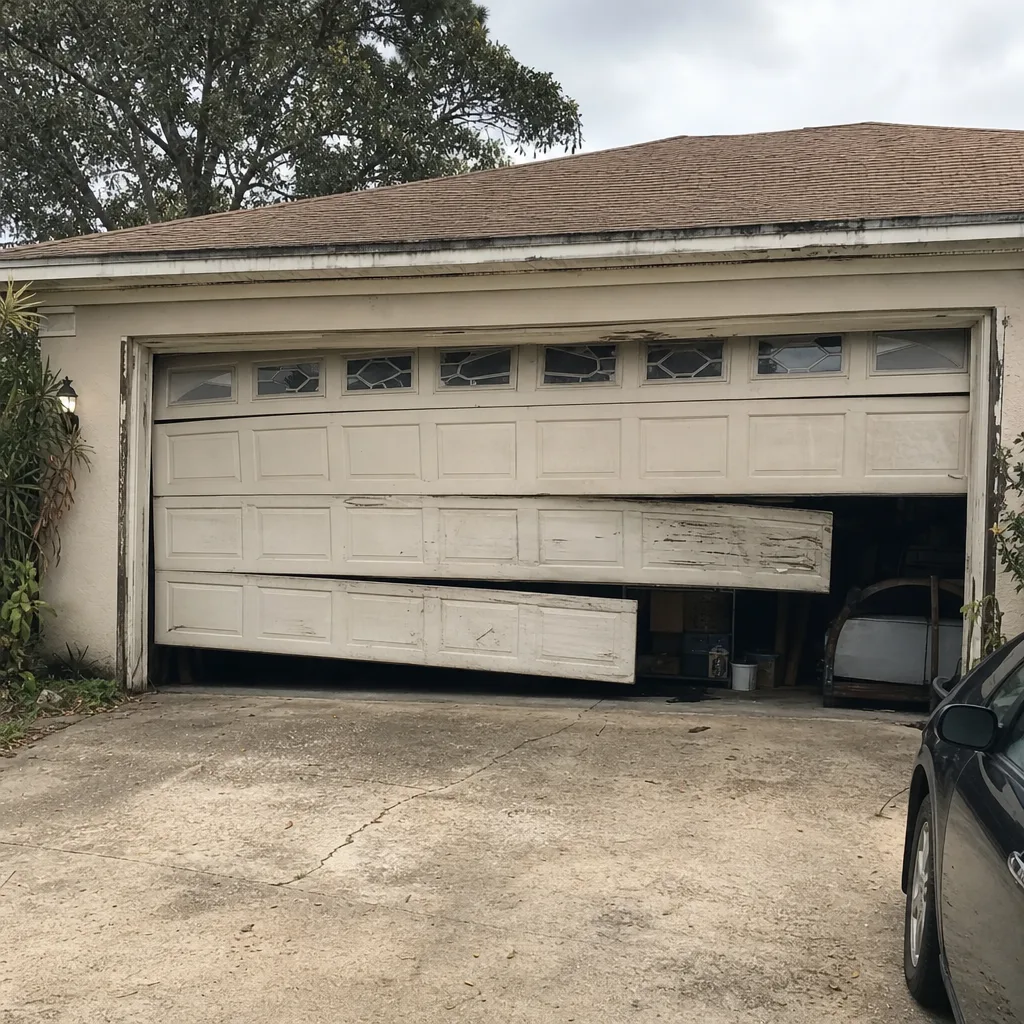 Before
 After
 Before
 After
When to Call a Professional
Call right away when a spring has snapped, the door has come off its track, a cable looks frayed or slack, or the opener runs but the door doesn’t move after you’ve confirmed the release works. Stop using the door if it’s uneven, if it lifts only a few inches, or if the bottom seal is dragging hard enough to strain the motor. Sensor alignment and lubrication you can handle; everything on that list you shouldn’t. Port Orange Garage Door Repair Co offers free estimates in Port Orange. Call (877) 492-2561 for an accurate diagnosis, and we’ll tell you whether a repair is the right answer or whether you should be looking at replacement. We answer 24/7. Fast dispatch from 7am to 7pm, Sunday through Friday, and we’re closed on Saturday. The price is quoted and agreed before any work starts, and the written estimate sets the final price.
Frequently Asked Questions
It usually means a spring has lost tension or broken, or your opener’s logic board is cutting power early. Run the manual release test: if the door is too heavy to lift by hand, the spring is the problem. If it lifts easily but the motor stops, suspect the opener.
Yes. A torsion spring holds the door’s full weight under tension, and unwinding it safely takes the right tools and training. This is not a DIY job.
A misaligned or dirty safety sensor is the most likely cause. Clean both photo eyes, check that they point at each other, and clear anything blocking the beam. If the reversal continues after that, the sensor or its wiring needs a professional check.
Pull the manual release. If the door lifts easily by hand, the opener motor or its internal gear is the problem. If the door is heavy or stuck, the spring or track is at fault.
Most repairs fall into a few common ranges, but the exact price is set by a written estimate after someone has seen the door. Estimates are free, and we agree on the price before any work starts. Call (877) 492-2561 for an exact quote.
We handle same-day repair calls across Port Orange, and emergency calls come first. Call (877) 492-2561. We answer 24/7. Fast dispatch from 7am to 7pm, Sunday through Friday. A call outside dispatch hours is booked into the next opening.
Yes. We’re certified to service eight major brands, including LiftMaster, Chamberlain, Genie, Clopay, Amarr, Wayne Dalton, Craftsman, and Raynor.
The Bottom Line
The goal of troubleshooting isn’t to become a garage door technician. It’s to know whether you’re looking at a cheap, safe fix or a job best left to a trained hand. Run the manual release test first, then match your symptom to its likely cause. Handle the sensor and lubrication work yourself; leave springs, cables, and off-track doors to a professional. If the problem is unclear, describe it precisely, get a written estimate, and agree on the price before anyone starts. Repair first, replace only when it makes sense. For Port Orange Garage Door Repair Co, that’s a diagnosis, not a sales call. Call (877) 492-2561 for a free estimate, and if you want the big picture on what we do, start at Port Orange Garage Door Repair Co.
Written by the team at Port Orange Garage Door Repair Co.