
Last updated November 21, 2026
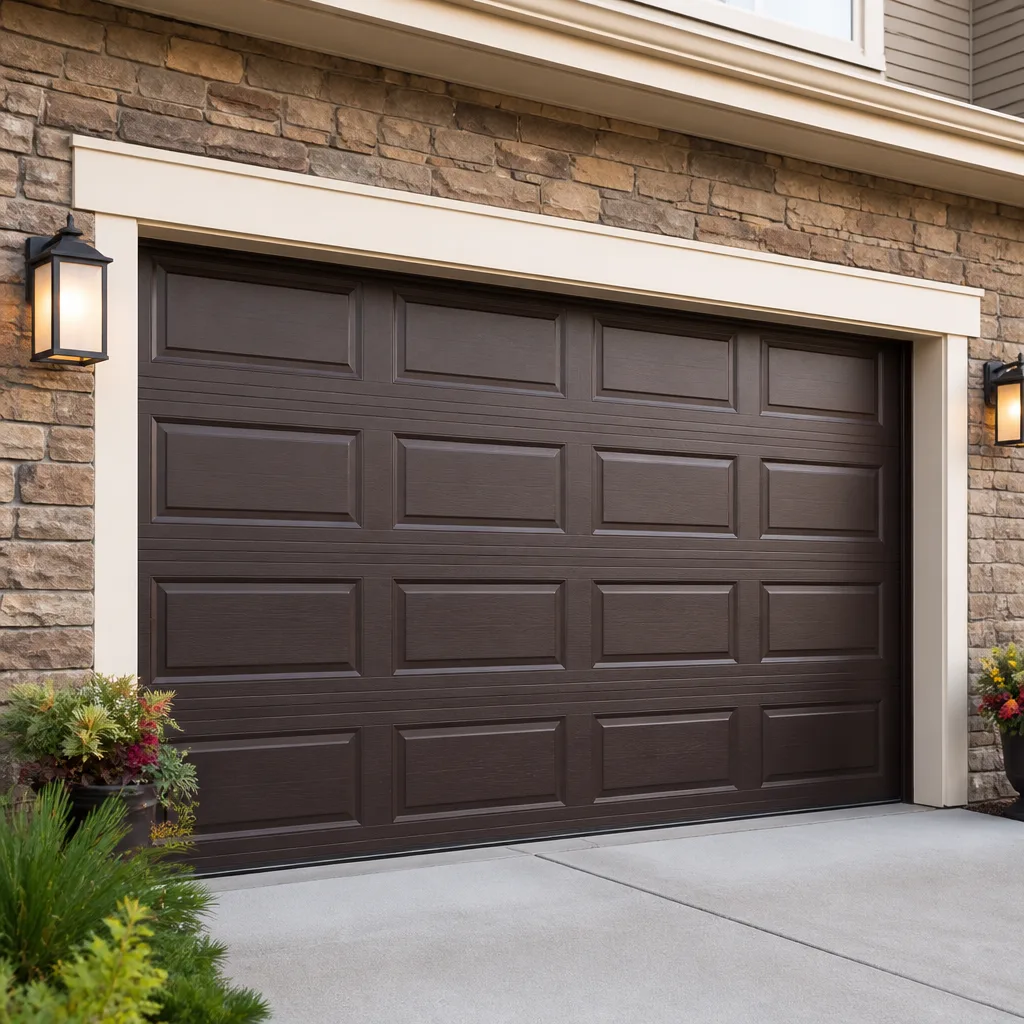 Raised-panel steel
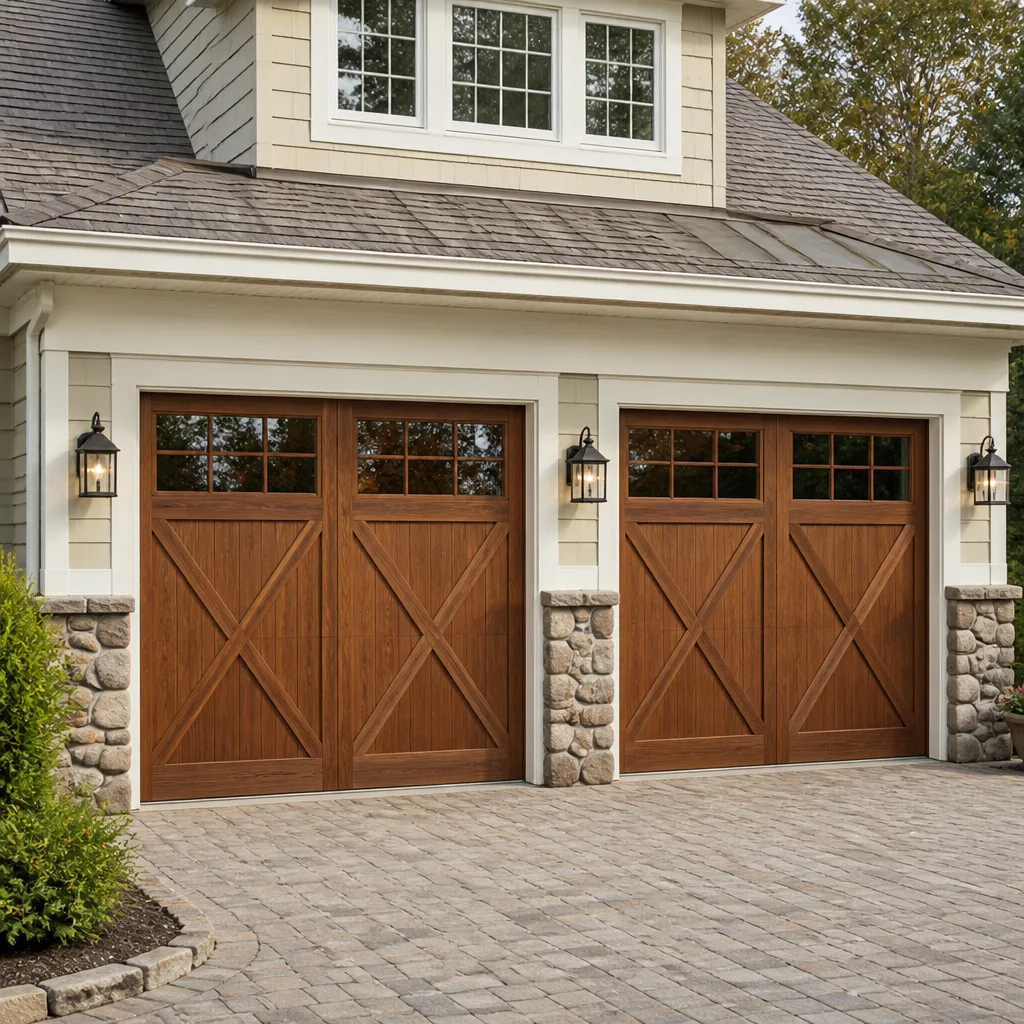 Carriage house
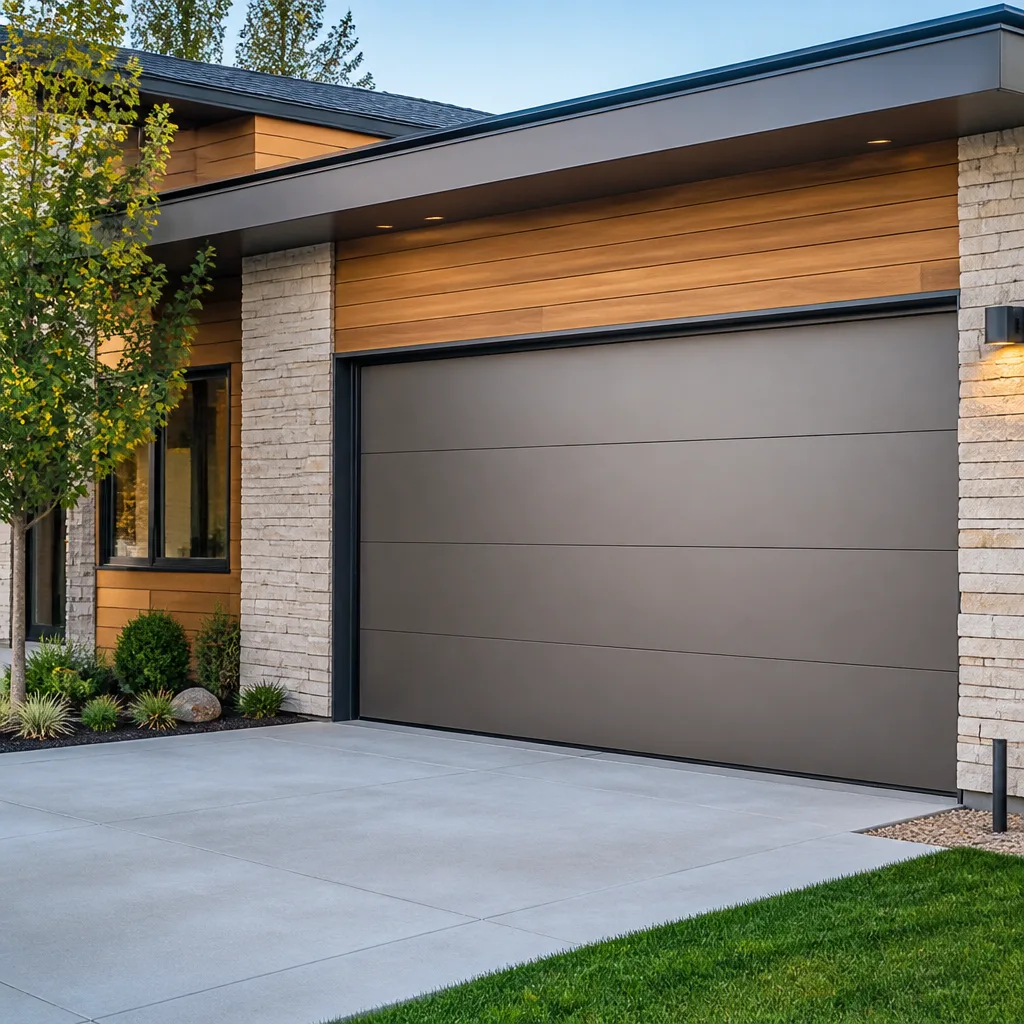 Modern flush
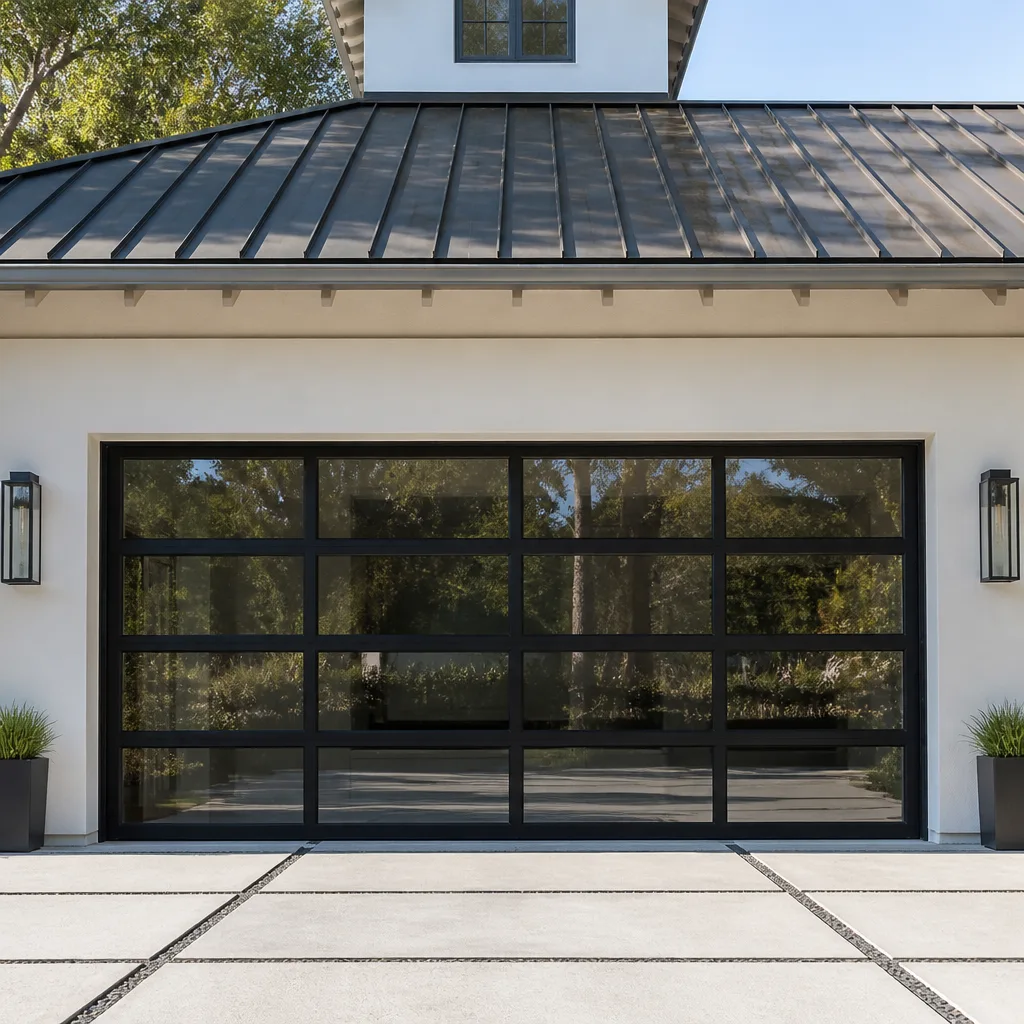 Full-view glass
 LiftMaster openers
 Chamberlain openers
Full 25-point door and opener safety check with every visit - springs, cables, rollers, tracks, and your LiftMaster or Chamberlain opener included
You get a price before we start. It does not change when the pro arrives.
Get your free estimateGarage Door Repair Maintenance Checklist for Port Orange Homeowners
The garage door failure that surprises you usually didn’t happen overnight. It’s the quarter-inch of rust you walked past every morning, the hinge you meant to oil last spring, the bottom seal that quietly separated from the floor during two rainy seasons. In Port Orange, the humidity and summer downpours speed up wear in ways a national checklist doesn’t account for, so the maintenance window is shorter than most homeowners assume. This guide gives you a task-by-task checklist built for this climate, honest time estimates for each job, and a clear line between what you can safely do yourself and what needs a technician.
Quick Answer
A garage door in Port Orange needs a monthly visual inspection, lubrication every three to four months, a balance and safety-reverse test every month, and a full hardware check after any storm with sustained winds over 45 mph. You can safely handle cleaning, lubrication, seal inspection and testing. Springs, cables, track realignment and opener electrical work belong to a trained technician. Budget about 30 minutes a month for the tasks you can do, and expect a professional service visit roughly once a year.
Styles & brands we work with
- Raised-panel steel
- Carriage house
- Modern flush
- Full-view glass
- LiftMaster openers
- Chamberlain openers
Table of Contents
- Your Monthly 15-Minute Visual Inspection
- Rust Blush on Torsion Bar Ends: The Failure Point National Checklists Skip
- Which Lubricants Hold Up in Florida Heat
- Testing Bottom Seal Integrity Against Heavy Rain
- The Post-Storm Hardware Checklist
- Balance and Safety-Reverse Testing
- Building a Maintenance Log That Works
- What a Professional Annual Service Covers
Your Monthly 15-Minute Visual Inspection
Fifteen minutes once a month catches most of the problems that turn into expensive repairs. Walk the door from the inside with it closed, then again with it open. The goal is comparison: you’re looking for changes from last month, not perfection. A door that looks the same every month is a door that’s holding up.
Work through this checklist in order. Keep a notebook or your phone handy and note anything that looks different.
- Panels and seams. Look along the bottom edge of each panel for bubbling paint, rust spots, or dents from a car bumper or a thrown ball. Small dents can be cosmetic; bent panels that touch each other when the door moves are a sign of a track issue.
- Hinges. Look for white powdery corrosion or loose screws at each hinge. A hinge that’s lost a screw needs that screw replaced, not tightened into a stripped hole.
- Rollers. With the door closed, look at the rollers in the tracks. Plastic rollers should be whole, not cracked or flat on one side. Steel rollers should spin freely by hand.
- Tracks. Check that the vertical and horizontal tracks are straight and the gap between the door edge and track is even top to bottom. Look for debris, spider webs or rust blooms inside the channel.
- Cables. Look at the cables on each side. Fraying, kinks or a cable sitting loose off its drum is a stop-and-call situation. Do not touch them.
- Springs. Look, don’t touch. Check for visible gaps in a torsion spring or a stretched, sagging extension spring. A gap or sag means the spring has failed.
- Torsion bar ends. This is the point most checklists skip. Look at where the torsion bar meets the end plates and bearing brackets. More on this below.
- Bottom seal and weatherstripping. Run your hand along the bottom seal and the side trim. Look for cracks, tears or gaps where daylight shows through.
- Opener head and rails. Look for a loose mounting bracket or a hanging chain. If you have a belt-drive opener, look for a belt that’s visibly frayed.
- Wall button and safety sensors. Confirm the wall button works smoothly and the two safety sensors at the bottom of the tracks have their indicator lights on.
Write down the date and anything you noticed. That record is worth more than you’d think when you’re trying to remember whether the dent was there before the storm.
Rust Blush on Torsion Bar Ends: The Failure Point National Checklists Skip
The ends of the torsion bar, where it passes through the bearing brackets and end plates, are one of the most overlooked failure points on a garage door in a humid climate. National maintenance lists talk about springs and hinges, and they stop there. But Port Orange’s humidity keeps a thin film of moisture on metal surfaces inside the garage, especially on the north-facing wall or wherever the door gets less airflow. That moisture starts a rust blush on the bar ends and bearing plates long before you see rust anywhere else on the door.
Why it matters: the torsion bar spins inside those bearings every single time the door opens. Once rust starts eating into the bearing surface or the bar end, you get a rough, grinding feel, uneven operation and, over time, a bar that wears faster than it should. On a garage door spring repair visit, that’s one of the first things a technician checks, because the springs and the bar work together. A rusty bar end can also make a grinding noise that gets misdiagnosed as an opener problem.
What to check monthly:
- A rust blossom on the end plate or the bearing bracket on either side of the torsion bar
- Orange-brown staining on the bar itself just inside the bearing
- A grinding or scraping sound when the door first starts moving, distinct from a rattle
- White or grey powdery corrosion around the bearing housing
If you see surface rust on the end plate only, a technician can clean and treat it during a routine visit. If the rust has reached the bearing surface or the bar, that’s a parts job, not something to manage with a spray can. We’ve seen this go unaddressed for years on doors that otherwise look fine, which is exactly why we put it near the top of our list for Port Orange homeowners.
Which Lubricants Hold Up in Florida Heat
Silicone spray is the most recommended garage door lubricant on the internet, and in a hot garage it’s also one of the least durable. Silicone sprays are thin, they evaporate their carrier quickly, and in a garage that regularly climbs above 90°F in summer they can thin out and drip off within weeks. That leaves your hinges, rollers and springs running dry right when the metal is expanding and working hardest.
The better choices for Florida heat are a dedicated garage door lubricant (often a lithium-soap or lithium-complex grease in an aerosol can) or a white lithium grease you apply with a small brush. Both stay put longer at high temperatures. A few things to know:
- Use the right lube on the right part. White lithium grease or a dedicated garage door spray on hinges, rollers, springs, and the torsion bar at the bearings. Do not put heavy grease on the tracks.
- Tracks get cleaned, not lubricated. Wipe them down with a damp rag to remove grit, then leave them dry. Lubricant in the track collects dust into a paste that jams rollers.
- Never lubricate the opener rail’s chain or belt with grease. A dry, light spray (often a chain-and-cable lubricant) is the right product, and only on the chain itself, not the rail.
- Watch the drip test. If you see lubricant running down a hinge or collecting on the floor within a week of applying it, the product is too thin for your garage. Switch to something heavier.
- Apply monthly in summer. What lasts three to four months in a mild climate might need reapplying every four to six weeks in a Port Orange garage during the hot stretch.
The weatherstripping on the sides and top can be treated with a light dusting of talc or silicone spray to keep it flexible, but keep that entirely away from the tracks. If your opener has ever seemed to labor on hot afternoons, the lubrication condition of the door is worth checking before you assume the motor is failing. A quick diagnostic of the opener and the door together is what garage door opener repair starts with, because the two have to be looked at as one system.
Testing Bottom Seal Integrity Against Heavy Rain
Most homeowners think of the bottom seal as a draft stopper. In Port Orange, it’s doing a real job against heavy rain. A summer downpour pushes water against the door, and a worn seal lets it under, where it works on the bottom panel and the floor edge of the garage. Over a couple of seasons, that’s where rust starts on a steel door and where paint starts peeling.
Here’s how to test the seal without a lot of fuss:
- The daylight test. Close the door, turn the garage lights off, and stand inside. Any light visible under the door means water can get in during wind-driven rain.
- The paper test. Close the door on a strip of paper at several points along the bottom. If you can pull the paper out without resistance, the seal isn’t making contact there.
- The hose test. With the door closed, spray water gently against the bottom edge from outside for about a minute and watch the inside. If water appears, the seal has failed. This one needs a second person, or a set of eyes you can borrow.
- The drip line test. After a real rain, look for a wet strip on the garage floor along the inside of the door. That’s the seal letting water past.
Also check the threshold. Many Port Orange garages have a low lip at the door opening where water can pool. If your floor stays wet after a storm, the seal isn’t the only thing to look at. The bottom seal itself is usually a homeowner-replaceable part in the right width, but if the bottom panel has rusted through where the seal attaches, that becomes a panel job. If the bottom panel is bent or water-damaged to the point it won’t hold a seal, garage door repair might mean panel replacement rather than a seal swap, and it’s worth having someone look at it before you buy a seal that won’t fit.
The Post-Storm Hardware Checklist
Any storm with sustained winds above 45 mph is worth a walk around the door afterward. Your garage door is the largest moving object in your home, and wind puts stress on the hardware that doesn’t show up until the next time you run the door. This checklist takes about ten minutes and is safe to do yourself, as long as you don’t touch cables or springs.
Check these five hardware points after any storm with sustained winds over 45 mph:
- Track alignment. Look at the gap between the door and the vertical track on each side. If the gap is noticeably different top to bottom, or the track is visibly bowed, stop using the door and call.
- Hinge screws. Run your finger along each hinge and feel for a screw that’s backed out. Replace any that turn by hand.
- Rollers. Check that no roller has popped out of the track or cracked. A roller sitting outside the track is a call-a-technician situation.
- Panel alignment. Close the door and look along the seams. A panel that’s shifted or bent so it rubs against a neighbor needs professional attention.
- Weatherstripping and seal. Look for sections of bottom seal or side trim that have torn loose or blown out.
Also check the opener for any change in sound or speed. A door that ran quietly before the storm and grinds afterward is telling you something. If the door won’t move at all, or the door has come off its tracks, leave it alone and call. Same-day repair for doors that fail after a storm is exactly the scenario we built emergency service around, and it’s better to have someone look at it before you try to force the door by hand. A door that’s off track or has a broken spring is under tension, and forcing it is how people get hurt.
Balance and Safety-Reverse Testing
Two tests tell you whether your door and its safety systems are working correctly. Run both once a month. They’re fast, safe and they catch problems that would otherwise surprise you.
The balance test:
- Disconnect the opener with the manual release cord (pull it straight down with the door fully closed).
- Lift the door by hand to about halfway open.
- Let go. A properly balanced door stays put at the halfway point. If it drops, the springs are losing tension. If it rises, they’re too tight.
- Reconnect the opener by running it until the carriage re-engages.
The safety-reverse test:
- Place a piece of wood or a roll of paper towels about two inches tall on the floor in the door’s path.
- Close the door using the wall button or remote.
- The door should reverse and open when it contacts the object. If it keeps going, the opener needs adjustment and you should stop using the door until it’s fixed.
- Also check the two safety sensors at the bottom of the tracks: pass an object between them while the door is closing and confirm the door reverses.
Both tests involve nothing more dangerous than a wooden block. They do not require you to touch the springs, cables or opener wiring. If either test fails, the fix is usually in the opener’s travel or force adjustments, and those are easy to get wrong. On modern openers, including LiftMaster and Chamberlain units, the adjustment dials are small and the manual is specific about the order to turn them. If the door fails either test, it’s worth having a technician set it correctly.
Building a Maintenance Log That Works
A simple written log does two things: it gives you real documentation if a warranty claim ever comes up, and it gives the next technician something useful to work from instead of a guess. The best log is short enough to actually keep.
Keep a single sheet or a note on your phone with these fields:
- Date of task. One line per month is fine.
- What was checked. A quick shorthand: “lubed,” “seal OK,” “balance OK,” “grinding noise noted.”
- Anything out of the ordinary. Note the date a symptom first appeared. “Grinding started April 3” tells a technician far more than “the door has been noisy.”
- Any professional visit. Note what was done, which parts were replaced, and the brand of any opener component.
- Brand and model of your door and opener. Write this at the top. It saves time on every future call, especially when your system uses Clopay, Chamberlain or Genie parts that need the right fit.
The most valuable entries are the boring ones. A homeowner who can say “I’ve been logging it monthly and the balance test started failing in November” is a lot easier to help than one who says “it just started acting up.” It also helps for warranty purposes on new doors, where manufacturers often want to see that routine maintenance was done.
One practical note: if you’ve never kept one, start with today’s date and an honest note on what condition the door is in. The log will build from there.
What a Professional Annual Service Covers
Once a year, an annual service visit handles the tasks that either need tools, need training, or need someone experienced enough to spot wear before it becomes a failure. This is where the homeowner line and the technician line actually meet.
An annual service visit usually covers:
- Full inspection of springs, cables, drums and bearings, including the torsion bar ends.
- Balance and force setting on the opener, checked with a scale to confirm the door’s actual travel.
- Track alignment and tightening of all hardware to spec.
- Roller and hinge inspection with replacement of any worn parts.
- Safety-reverse test and sensor check.
- Lubrication of all moving parts with a product appropriate for the climate.
- Evaluation of the door’s overall condition, with a clear recommendation on repair versus replacement.
A few things an annual visit also does that a checklist can’t: it catches a spring losing tension before it breaks, it spots a worn cable before it snaps, and it evaluates the coupling between the door and the opener so the motor isn’t fighting a door it can’t move efficiently. In our experience, the door that gets serviced every year is the one that doesn’t leave you stranded. If you’re not sure what state your door is in, a free estimate from Port Orange Garage Door Repair Co is a good starting point.
Common Mistakes to Avoid
- Lubricating the tracks. Tracks are meant to be clean and dry. Lubricant in the track collects grit and grabs the rollers, and it’s the single most common cause of a door that suddenly feels stiff. Wipe the tracks; don’t oil them.
- Using WD-40 on hinges and springs. Standard WD-40 is a water displacer, not a durable lubricant. It evaporates and leaves metal drier than before in Florida heat. Use a dedicated garage door or white lithium lubricant.
- Trying to adjust springs yourself. Torsion springs are under extreme tension and can cause serious injury if released incorrectly. This is the job for a trained technician, full stop.
- Ignoring a grinding or scraping sound. Most grinding noises come from a worn roller, a dry bearing or a misaligned track. Diagnosing early costs less than diagnosing after a track has been bent by a door that’s been fighting it for months.
- Patching rust instead of finding the cause. Paint over a rust spot and it comes back, usually within a season in this humidity. The cause is usually a failing seal or a leak in the weatherstripping that needs to be fixed first.
- Never checking the balance test. Doors that slowly lose spring tension don’t fail overnight. They fail once the balance test has been failing for months and nobody noticed. The balance test is free to run and takes two minutes.
- Running the door after a storm without a walk-around. A ten-minute inspection after a storm with sustained winds over 45 mph catches track and hardware issues before the opener makes them worse.
See the difference
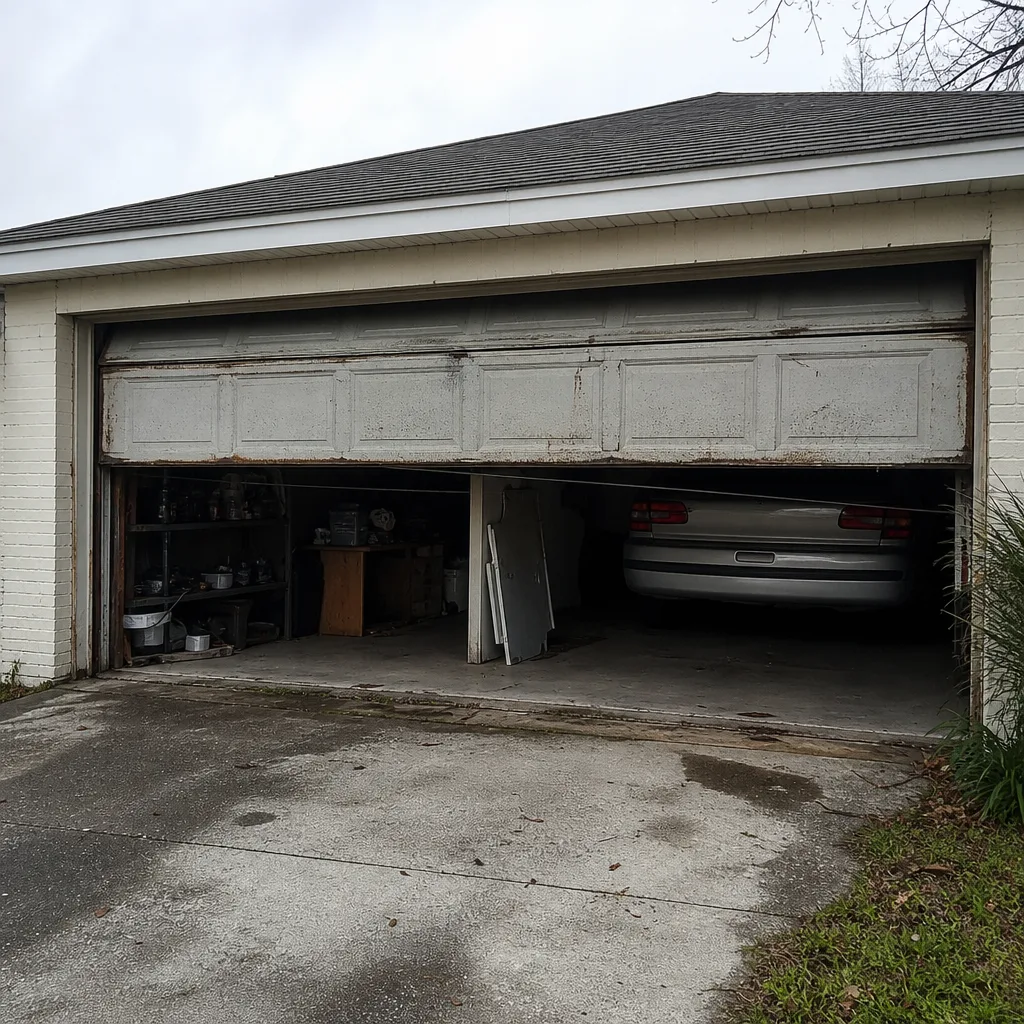 Before
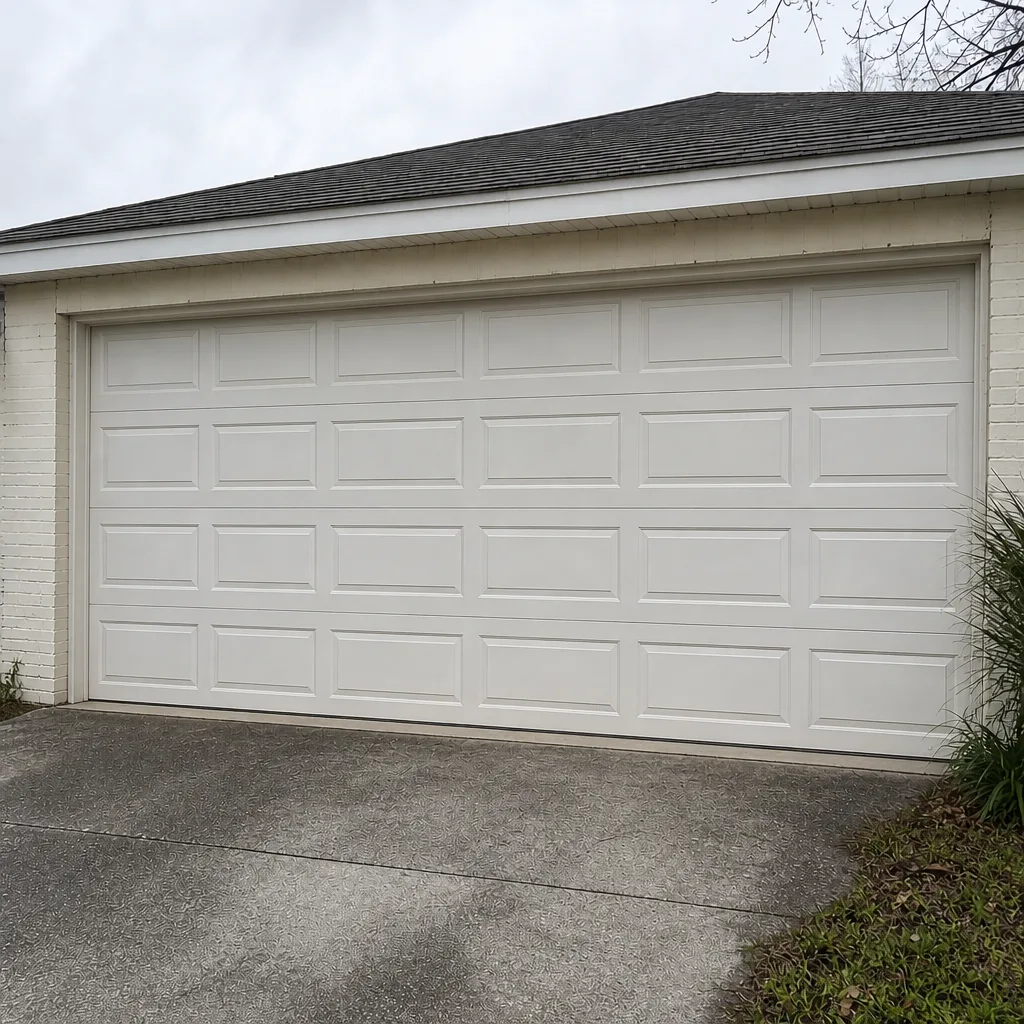 After
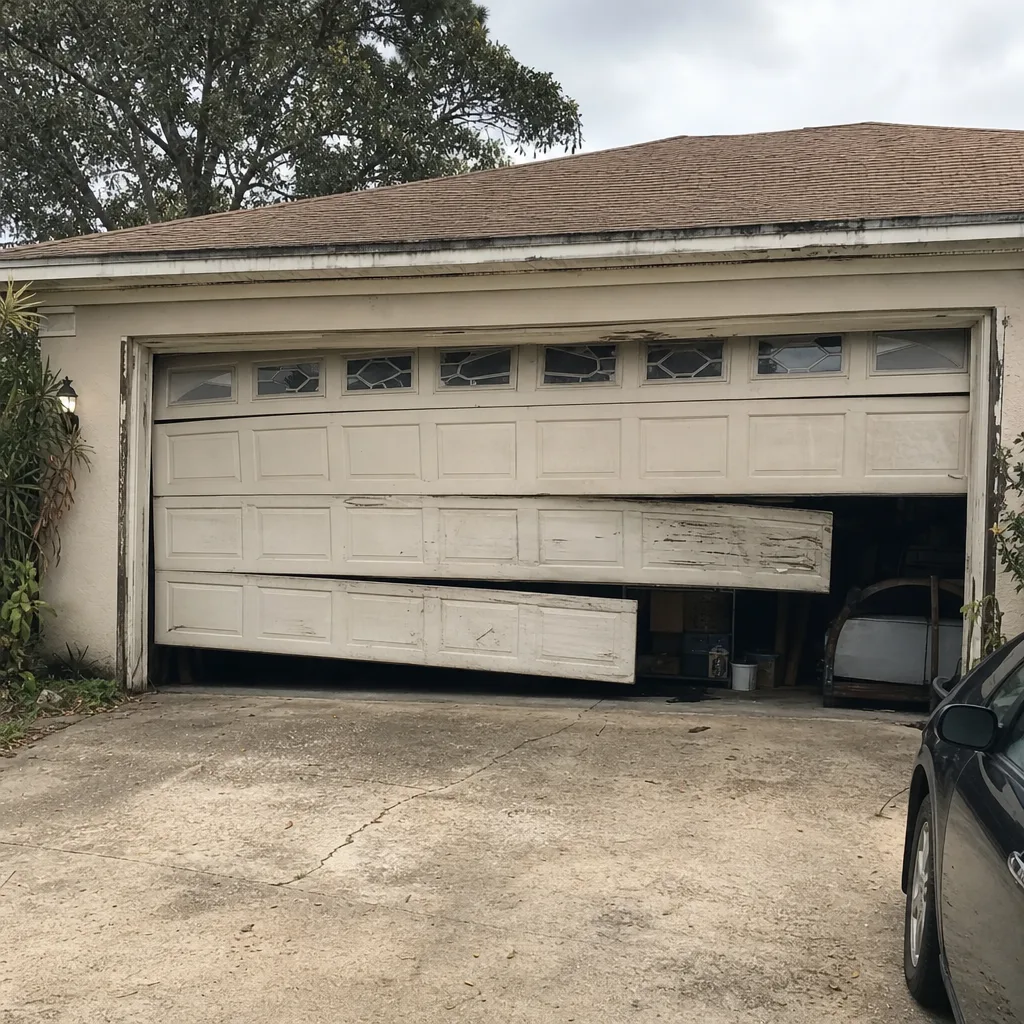 Before
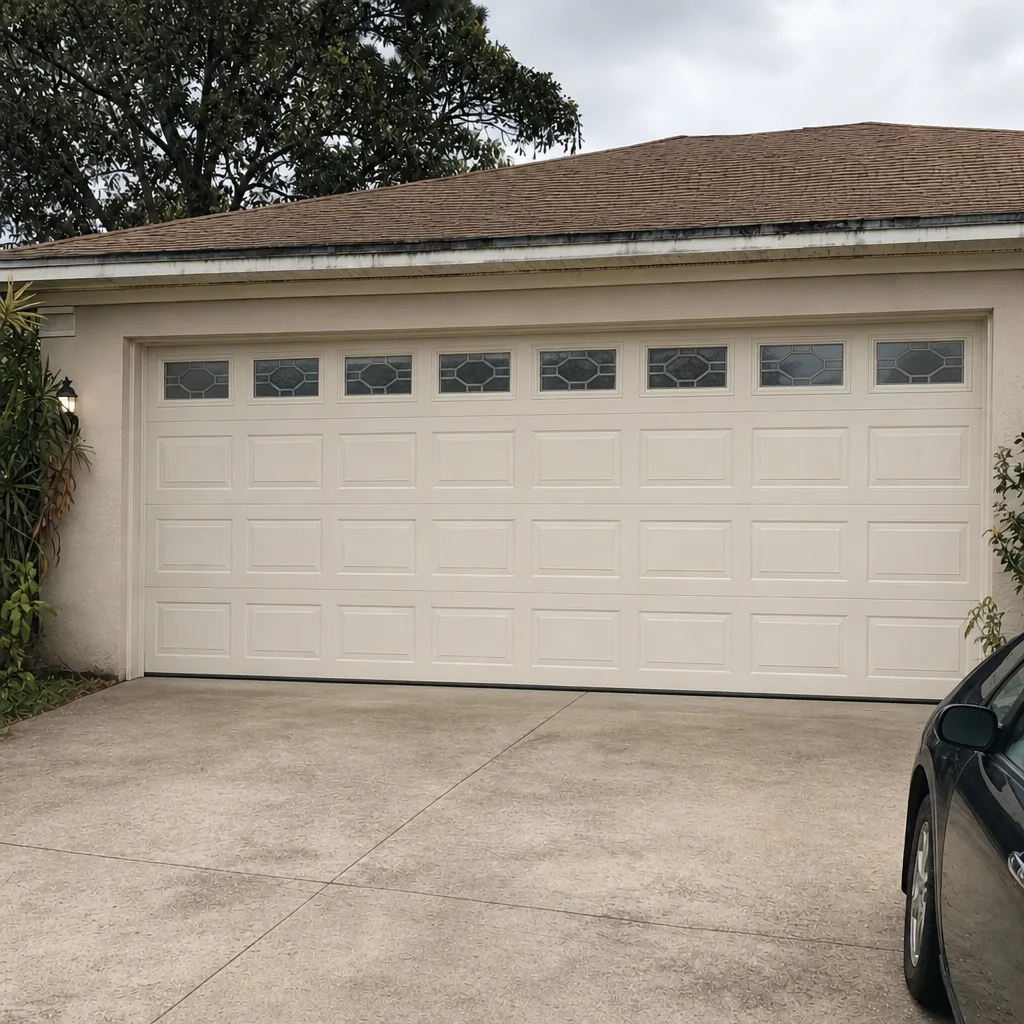 After
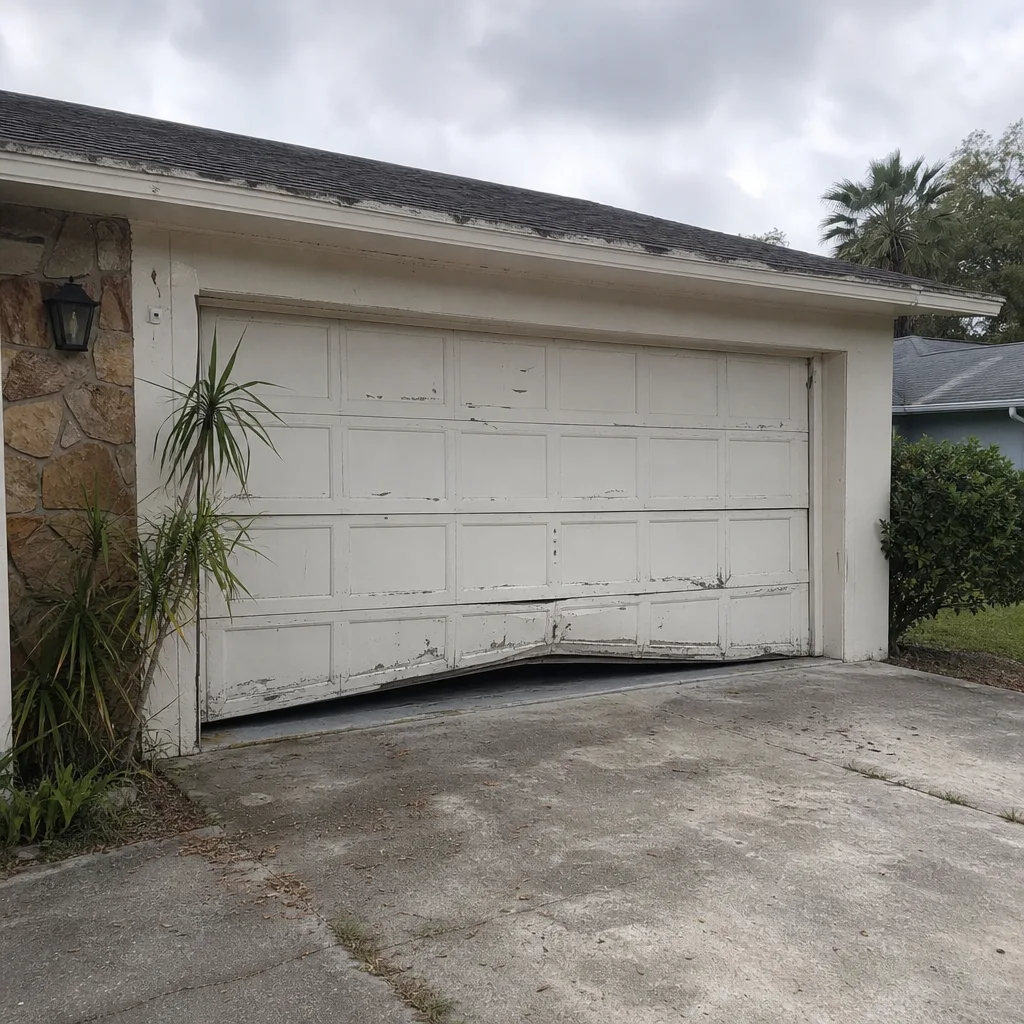 Before
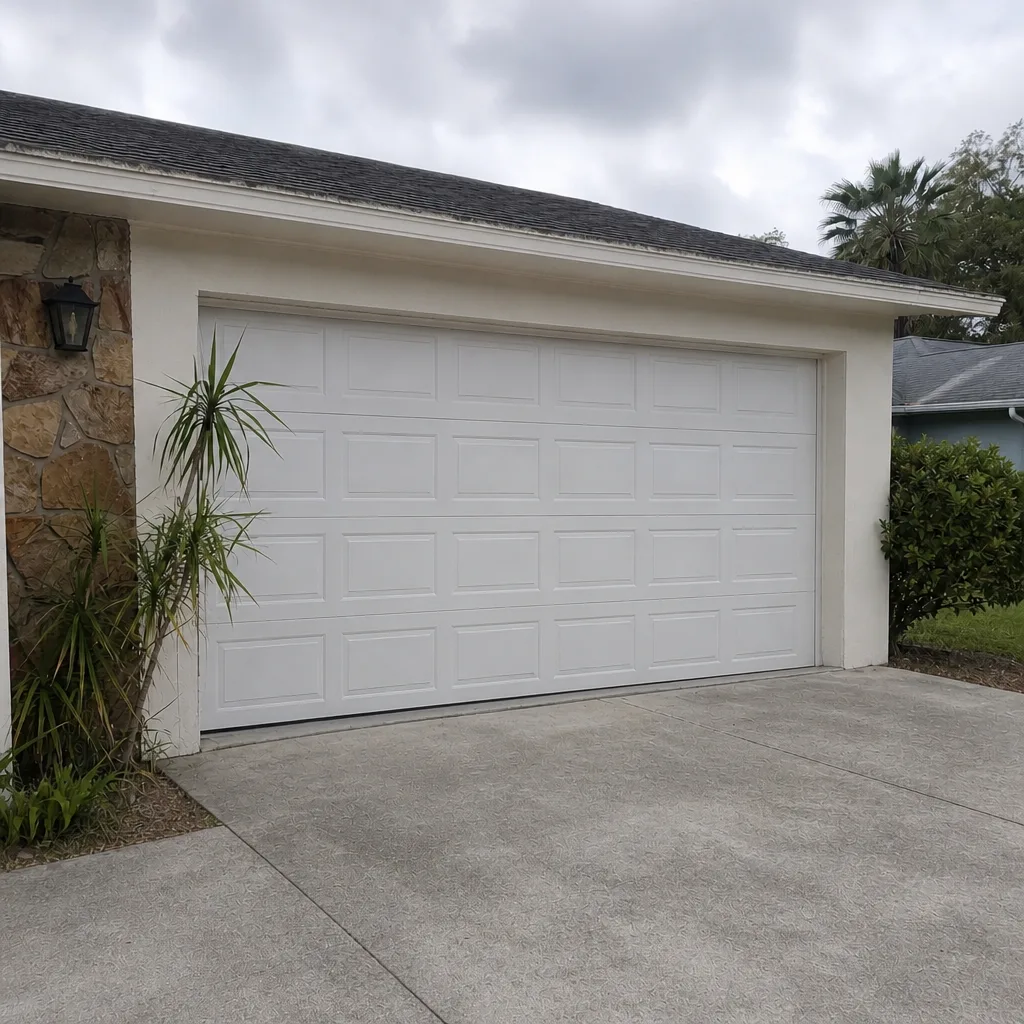 After
When to Call a Professional
Call a technician when the door’s balance test fails, when you see a spring with a visible gap or a stretched extension spring, when the safety-reverse test doesn’t work, or when a cable is frayed, kinked or sitting off its drum. Call when the door is off its tracks, when the opener makes a new grinding sound or won’t reverse, when a panel is bent so it rubs against a neighbor, and when you’re not sure whether a repair or replacement makes more sense. Spring and cable work is dangerous and belongs to a trained technician every time. Port Orange Garage Door Repair Co offers free estimates in Port Orange – call (877) 492-2561. We answer 24/7, with fast dispatch from 7am to 7pm, Sunday through Friday.
Frequently Asked Questions
Every three to four months in general, and closer to every four to six weeks during the hot summer stretch. The higher humidity and hotter garage temperatures in Port Orange cause thin lubricants to break down faster than they would in a drier climate. Use a dedicated garage door lubricant or white lithium grease on hinges, rollers, springs and the torsion bar bearings, and keep the tracks clean and dry.
No. Garage door springs are under extreme tension and can cause serious injury if handled incorrectly, which is why spring repair is a job for a trained technician. A torsion spring or extension spring can release violently if it’s not handled with the right tools and technique. Call a professional for spring work. Port Orange Garage Door Repair Co treats spring repair as a core service and can give you a free estimate on the job. Call (877) 492-2561.
Check five hardware points after any storm with sustained winds over 45 mph: track alignment, hinge screws, rollers, panel alignment and the bottom seal and weatherstripping. If the door is off its tracks, has a visibly bent panel or won’t move at all, stop using it and call a technician. Don’t try to force a door by hand after a storm; it may be under tension.
A routine annual service visit is priced per job by a written estimate, and a free estimate tells you exactly what your door needs before any work begins. The price you agree to at the estimate is the price that gets billed. For a specific number, call (877) 492-2561 for a free estimate.
Yes, and the biggest gains come from the simplest tasks. Regular lubrication, a monthly balance test and a post-storm walk-around prevent most of the wear that turns into repair calls. The maintenance log also helps with warranty claims and gives any future technician a clear picture of the door’s history.
A homeowner check covers visual inspection, cleaning, lubrication and testing. A professional service covers spring, cable and bearing inspection, opener force and travel settings, track alignment to spec, and the judgment call on repair versus replacement. Both matter, and the homeowner check is what makes the professional visit more useful. Call (877) 492-2561 for a free estimate on a professional service visit.
The Bottom Line
Garage door maintenance in Port Orange comes down to a short monthly routine and one annual professional visit. The monthly routine takes about fifteen minutes: a visual walk-around, a lubrication check appropriate to the heat, a bottom seal test against heavy rain, and the balance and safety-reverse tests. After any storm with sustained winds over 45 mph, add the five-point hardware check. Log everything, even the boring months, and note the brand of your door and opener at the top. When something fails the balance test, gives a grinding sound or shows a rust blossom at the torsion bar end, call a technician. Port Orange Garage Door Repair Co works on the brand you already have, from LiftMaster and Chamberlain openers to Clopay and Genie doors, and can tell you whether a repair or replacement is the right call. Call (877) 492-2561 for a free estimate. We answer 24/7. Fast dispatch from 7am to 7pm, Sunday through Friday. Visit Port Orange Garage Door Repair Co for more.
Written by the team at Port Orange Garage Door Repair Co.