
Last updated November 21, 2026
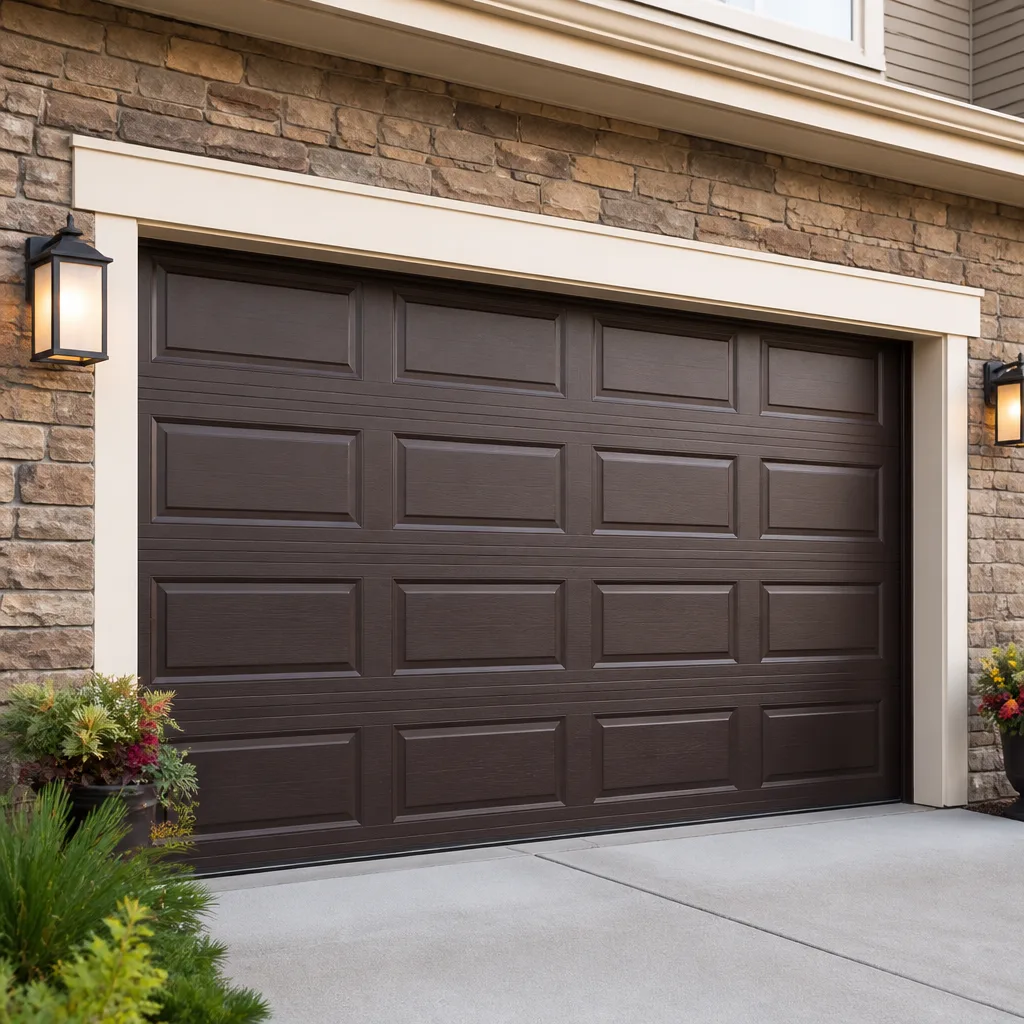 Raised-panel steel
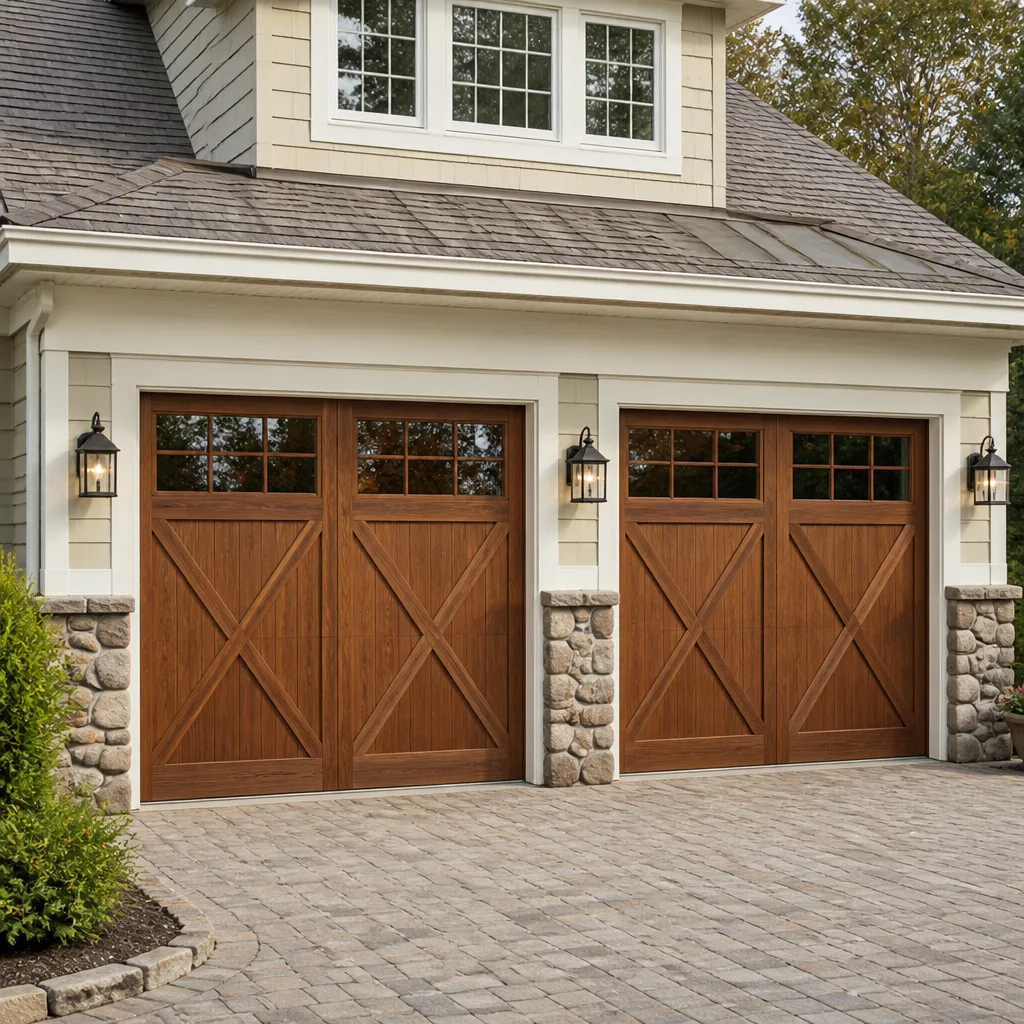 Carriage house
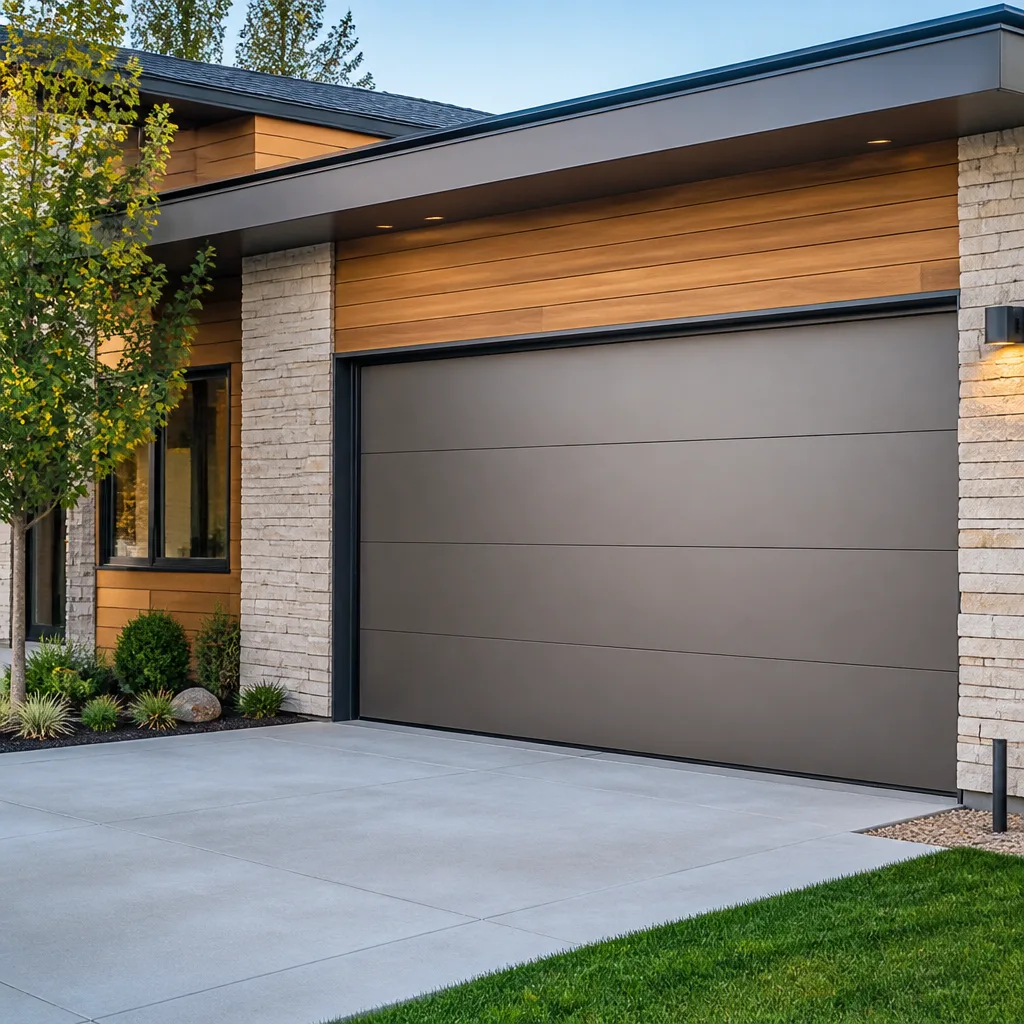 Modern flush
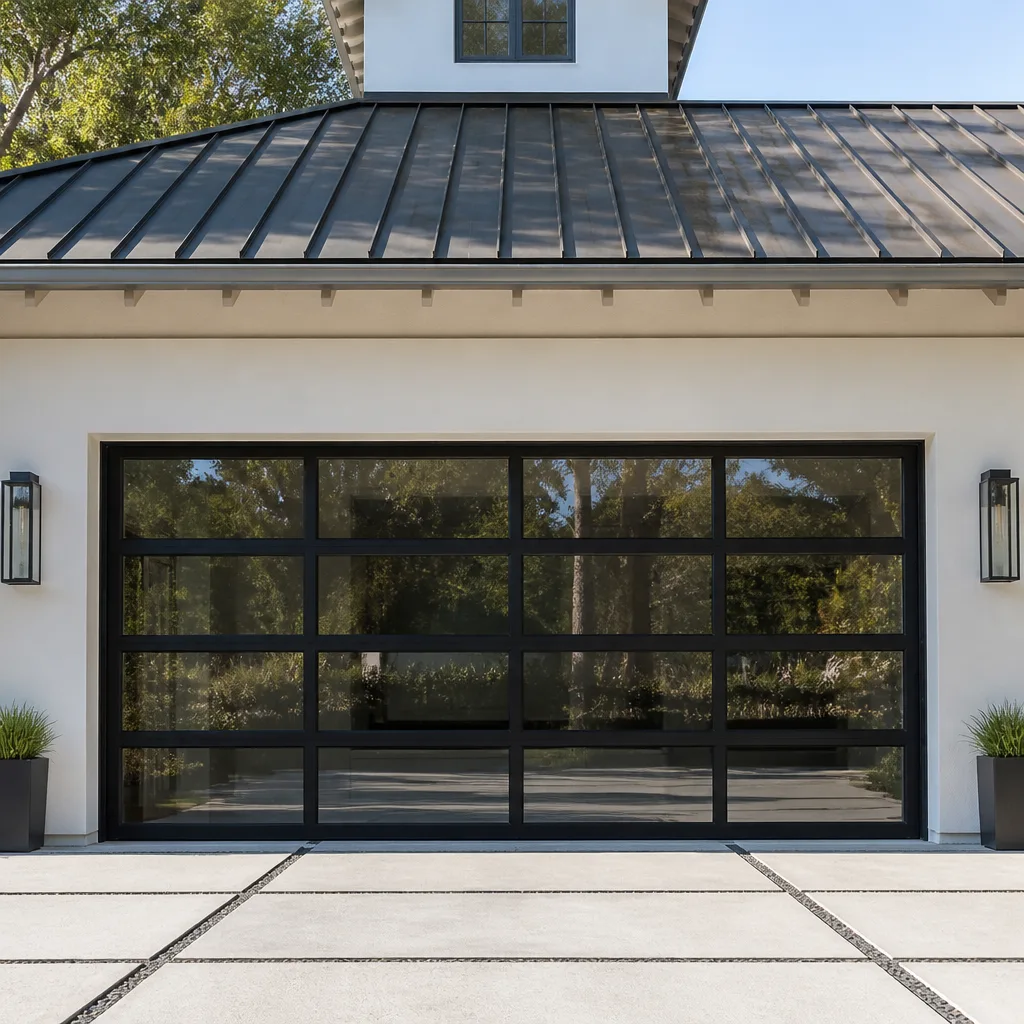 Full-view glass
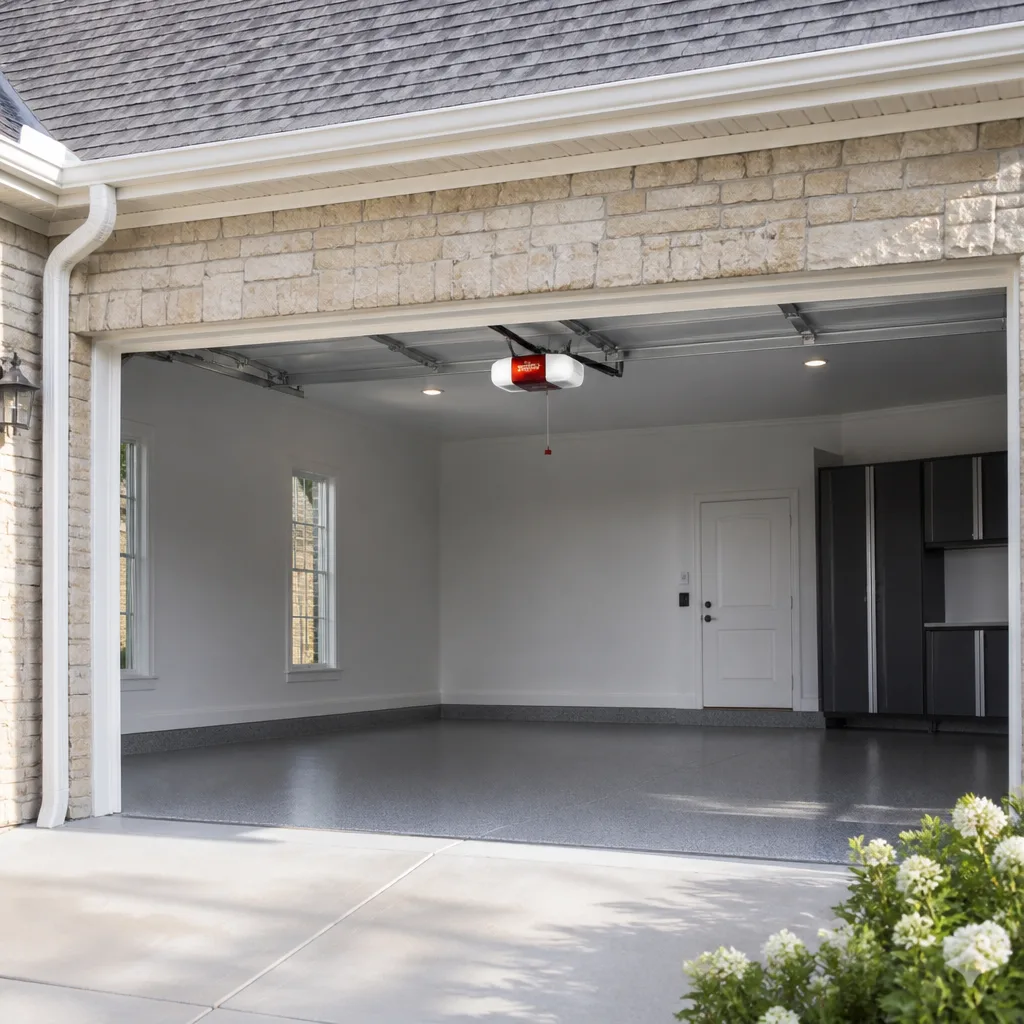 LiftMaster openers
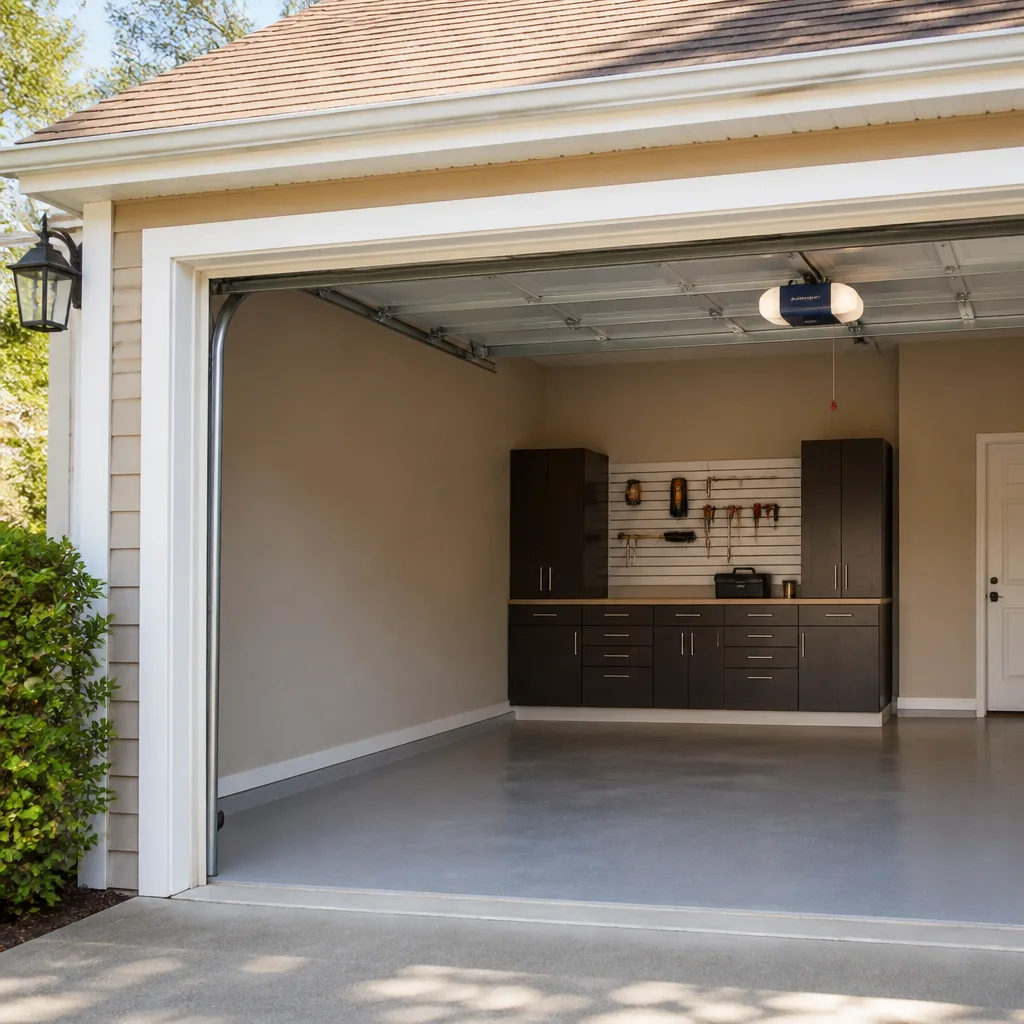 Chamberlain openers
Full 25-point door and opener safety check with every visit - springs, cables, rollers, tracks, and your LiftMaster or Chamberlain opener included
You get a price before we start. It does not change when the pro arrives.
Get your free estimateThe Complete Guide to Garage Doors in Port Orange
Most garage door guides are written for the Midwest. They talk about snow load, road salt, and freeze-thaw cycles that never happen here. That advice doesn’t translate. Port Orange gets soaked with rain, sits inside a hurricane evacuation zone, and builds most of its homes on slab-on-grade foundations. Those three facts change what kind of door holds up, how long the springs last, and what hardware survives more than a couple of seasons. This guide follows one door through its whole life, from choosing it on a spec sheet to the day you have to decide whether to repair or replace. Along the way you’ll learn how to read a wind rating, why cycle numbers matter more than brand names, and what the housing stock in Port Orange actually tells you about your own repair timeline.
Quick Answer
The best garage door for a Port Orange home is a wind-rated steel door (check how the rating is documented, not just the label), paired with galvanized or stainless hardware and a spring rated for high daily cycles, because the humidity and two-car usage here wear parts faster than the national average. Your typical repair window on original hardware in 1985-2005 construction is shorter than you’d expect. When it fails, a qualified technician diagnoses it in one visit, quotes the price before any work starts, and fixes it, rather than selling a full replacement you don’t need.
Styles & brands we work with
- Raised-panel steel
- Carriage house
- Modern flush
- Full-view glass
- LiftMaster openers
- Chamberlain openers
Table of Contents
- What “Wind-Rated” Actually Means in Volusia County
- Why Slab-On-Grade Foundations Change Spring Tension
- The Humidity Corrosion Timeline: Galvanized vs. Stainless vs. Coated
- Reading Cycle Ratings Against Real Port Orange Usage
- The Repair-or-Replace Decision by Housing Age in Port Orange
- Brand Fluency: Why It Matters That Your Tech Knows Your Door
- Hurricane Season Prep Without the Panic Buying
- Common Mistakes to Avoid
What “Wind-Rated” Actually Means in Volusia County
Volusia County’s building code uses a design wind speed of 130 mph for most residential construction. That number drives how a garage door has to be built and anchored, and it’s the difference between a door that protects the house in a storm and one that becomes a giant sail. A garage door is the largest opening in most homes. When it fails under wind pressure, the pressure has to go somewhere, and it usually goes into the roof.
“Wind-rated” on a spec sheet is not a single promise. It’s a stack of tested details. Look for three things:
- A documented design pressure rating matched to 130 mph or higher, listed with the specific door size. A rating on a small door doesn’t transfer to a wide one.
- Reinforcement that ships with the door, not as an add-on. The struts, hinges, and brackets all matter.
- Anchoring instructions for the track and the header. A powerful door on weak anchorage still comes down.
Clopay and Amarr both publish wind-load documentation for their product lines, and a knowledgeable installer will pull it for your exact size before ordering. This is the part homeowners skip. They see “hurricane-rated” on a label and call it done. In Port Orange, ask for the paperwork behind the label. Code wind ratings are set at the county level, so if you’re unsure what applies to your address, your city’s building department is the source.
One more thing that doesn’t get said enough: reinforcement keeps the door in the opening, but it adds weight. A wind-rated door with heavier panels needs a stronger spring setup and, often, a more capable opener. Those pieces have to be planned together.
Why Slab-On-Grade Foundations Change Spring Tension
Most subdivisions in Port Orange are built on slab-on-grade foundations. That means the garage floor sits at roughly the same elevation as the rest of the house, and the ceiling height in the garage is set by the plate line above it. Homes with raised garages run into a different set of constraints. The difference matters because of one measurement: the height from the floor to the spring shaft and the clearance above the door.
Here’s how it plays out. Torsion springs generate lift based on their wire size, coil count, and the number of turns they’re wound. Change the height of the door opening and you change how many turns the spring needs. A tech who orders springs off the door’s model number alone, without measuring the actual opening and the ceiling clearance, can install a spring that’s under- or over-tensioned. Sometimes it works for a month before the door starts creeping up or slamming down.
The right sequence for a spring replacement is:
- Measure the door width, height, and weight.
- Measure the ceiling clearance and the drum circumference.
- Check the counterbalance type (torsion, extension, or a low-headroom setup).
- Match the spring to the door’s actual weight, not the label on the panel.
- Test the balance after installation by disconnecting the opener and lifting the door halfway.
Springs are dangerous. A wound torsion spring stores enough energy to cause serious injury in a fraction of a second, and the tools involved are not things you’ll find in a typical homeowner’s kit. This is not a DIY job. If your door is off-balance or the spring has visibly failed, stop using it and call for a technician. Our group of vetted local pros handles garage door spring repair as a core service, with the training to do it safely and the right springs on hand.
The Humidity Corrosion Timeline: Galvanized vs. Stainless vs. Coated
Central Florida humidity works on garage door hardware in a way that dry climates simply don’t. You don’t need salt air in the equation. Warm, damp air alone is enough to start oxidation on bare steel, especially inside a garage that also holds lawn equipment, pool chemicals, or a parked car dripping wet from a rainstorm.
The practical ranking of hardware from most to least durable in Port Orange conditions:
- Stainless steel: The best long-run choice for hinges, rollers, and fasteners. Higher upfront cost, but it rarely needs replacing for corrosion alone.
- Galvanized steel: The common middle option. Works well when the zinc coating is intact, but scratches open the door for rust. You’ll see surface rust on high-wear points after a few seasons.
- Painted or powder-coated steel: Depends entirely on the coating. A good powder coat lasts; a thin spray job chips off fast. Check the rollers and bottom brackets first, since they take the most abuse.
Rollers deserve their own mention. Nylon rollers won’t rust at all, but they can flat-spot under heavy use. Steel rollers are stronger but corrode faster in humidity. For most Port Orange homeowners, a mix works: steel rollers with regular lubrication on doors that get light use, nylon on doors that cycle every day.
The bottom brackets and the bottom panel are the two places moisture collects. If you’re doing a visual inspection, those are the first spots to check for bubbling paint, white rust, or flaking coating. Catching it there is a fifteen-dollar fix. Catching it after the bottom bracket seizes is a much bigger job.
Reading Cycle Ratings Against Real Port Orange Usage
A cycle is one full open plus one full close. Most spring warranties are written in cycles, not years, and that’s the number you should care about. A typical two-car household in Port Orange uses the door about six to eight times a day. Do the math: at seven cycles daily, that’s roughly 2,555 cycles a year, and around 25,000 cycles over a decade of steady use.
Standard springs are commonly rated somewhere in the 10,000 to 15,000 cycle range. Higher-cycle springs go well beyond that. If you’re replacing a spring, ask what the new one is rated for, and compare it to your household’s actual daily pattern. A family that uses the door as the primary entry point on a two-car home should not accept a standard-cycle spring just to save a few dollars; you’ll be back in the same repair sooner.
Opener motor ratings follow the same logic. A motor rated for a certain number of cycles per day will run hot and shut down if you exceed it. Pay attention to what happens when the opener refuses to run after a burst of use: that’s usually a thermal protection trip, not a failure, and it points to a motor that’s undersized for how the household actually uses the door.
We see this in Port Orange because a lot of homes have their garage as the front door. The door comes up to let the dog out, comes up again to grab something from the car, comes up again for the groceries. A door that “only” cycles a few times a day in a spec sheet cycles far more in real life. Factor that in when you’re choosing springs, rollers, and an opener. Our technicians have up to 14 years of experience matching components to how a home actually uses its door, which is the difference between a repair that lasts and one that comes back.
The Repair-or-Replace Decision by Housing Age in Port Orange
Port Orange’s housing stock is dominated by construction from the mid-1980s through the mid-2000s. That’s a specific window, and it gives you a starting point for the repair-or-replace question. Here’s how we think through it.
Doors from the 1980s to early 1990s
These doors have often been through one or two hardware replacements. If the panels are intact and the track isn’t bent, a full spring and roller refresh can keep the door running several more years. If the panels are rusted through at the bottom or the torsion tube is worn at the bearing plates, replacement usually makes more financial sense than chasing repairs across multiple visits.
Doors from the mid-1990s to early 2000s
This era of door is often the best candidate for targeted repair. Panel condition tends to be decent, and the hardware is usually the failure point. A spring replacement, new rollers, and an opener tune-up can restore the door to reliable operation. Many of these doors also predate wind-load requirements, so if you’re serious about storm protection, that’s a reason to consider upgrading to a wind-rated door even if yours is repairable.
The decision matrix
- One failure (spring, roller, opener): Repair.
- Two or more failures within a year: Price the replacement against the next two years of likely repairs.
- Bent track or damaged panels: Often replacement, because track and panel sourcing for older doors gets expensive fast.
- Non-wind-rated door in an evacuation zone: Lean toward replacement, or at minimum add a wind retrofit if one is available for your door type.
- Cosmetic issues only: Repair. A functioning door that looks tired still works.
We can honestly assess both sides because we work on the whole job spectrum, from repair to full installation, so there’s no conflict of interest pushing you toward a new door. That’s a real problem with companies that only install, and it’s worth knowing which kind you’re calling.
Brand Fluency: Why It Matters That Your Tech Knows Your Door
There are dozens of garage door and opener systems installed across Port Orange, and they’re not all built the same. A blanket “we fix anything” approach looks fine until the tech shows up and has to guess whether the opener is a Wayne Dalton with a specific logic board revision or a Craftsman with a different receiver. Guesswork costs you diagnostic time and, sometimes, a part that didn’t need replacing.
We’re certified on eight major brands and we work across all of them: LiftMaster, Chamberlain, Genie, Clopay, Amarr, Wayne Dalton, Craftsman, and Raynor. In practice, that means when we walk up to your door, we’re already familiar with the mechanical layout, the opener’s programming sequence, and the failure points that particular model is known for. For garage door opener repair, that knowledge shortens the visit and reduces the chance of ordering the wrong part.
If you’re shopping parts or deciding what to buy, a few notes on the brands you’ll see most in Port Orange:
- Clopay and Amarr: Both publish wind-load documentation, which matters here. Familiarity with their product lines helps when you’re comparing a new door.
- Wayne Dalton: Common in older Port Orange homes. Sourcing certain panels can take more lead time, so a full-system view of the door helps avoid piecemeal ordering.
- Craftsman: Frequently paired with the opener line, which is good to know when a lockout or programming problem shows up.
What this comes down to is simple. We work on the brand you already have. You don’t need to replace the whole system because one component is unfamiliar to a generalist.
Hurricane Season Prep Without the Panic Buying
The right time to prep a garage door for hurricane season is spring, not the day before a storm forms. Panic buying at the hardware store produces cracked panels from jury-rigged reinforcement and openers that fry under a load they weren’t built for. Stand in your garage in March and work through this checklist instead.
- Confirm the wind rating of your current door. Look for the documentation, not the advertising copy. If you don’t have it, ask a technician to inspect the door and identify what it’s rated for.
- Check the bottom seal. A damaged bottom seal lets water push in under wind pressure. Replace it if it’s cracked or torn.
- Test the auto-reverse safety feature. Place a two-by-four flat on the ground and run the door down. It should reverse on contact. If it doesn’t, that’s a safety fix, not a cosmetic one.
- Lubricate the moving parts. Rollers, hinges, springs, and the opener’s rail. A light application is enough; excess grease collects grit.
- Look for corrosion at the bottom brackets and panel edges. These are the first places to fail in the humidity and are the spots that let wind-driven rain in.
- Confirm the opener is functioning correctly. The last thing you want is a door that works during a storm warning and fails when you need to leave.
If anything on that list is beyond you, call a technician in. The check is quick, and the fix is usually cheaper than the damage a storm can do to a door that wasn’t ready.
Common Mistakes to Avoid
- Treating “hurricane-rated” as a single checkbox. The rating needs to be documented for your exact door size and match the design wind speed for Volusia County. Ask for the paperwork, not the sticker.
- Buying the cheapest spring you can find. Cycle rating matters more than price on a two-car household in Port Orange that uses the garage as the main entry. A lower-cycle spring fails faster.
- Doubling up on springs or buying mismatched pairs. Torsion springs should be replaced as a matched pair. One new spring against one worn spring will wear the new one out quickly, and the door won’t stay balanced.
- Running the door on a visibly broken spring. This stresses the opener and can cause the door to fall unevenly. A broken spring means the door stays closed until a tech arrives.
- Ignoring corrosion on the bottom bracket. Small, rusted hardware points are cheap to replace early and expensive to recover from once they seize or shear.
- Adding hurricane reinforcement to a door that wasn’t designed for it. Reinforcement changes the load on the springs and the opener. If you’re hardening the door, do it as a system.
- Calling an installer when you need a repair. A company that only installs has an obvious incentive to sell you a new door. A multi-brand service company can tell you honestly which is the right call.
See the difference
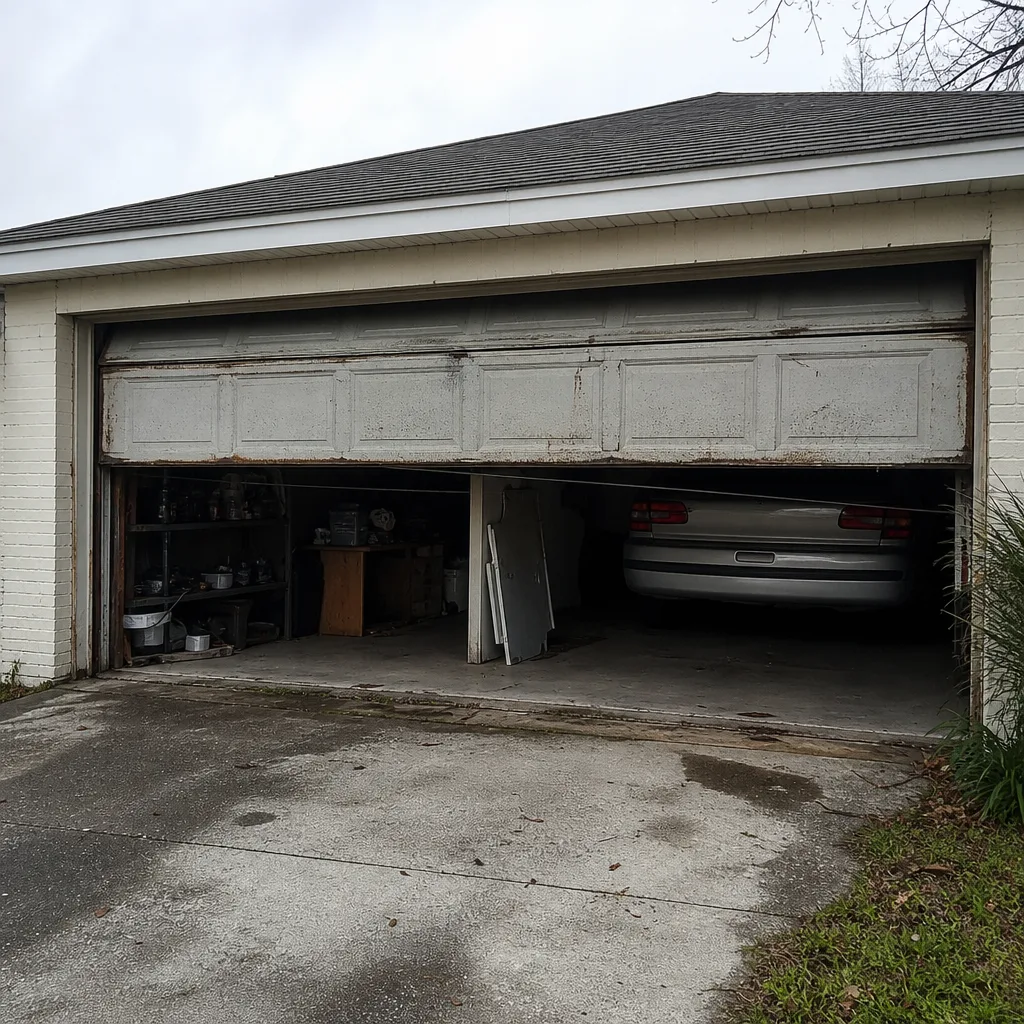 Before
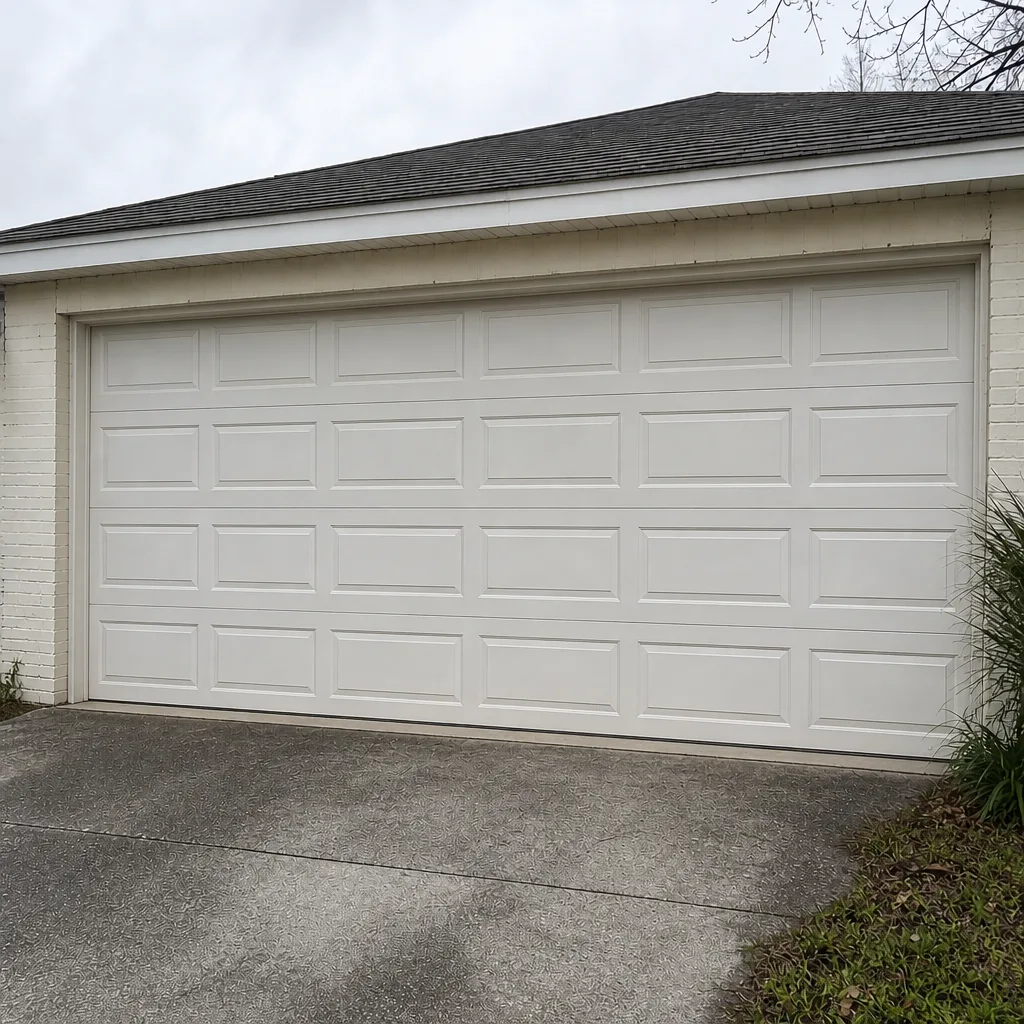 After
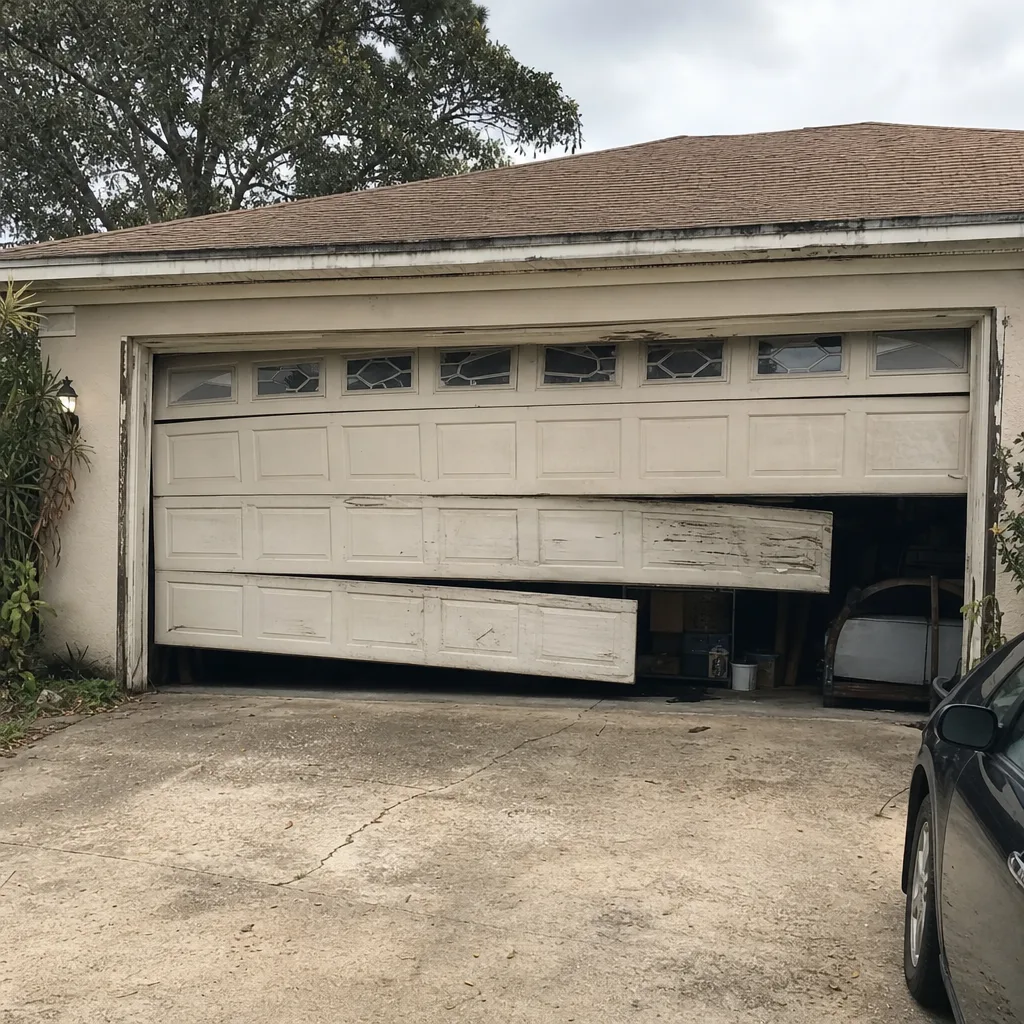 Before
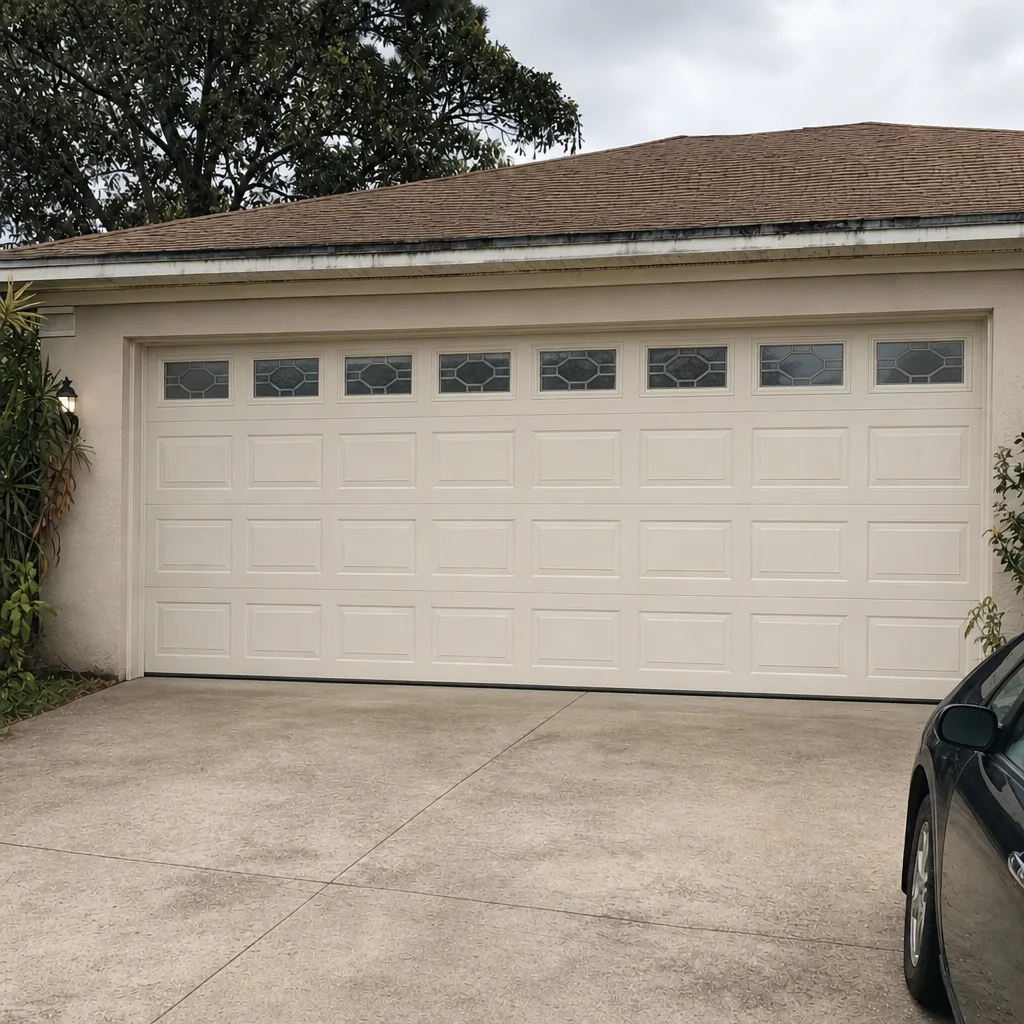 After
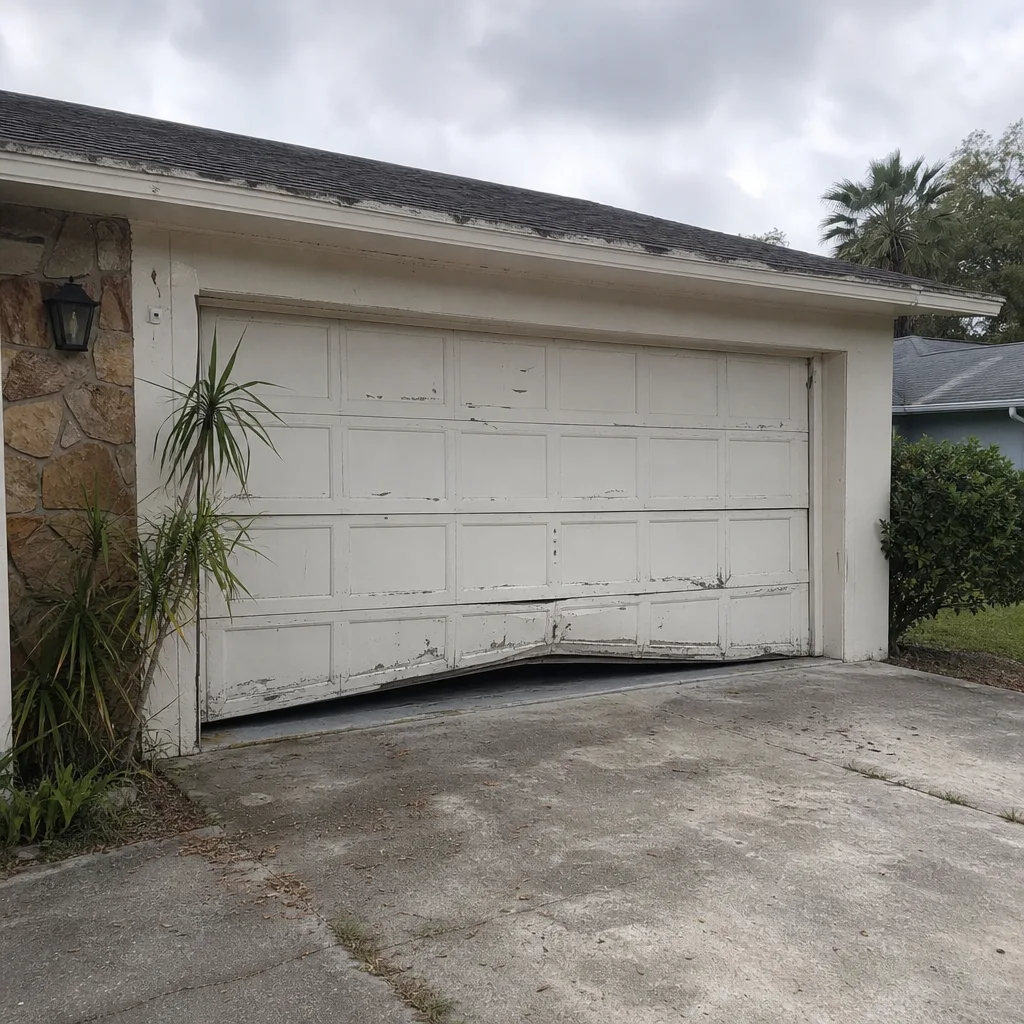 Before
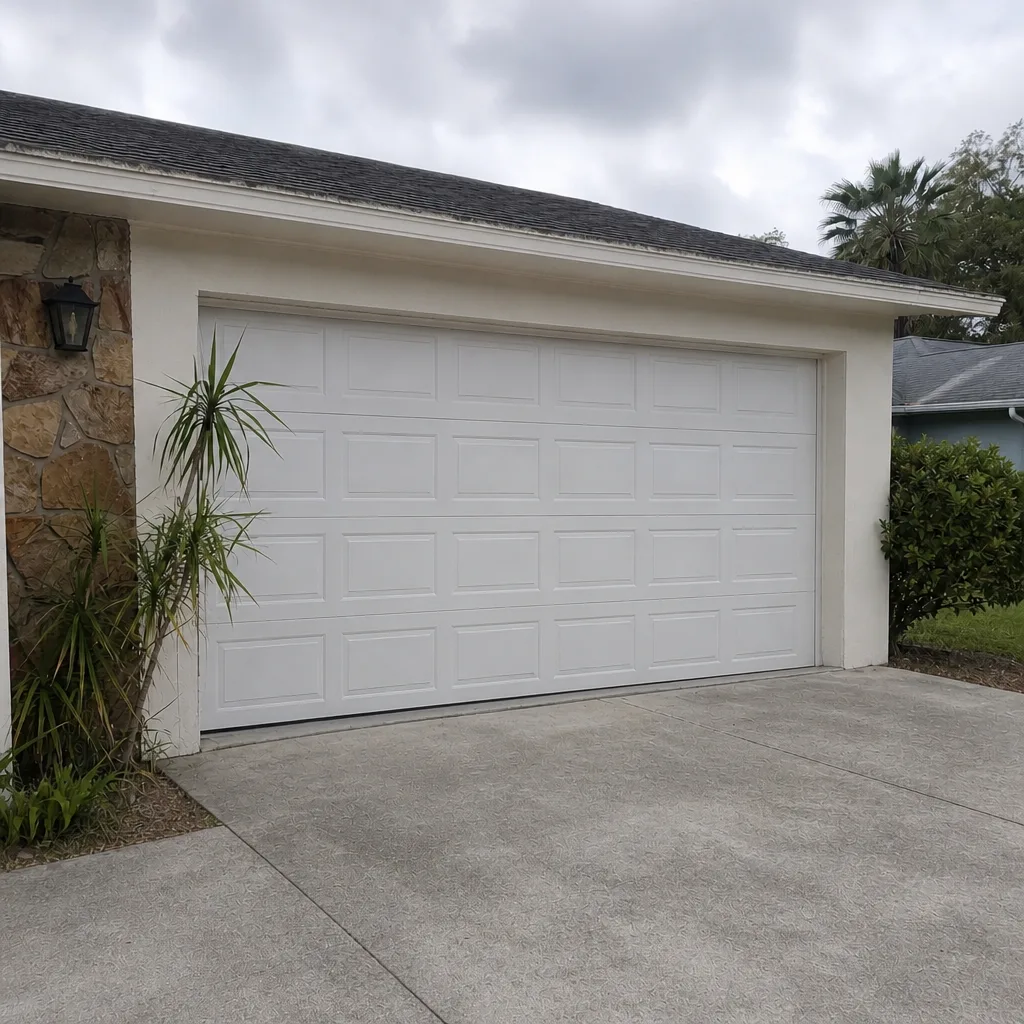 After
When to Call a Professional
Some garage door problems are a quick lubricate or a loose bracket. Others are a safety issue. If you see a snapped or sagging spring, hear a loud bang followed by a door that won’t lift, notice the door is off its track, or find the door has dropped onto one side, that’s a call-it-in situation. Don’t try to force the opener to lift a door with a failed spring or a bent track; you’ll turn a repair into a replacement. If the door is stuck open at night or on a Saturday and you can’t leave the house secure, we answer the phone 24/7, and if the failed door doesn’t fit our dispatch window that day, we book you into the next opening, Sunday through Friday, 7am to 7pm.
Port Orange Garage Door Repair Co offers free estimates in Port Orange. Call (877) 492-2561. We answer 24/7. Fast dispatch from 7am to 7pm, Sunday through Friday, and closed Saturday. The written estimate sets the price before any work begins, so there’s no surprise on the invoice.
Frequently Asked Questions
A wind-rated steel door with documented construction for Volusia County, paired with hardware that’s rated for the daily cycle count of your household. Look for the wind-load paperwork behind the rating, match the springs to your usage, and pick galvanized or stainless hardware for the brackets, hinges, and rollers. For many Port Orange homes, a wind-rated Clopay or Amarr is a reasonable starting point for a new door.
It depends on cycle usage, not the calendar. A two-car household running the door six to eight times a day hits a high enough annual cycle count that standard springs can wear out well before the ten-year mark. Replacing with a higher-cycle spring at that point is worth the extra cost. Call (877) 492-2561 for a spring assessment, and we can tell you what your current springs are rated for.
Yes, for repair and emergency work we offer same-day service when the schedule allows. A door that’s stuck open, off its track, or has a broken spring is exactly the kind of repair that fits a same-day slot. Call (877) 492-2561. We answer 24/7. Fast dispatch from 7am to 7pm, Sunday through Friday. The price is set by the written estimate before any work starts.
No. The written estimate sets the final price. If we find something on arrival that’s materially different from what we discussed, we talk it through with you before doing anything, and nothing happens without your approval. Estimates are free and upfront. Call (877) 492-2561 to get one.
The local pros we connect you with are licensed and insured as their state requires. Our technicians have up to 14 years of experience, and they work on eight major brands, which reduces misdiagnosis and shortens the visit. If you’re unsure what your door needs, call (877) 492-2561 and we’ll talk it through.
Most likely. We handle LiftMaster, Chamberlain, Genie, Clopay, Amarr, Wayne Dalton, Craftsman, and Raynor, and we work on the brand you already have rather than pushing a replacement. If your door is a fit for full-system service or routine garage door repair, we’ll say so. If it’s a replacement candidate, we’ll explain why and let you decide. If it’s not something we can service, we’ll tell you honestly.
The Bottom Line
Garage door advice for Port Orange homes has to account for humidity, hurricane code, slab foundations, and the age of the local housing stock. Wind-load ratings need documentation, not a sticker. Springs need to be matched to your door’s real weight and cycle count. Hardware needs to survive decades of damp air. And the eventual repair-or-replace call should be made on the facts of your door, not the incentive of whoever shows up. When anything on that list is beyond a visual check, call in a technician who knows your brand. Port Orange Garage Door Repair Co is your starting point. Call (877) 492-2561 for a free estimate. Estimates are free, and the written price is the price.
For more about how we handle your system from the opener to the bottom panel, start at Port Orange Garage Door Repair Co.
Written by the team at Port Orange Garage Door Repair Co.