
Last updated November 21, 2026
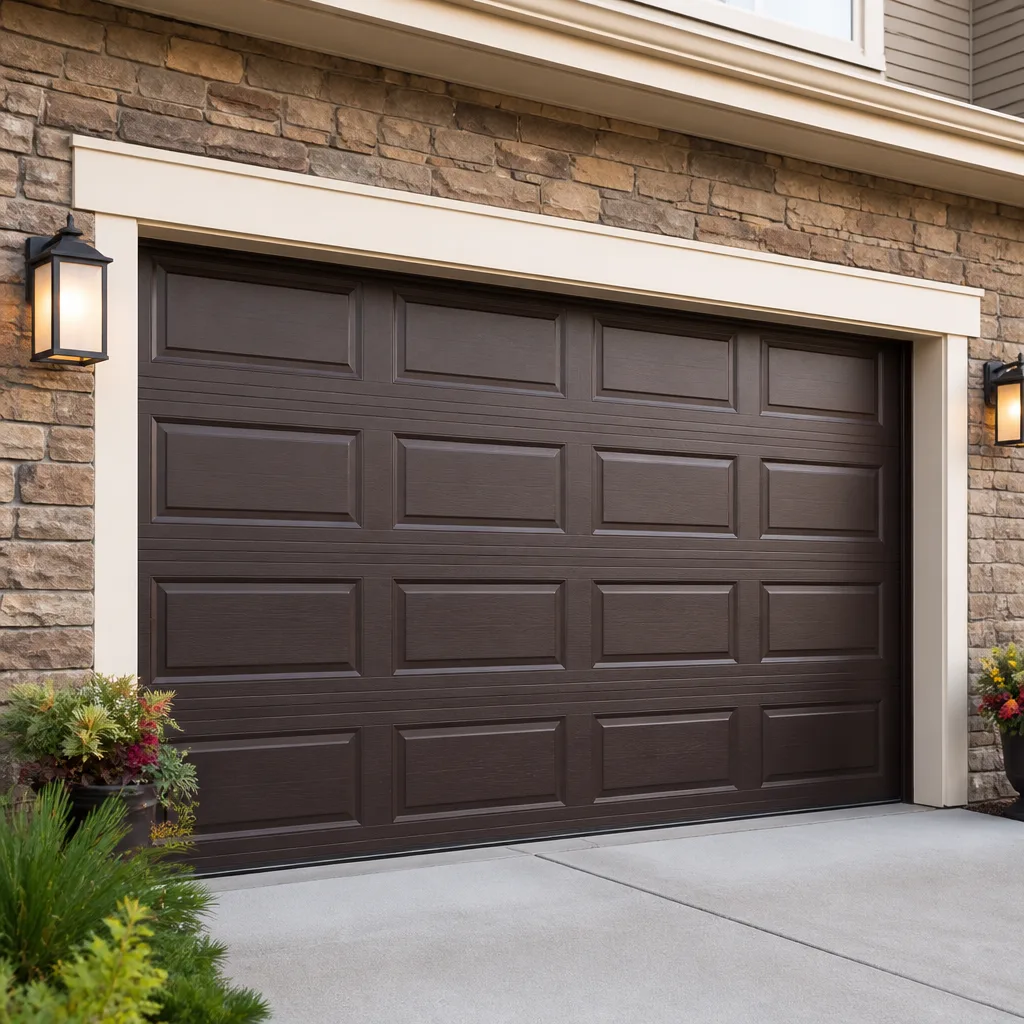 Raised-panel steel
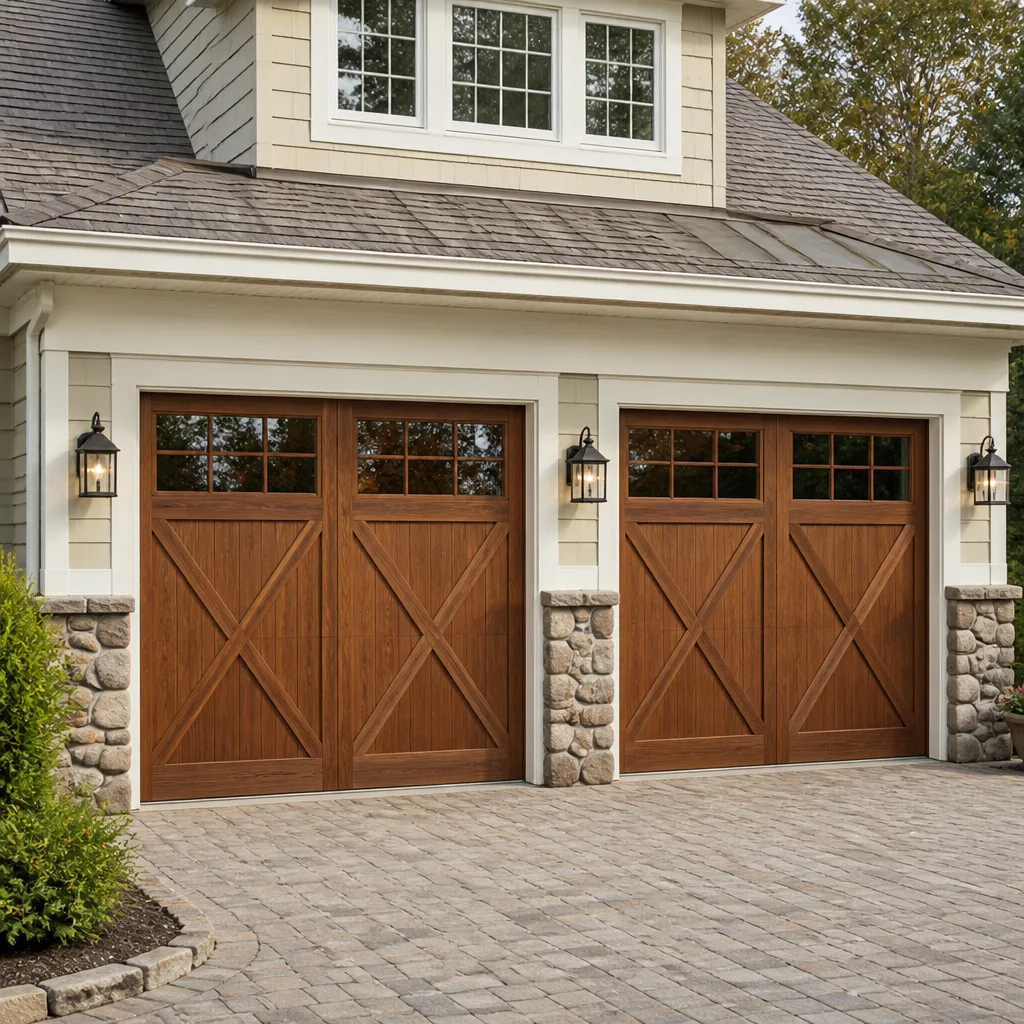 Carriage house
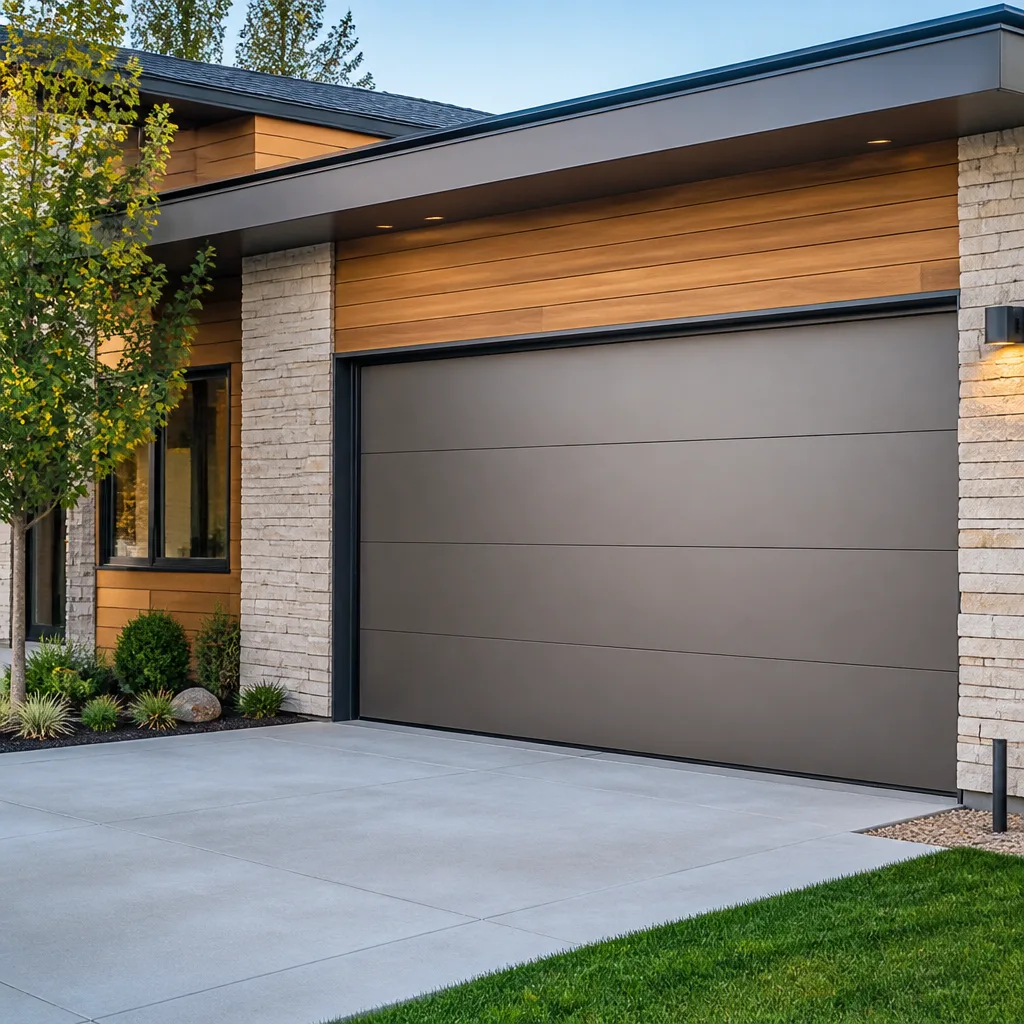 Modern flush
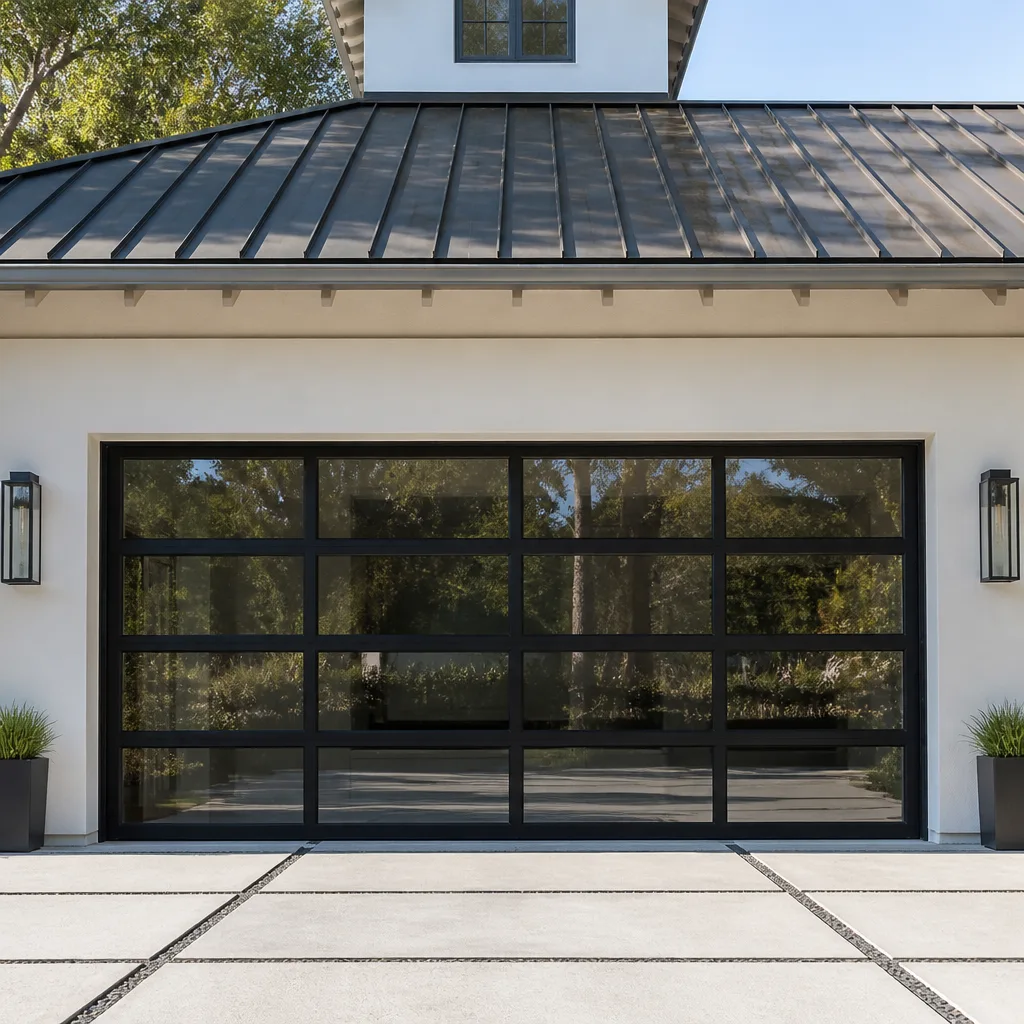 Full-view glass
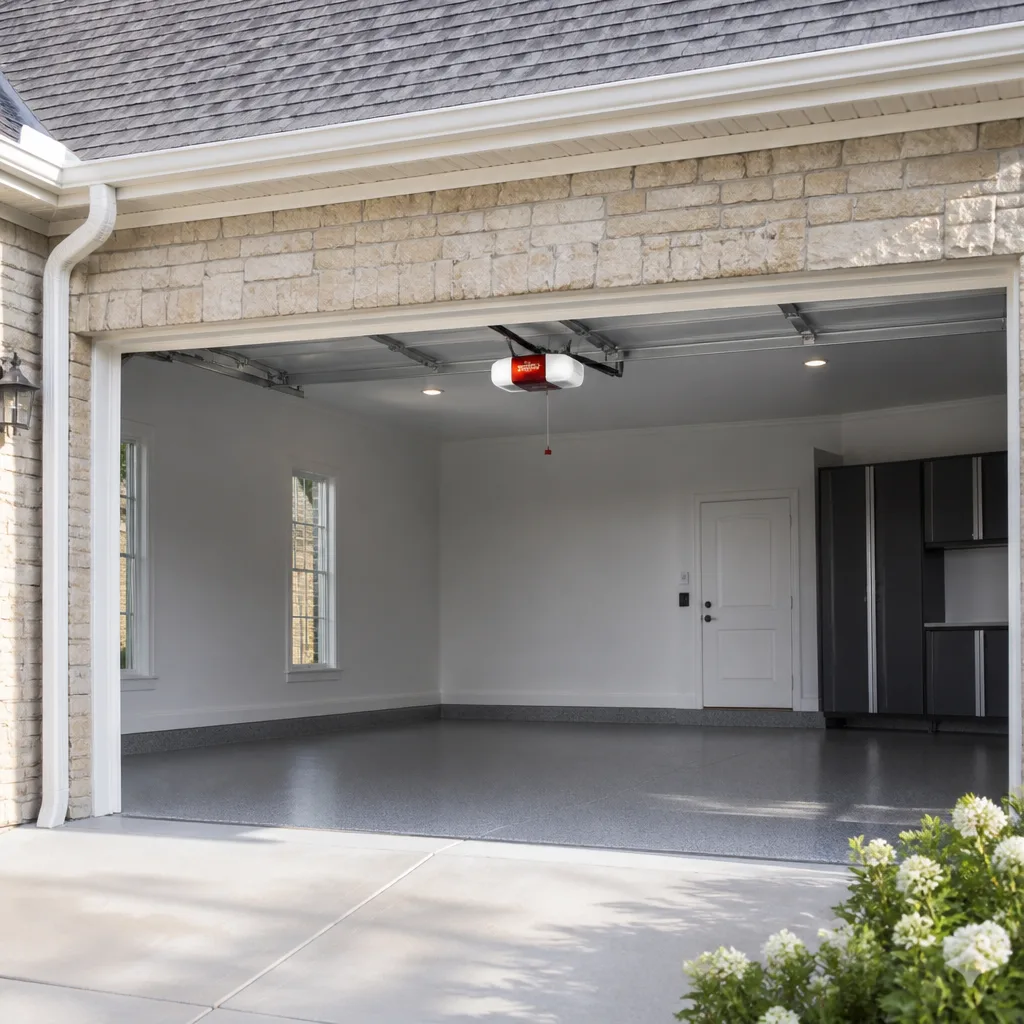 LiftMaster openers
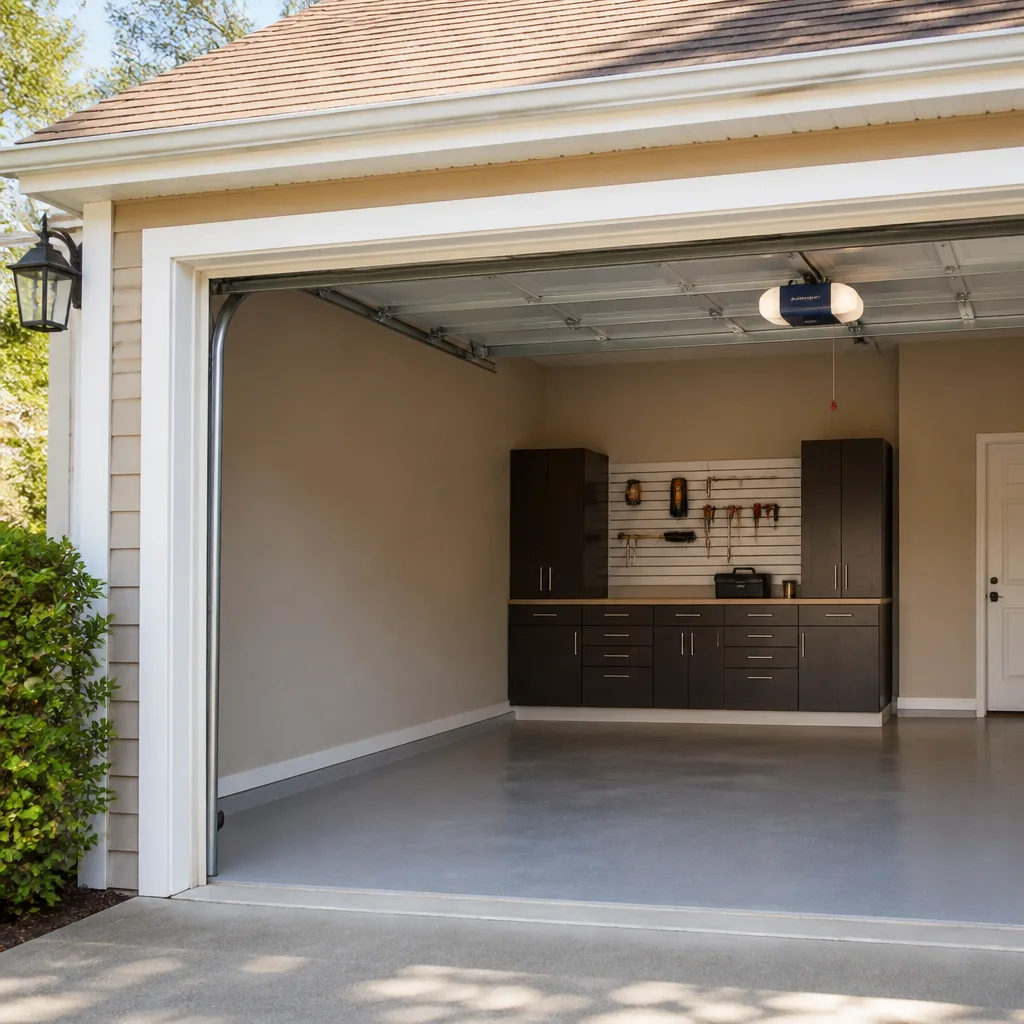 Chamberlain openers
Full 25-point door and opener safety check with every visit - springs, cables, rollers, tracks, and your LiftMaster or Chamberlain opener included
You get a price before we start. It does not change when the pro arrives.
Get your free estimateGarage Door Warning Signs: A Port Orange Homeowner’s Reference Guide
A garage door that reverses before it reaches the floor and a door that closes fine but sounds like gravel in a dryer are not the same emergency. One is usually a sensor alignment you can sort out in a few minutes. The other is a failing bearing that will leave your car trapped inside within days. Most homeowners in Port Orange can’t tell those two apart, so they either ignore a real problem until the door quits or they panic over something minor. This guide gives you a triage system: three severity tiers, the specific symptoms that belong in each, and how fast things move in Florida’s humidity. By the end you’ll know what to monitor, what to book, and what to stop touching.
Styles & brands we work with
- Raised-panel steel
- Carriage house
- Modern flush
- Full-view glass
- LiftMaster openers
- Chamberlain openers
Quick Answer
Most garage door failures announce themselves two to six weeks before the door stops working, through a small set of identifiable symptoms: a door that reverses on its own, grinding or popping sounds, a visible gap at the bottom, streaks of rust on the track, or a slow but steady change in how long the door takes to open and close. Sort what you’re hearing and seeing into three tiers – monitor it, schedule a repair, or stop using the door now – and you’ll almost always avoid a stranded car and a bigger bill.
Table of Contents
- The Three-Tier Triage System
- Warning Signs That Are Specific to Florida Humidity
- When It’s the Spring, Not the Opener
- Using Travel Time as a Diagnostic Baseline
- The Safe Ten-Foot Cable and Hardware Check
- Decoding the Noises a Door Makes
- What You Should Never Touch Yourself
- Common Mistakes to Avoid
- When to Call a Professional
- Frequently Asked Questions
- The Bottom Line
The Three-Tier Triage System
Every symptom you notice on a garage door belongs to one of three tiers. The tier decides your next move, not the loudness of the sound. A quiet symptom can be the urgent one, and a dramatic bang is often a cable that snapped and took the tension with it, which is also urgent but obvious. Here’s how we sort them in our heads when a Port Orange homeowner describes a door over the phone.
Tier 1: Monitor it
- A single reverse at the floor, once, with nothing in the way. Clear the area and test again.
- Light squeaking that shows up in the first cold snap and fades as the day warms.
- A remote that occasionally needs a second press. Usually a battery or a weak sensor lens, not the door.
- Faint vibration you notice only when you stand next to the door while it runs.
Tier 1 symptoms are worth a note on your phone and a second look in a week. If they don’t repeat, you’ve learned something about your door and lost nothing.
Tier 2: Schedule a repair
- Grinding, scraping or popping that repeats on every cycle.
- A visible gap along the bottom when the door is closed.
- Rust streaks on the vertical track or bubbling along the bottom seal.
- The door slows down measurably over a few weeks.
- The opener strains, and the light on the motor flickers while the door lags behind it.
Tier 2 is where the majority of Port Orange calls land. The door still works, so people keep using it, and the wear gets worse in a straight line. Booking garage door repair at this stage is almost always cheaper and simpler than waiting for the symptom to turn into a failure.
Tier 3: Stop using the door now
- The door is off its track, crooked in the opening, or hanging at an angle.
- You heard a loud snap and now the door feels very heavy or won’t lift at all.
- A coiled spring above the door is visibly broken, with a gap in the coil.
- A cable is hanging loose or is clearly unwound from its drum.
- The door drops faster than it should on the way down, or free-falls the last foot.
In Tier 3, stop pressing the button. A door with a broken spring or a slack cable is being held up by whatever tension is left, and running the opener on it can turn a straightforward fix into a bent panel and a bent track. Call (877) 492-2561. We answer 24/7. Fast dispatch from 7am to 7pm, Sunday through Friday, and we book anything outside that window into the next opening.
Warning Signs That Are Specific to Florida Humidity
Port Orange sits in a climate that punishes steel and wood in ways homeowners from drier states don’t expect. The air holds moisture most of the year, and a garage is often the least ventilated room on the property. That combination produces a handful of warning signs you’ll see here far more than in a dry climate, and each one maps cleanly to a triage tier.
Rust streaking on the track
Look at the vertical tracks on either side of the door. A light film of orange dust where the rollers ride is a Tier 1 to Tier 2 sign – worth watching, worth lubricating, worth a look from a technician if it keeps returning. Heavy pitting or flaking rust on the track face means the rollers are grinding rather than rolling, which wears the track and the roller at the same time. That’s a booking.
Bubbling or curling along the bottom seal
The bottom seal is the rubber strip that meets the floor. In Port Orange humidity it can trap water against the panel edge, and you’ll see the seal bubble, curl or pull away from the aluminum retainer. A seal that no longer makes contact lets rain and insects in, which is a Tier 2 problem. A seal that’s hanging off the door entirely is Tier 1 to Tier 2 depending on how much of it has let go – it’s cheap to correct before it takes the bottom panel with it.
Panel edge delamination
On steel-backed doors with a wood or composite core, watch the bottom and side edges of each panel. If the skin starts to separate from the core, you’ll see a thin lip lifting at the edge, or a soft spot when you press gently with a thumb. Left alone in this climate, delamination spreads. It’s the one symptom on this list where the honest answer in our experience is sometimes “repair the panel” and sometimes “this door is near the end” – and that’s exactly why we handle both repair and new installation. A shop that only sells doors will always tell you to replace.
Sticking rollers and stiff hinges
Humidity doesn’t just rust steel. It stiffens the hinges and makes rollers drag inside the track. A door that used to glide and now needs a small push at the halfway point is showing you this. The fix is usually lubrication and adjustment rather than parts, but it’s worth having someone confirm the rollers haven’t flat-spotted. Our technicians have up to 14 years of experience reading exactly this kind of wear, and it’s often the difference between a ten-minute adjustment and a replacement you didn’t need.
When It’s the Spring, Not the Opener
A door that lifts and lowers easily by hand but struggles when the opener runs it is almost never an opener problem. That’s the single most common misdiagnosis we walk Port Orange homeowners back from. The opener’s job is to lift a door that’s already balanced. The springs do the balancing. When the springs lose tension, the opener takes on weight it was never designed to carry, and the symptom shows up as a straining motor.
Here’s the reasoning, without the jargon. A properly balanced door should feel like it weighs about what a shopping cart weighs when you lift it by hand, at any point in its travel. If it feels like a loaded wheelbarrow, the springs are doing less than they should. Press the wall button and the opener has to make up the difference. It hums louder, the light dims, the door lags, and eventually the motor’s internal gear wears out or the logic board quits under the extra load.
What happens next is the expensive part. Replace the opener and the door still feels heavy, because the springs were the problem all along. In our experience, this is one of the top reasons a homeowner ends up paying for two repairs instead of one. A technician who checks balance first, before touching the opener, catches it in minutes.
This is why garage door opener repair always starts with a balance test on the door itself. If the springs are the real issue, we say so, and the opener stays where it is. We work on the opener brands homeowners actually have – LiftMaster, Chamberlain, Genie and Craftsman among them – so a genuine opener fault gets diagnosed correctly too. If a spring is the culprit, that’s a job for garage door spring repair, and it’s one of the repairs we’ve built the business around. Springs are dangerous – this is not a DIY job.
How to tell the difference without touching the springs
- Disconnect the opener using the manual release cord. This is safe to do; the door should be fully closed when you pull it.
- With the door disconnected, lift it by hand about halfway. If it feels heavy and won’t stay put when you let go, the springs are the issue.
- Reconnect the opener and press the wall button. If the door moves slowly or strains, that confirms it.
- Write down what you felt and call it in. A balance problem described accurately saves a diagnostic step.
Do not touch the springs themselves. Do not try to adjust the tension. Those coils hold enough force to cause serious injury, and this is the one part of the door where the only safe move is to call a trained professional.
Using Travel Time as a Diagnostic Baseline
Your phone’s stopwatch is the most underrated diagnostic tool a homeowner has. A typical residential door takes somewhere in the range of twelve to fifteen seconds to travel from closed to open, depending on the model and how far it has to move. The number itself doesn’t matter nearly as much as the trend. A door that gets roughly ten percent slower over about thirty days is telling you something specific is wearing, and the wear will keep accelerating until it fails.
How to set your baseline
- Pick a day when the door sounds normal to you.
- Start a stopwatch the moment you press the button and stop it when the door reaches fully open.
- Write the number down, along with the date, where you’ll find it again.
- Repeat the test on the same door once a month. Same button, same conditions.
A ten percent slowdown is the flag. If your baseline was fourteen seconds and you’re now at fifteen and a half, start paying attention. That slowdown usually points to one of four things:
- Spring tension loss. The most common cause, and the one that quietly taxes your opener.
- Roller wear. Flat-spotted or seized rollers drag in the track.
- Track misalignment. Even a slight bend makes the door work harder.
- Opener gear wear. The drive gear or the belt is slipping.
Two things make the travel time test worth doing here rather than anywhere else. First, the humidity in Port Orange makes stiff hinges and dragging rollers a real, recurring factor, so a slowdown is more likely to be mechanical than electrical. Second, a door that spends a few extra seconds in motion in a climate that can bring sudden summer storms gets exposed to weather it wouldn’t otherwise. A slow door is a wet door, and a wet door in this climate rusts faster. Catching the slowdown early keeps the timeline short.
The Safe Ten-Foot Cable and Hardware Check
You can inspect your cables, springs and hinges from ten feet away without putting your hands on anything. This is a visual check, not a hands-on one. Everything in this section is done with your eyes, from the floor, with the door closed and the opener disconnected from the power at the wall switch. If you have to reach for something, you’ve crossed into a job for a professional.
What to look for, in order
- Stand back and look at both cables. They run vertically down each side from the drum above the door. A healthy cable is a single, tight, straight run. Fraying shows as a fuzzy fringe, a kink, a birdcage twist, or a cable sitting slack and off the drum. Any of those is a stop-using-the-door sign.
- Check the springs from a distance. A torsion spring sits on a bar above the door; extension springs run along the horizontal tracks. A broken spring shows a clear gap in the coil. That’s Tier 3.
- Look at the track along its whole length. Any visible bend, dent or gap where the roller leaves the track is a booking.
- Look at the bottom seal and the bottom corners. Gaps, curling or sagging mean the door isn’t sealing.
- Look at the hinges. If you can see rust blooming around the pivots or a hinge that’s separating from the panel, book it.
The camera on your phone is a useful tool here. Take a photo of the cables, the springs and the track ends so you have something to compare against next month. A photo of a cable today and a photo in six weeks will show you fraying that’s hard to see in real time, especially on a Port Orange Garage Door Repair Co service call we can look at together.
Two things you should not do during this check: don’t pull on the cable to test it, and don’t stand under the door while it moves. A cable under tension can cut. A door that drops can crush. Eyes only.
Decoding the Noises a Door Makes
A garage door has a small vocabulary, and each sound points to a different part. Once you know what you’re hearing, you can sort it into the triage tiers without guessing.
Grinding or scraping
Grinding is metal on metal. Usually a roller that’s frozen inside the track, or a track that’s out of alignment and dragging. It’s a Tier 2 sign on its own because it’s wearing the track every time the door runs. Left long enough, it’s a Tier 3 problem when the roller seizes completely and the door stops mid-travel.
Popping or snapping on every cycle
A pop that follows the door’s path as it moves is usually a hinge coming loose, or a roller that’s jumping in its track. A single loud snap followed by a very heavy door is a broken spring or a snapped cable, and that’s Tier 3 immediately.
Squealing
Squealing is usually a dry hinge or a stiff roller, and it’s the easiest of the noises to deal with. Lubrication and adjustment. It’s a Tier 1 to Tier 2 signal, but it’s the one most worth acting on in Port Orange, because a hinge that’s stiff in this humidity will start to bind much faster than in a dry climate.
Rattling
Rattling on a closed door usually means a loose bolt or a worn roller. It’s Tier 1 on its own. Combined with a visible gap at the bottom or a slow travel time, it moves up.
Humming with no movement
If the opener hums and the door doesn’t move, you have one of two situations. The opener has failed mechanically, or the door is stuck because of a spring or cable issue. This is the one case where the sound is the least helpful, and the balance test in the section above is how you’ll sort it out. Don’t keep pressing the button to find out. A humming motor under load is doing damage to its own gear while you watch.
What You Should Never Touch Yourself
A garage door is the largest moving object in your home, and some of its parts are held under force that no homeowner should handle. Springs are the obvious one. Cables are the second. But there are a few others worth flagging, and every technician who has been on the job any length of time has seen what happens when someone tries to fix them without the right tools and training.
- Springs above the door. Both torsion and extension springs store energy that can release instantly. This is the single most dangerous part of the whole system.
- Cables and drums. A cable under tension can whip when it’s released. Never cut, loosen, or adjust a cable.
- Track adjustment. A wrong adjustment can drop the door off the track while you’re standing under it.
- Panel replacement on your own. Panels are heavy and the springs must be relaxed first. That’s a two-person job with knowledge of how the system comes apart safely.
- Opener rewiring. If the opener needs anything beyond a battery or a remote re-pair, leave the wiring alone and call us. We diagnose the motor, the logic board, the safety sensors and the wall button from the outside, safely.
None of this is meant to make you anxious about your door. It’s meant to give you a clean line between the things you can watch, the things you can test, and the things that belong to a professional. That line is what makes the triage system work in the first place.
Common Mistakes to Avoid
- Lubricating the track. Track is supposed to stay clean and dry. Oil or spray grease on the track gathers dust and debris, and in Port Orange’s humidity it turns into a gritty paste that drags on the rollers. The rollers and hinges take the lubricant, not the track.
- Bumping up the opener’s force setting to fix a slow door. The opener’s force adjustment is there for the door’s weight, not to squeeze more power out of a straining motor. Turning it up masks the real problem and burns out the opener’s gear faster – and it defeats the safety reverse, which is a genuine hazard if a child or a pet is in the door’s path.
- Ignoring a bottom seal that’s stopped sealing. In this climate, a bad seal lets damp air in against the bottom panel, and panel edge delamination is the result. Seal is cheap. Panel skin is not.
- Replacing a door because the opener keeps quitting. If the door is unbalanced, the opener will always lose. A shop that only sells doors will tell you to replace it. An honest diagnosis checks the springs first.
- Using the door when it’s visibly off its track. A crooked door being run on its opener can bend the track irreparably and take a panel with it. Stop the button and call.
- Skipping the balance test when the opener struggles. A door that lifts easily by hand and still drags on the opener needs a different answer. A door that lifts heavy by hand needs a spring check, not a new motor.
- Assuming a garage door that hums in the rain is fine. A door that hums and won’t move needs a call. It’s either a seized opener gear or a stuck door, and both get worse with use.
When to Call a Professional
There are a few scenarios where a call is the correct next move, and they’re worth spelling out because people often hope a symptom will sort itself out. A door that reverses on its own more than twice in a week, a door that has visibly dropped or tilted, a snap followed by a very heavy door, any visible cable fray or gap in a spring coil, a bottom seal that’s let go along most of its length, or a door that has slowed measurably and keeps slowing. If you’re in any of those spots, stop pressing the button and give us a call.
We work on the brand you already have, whether that’s a Wayne Dalton, a Raynor, a LiftMaster or a Craftsman – and if it’s outside our named list, ask, because we’ve probably seen it. Port Orange Garage Door Repair Co offers free estimates in Port Orange, and Port Orange Garage Door Repair Co handles emergency calls when a door fails at the worst moment. If your door is stuck open overnight, that’s a call worth making. We answer 24/7. Fast dispatch from 7am to 7pm, Sunday through Friday.
Call (877) 492-2561. We answer 24/7. Fast dispatch from 7am to 7pm, Sunday through Friday.
Frequently Asked Questions
The most common warning signs are a door that reverses before reaching the floor, grinding or popping sounds on every cycle, a slow but steady change in travel time, a visible gap along the bottom seal, rust streaks on the track, and an opener that strains while the door lags behind it. A handful of these appear on almost every Port Orange door we look at, so if two or more show up together, that’s your signal to get an inspection.
Prices vary widely with the part and the job, so we don’t quote a single number before we see the door. What we do is simple: a free estimate, a written price agreed before any work starts, and no surprise on the final bill. If the price changes once we’re on-site, we tell you why and agree it with you first. Call (877) 492-2561 for an exact quote – estimates are free.
Yes, we handle same-day repair calls for doors that stop working, and we run emergency service for doors that are stuck open, stuck closed or off the track. We answer 24/7. A call outside dispatch hours is booked into the next opening, Sunday through Friday, 7am to 7pm. If a door fails on a Saturday, we’re closed that day, and we’ll book you for the next opening on Sunday.
No, not silently. If what we find on-site changes the price, we explain why before any work starts, and the written estimate sets the final number. That’s the only number you’re committed to. We don’t add fees for showing up, and the estimate itself is free.
Yes. The local professional who comes to your door is licensed and insured as Florida requires for this work, and carries the training and liability coverage that a garage door repair job demands. If you’d like details before booking, ask when you call.
Usually it’s a safety sensor issue: a misaligned lens, a dirty lens, or a lens that’s been bumped by a car or a toy. In this climate, a sensor that’s been catching extra humidity or direct sun can act up too. Clear the lens, make sure the two sensors are pointing at each other, and test once. If it still reverses, it’s a call – the sensor could be failing, or the opener’s travel limits need a trained adjustment.
No, but a door that’s slow and also feels heavy by hand when you disconnect the opener almost always is. If the door lifts smoothly by hand and the opener still strains, the problem is likelier to be the opener itself or a dragging roller. That’s the difference that saves you from paying for a new opener you didn’t need.
The Bottom Line
A garage door fails in stages, and the two-to-six-week warning window is real. Most failures give you at least one of the symptoms in this guide, and the fix is simply to know which tier a symptom sits in. Monitor the small stuff. Book the Tier 2 signs before they cost you a panel. Stop using the door the moment you see a broken spring, a frayed cable, or a door off its track. The travel time test, the balance test, and the ten-foot visual check are the three tools that do the most work for a homeowner in this climate. When in doubt, call.
Call (877) 492-2561. We answer 24/7. Fast dispatch from 7am to 7pm, Sunday through Friday, and free estimates on every job.
Written by the team at Port Orange Garage Door Repair Co.
See the difference
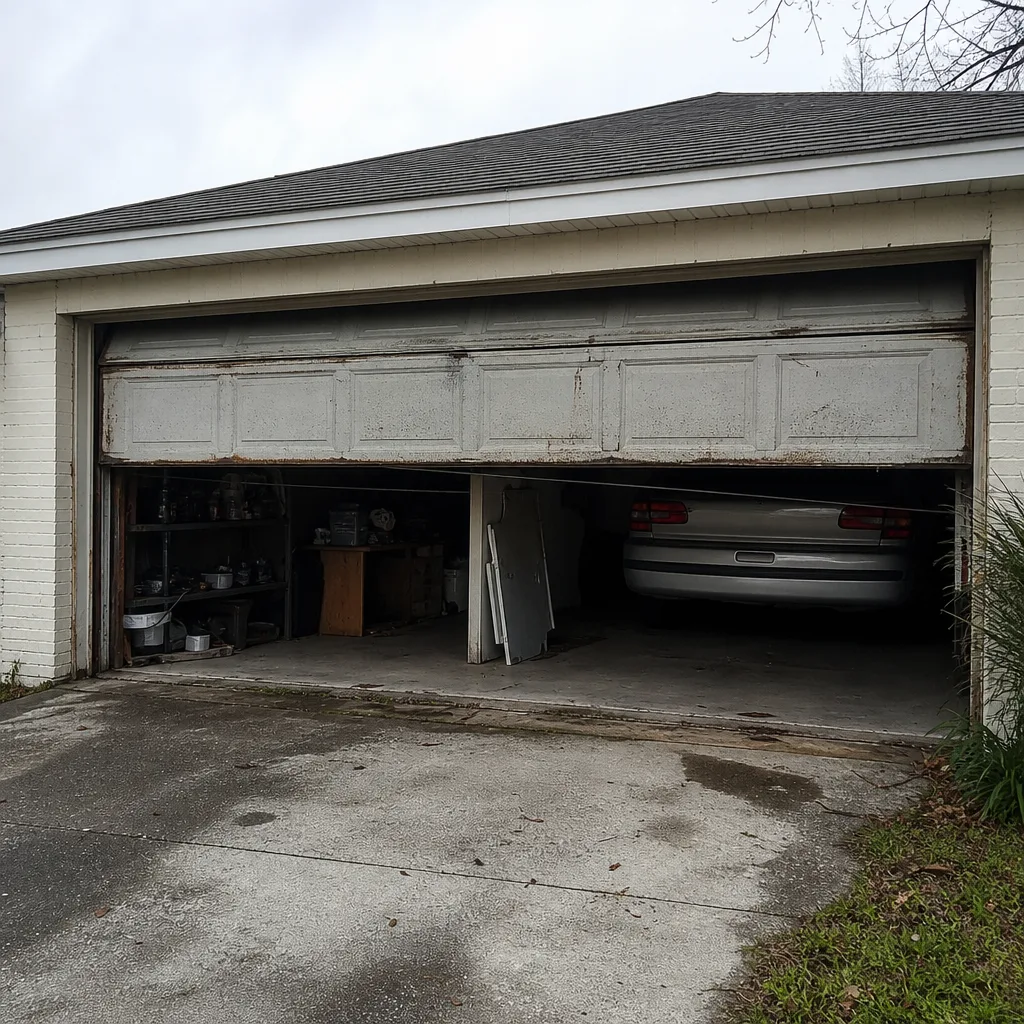 Before
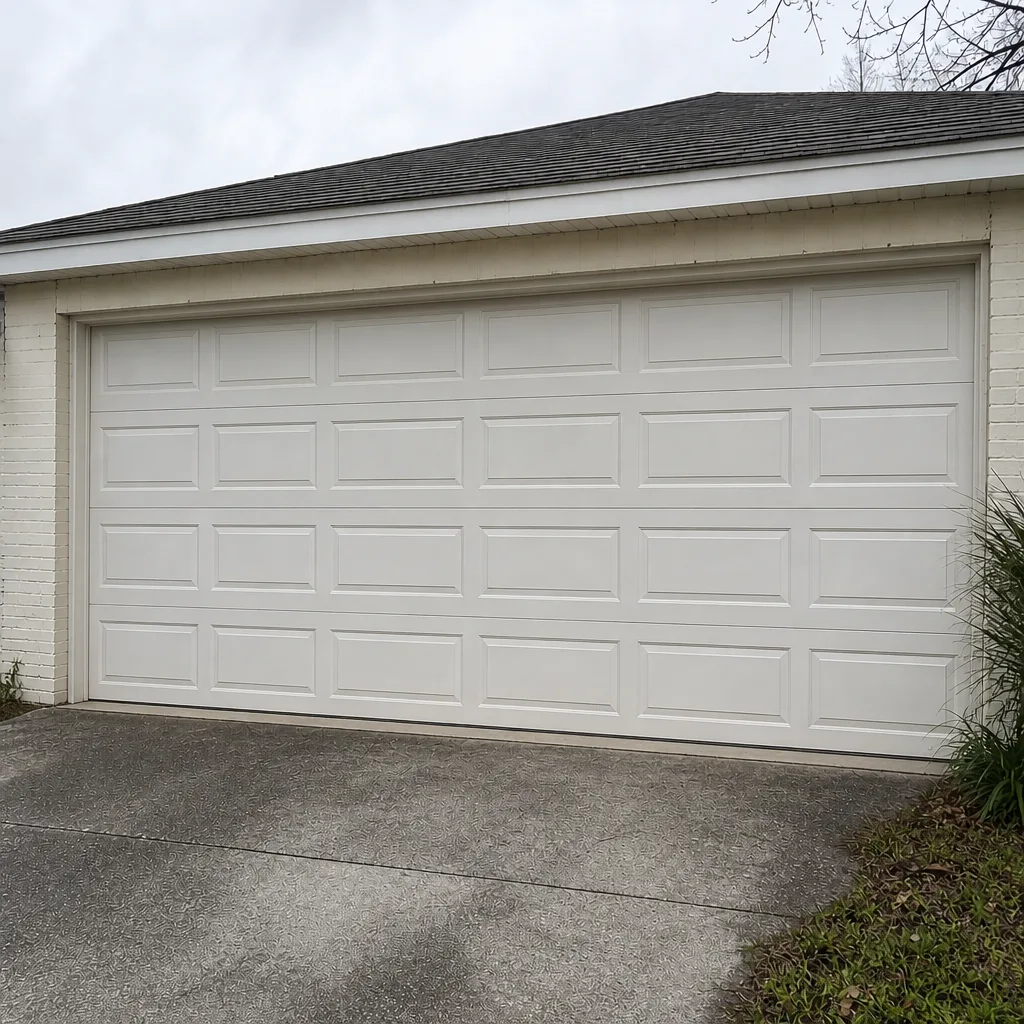 After
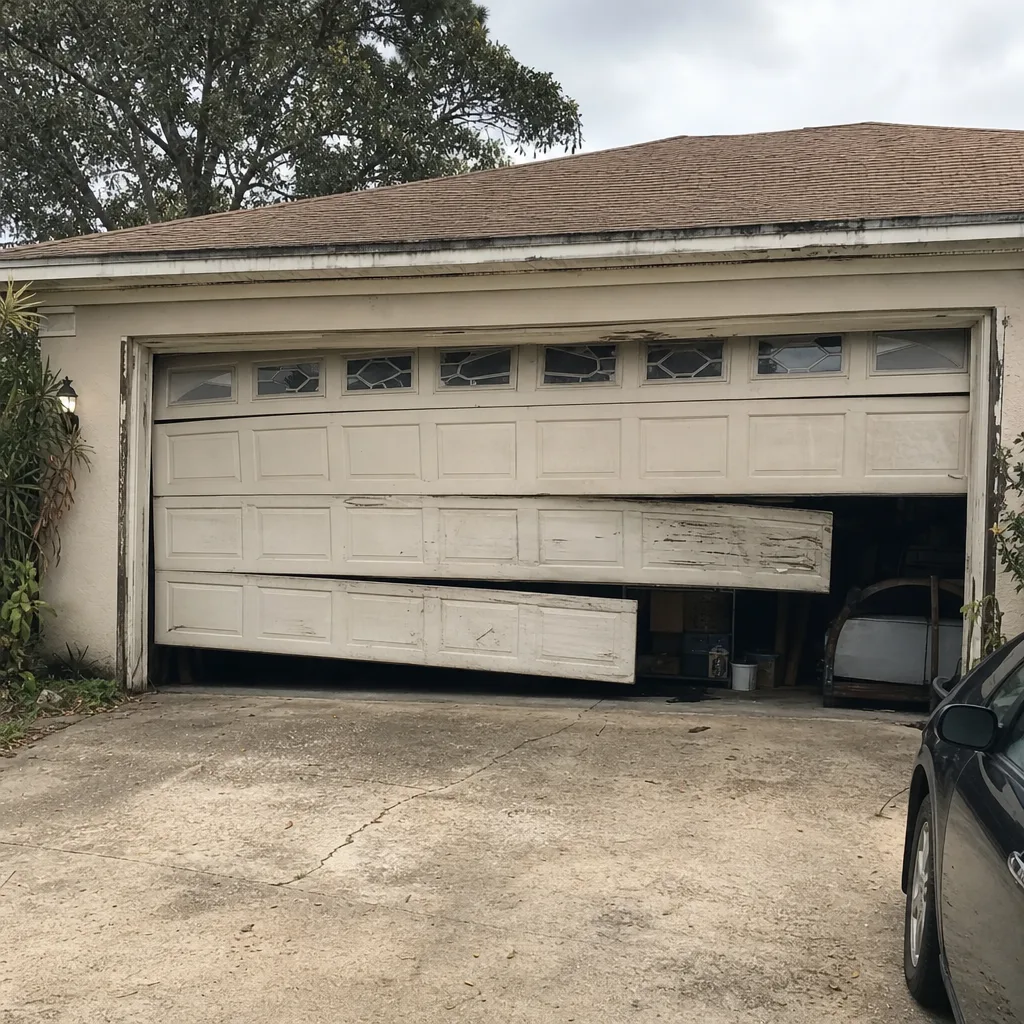 Before
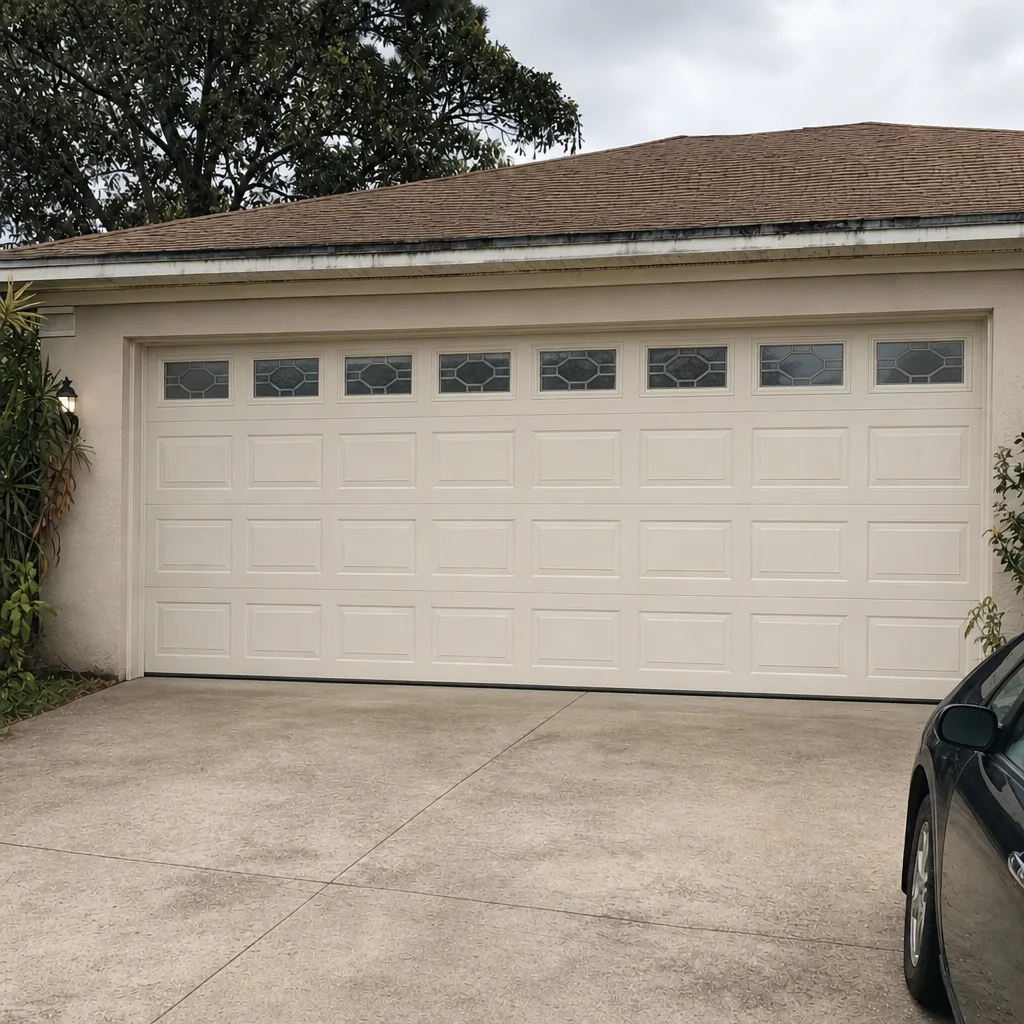 After
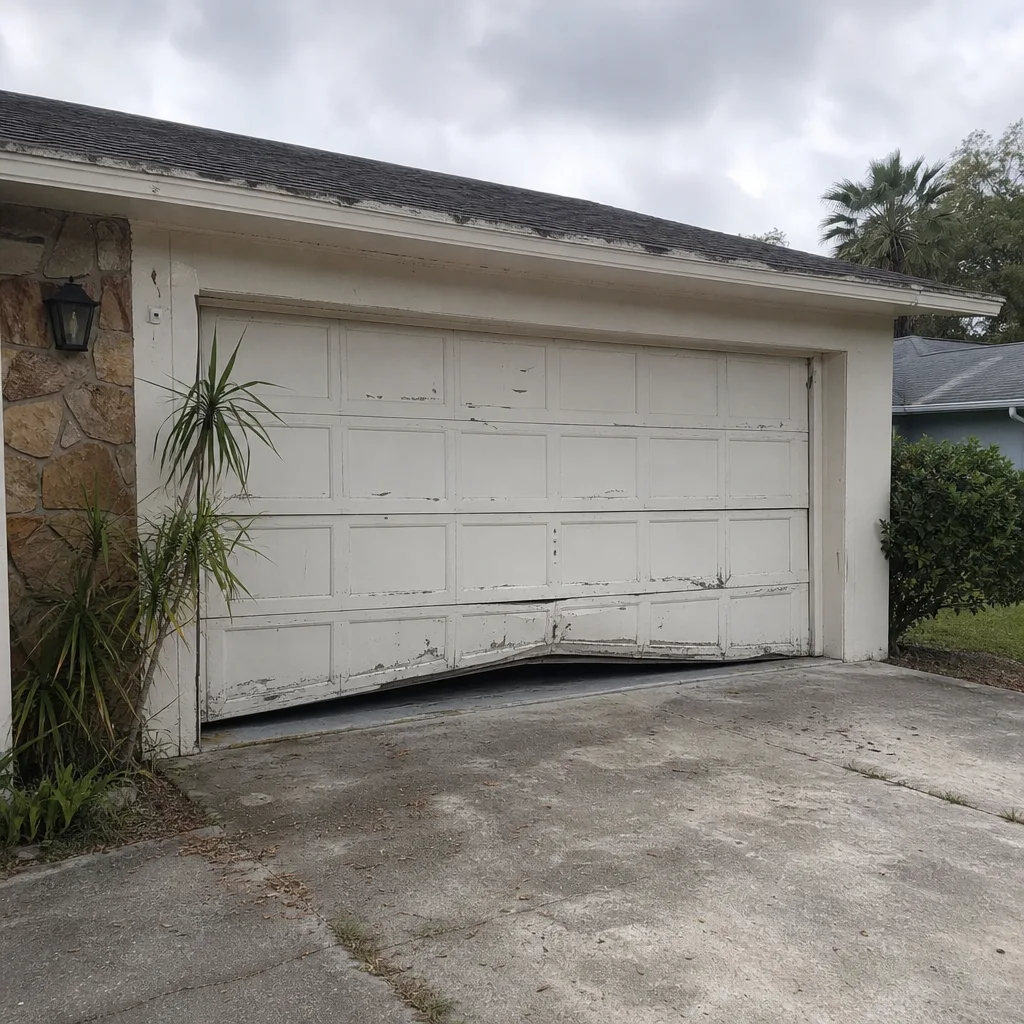 Before
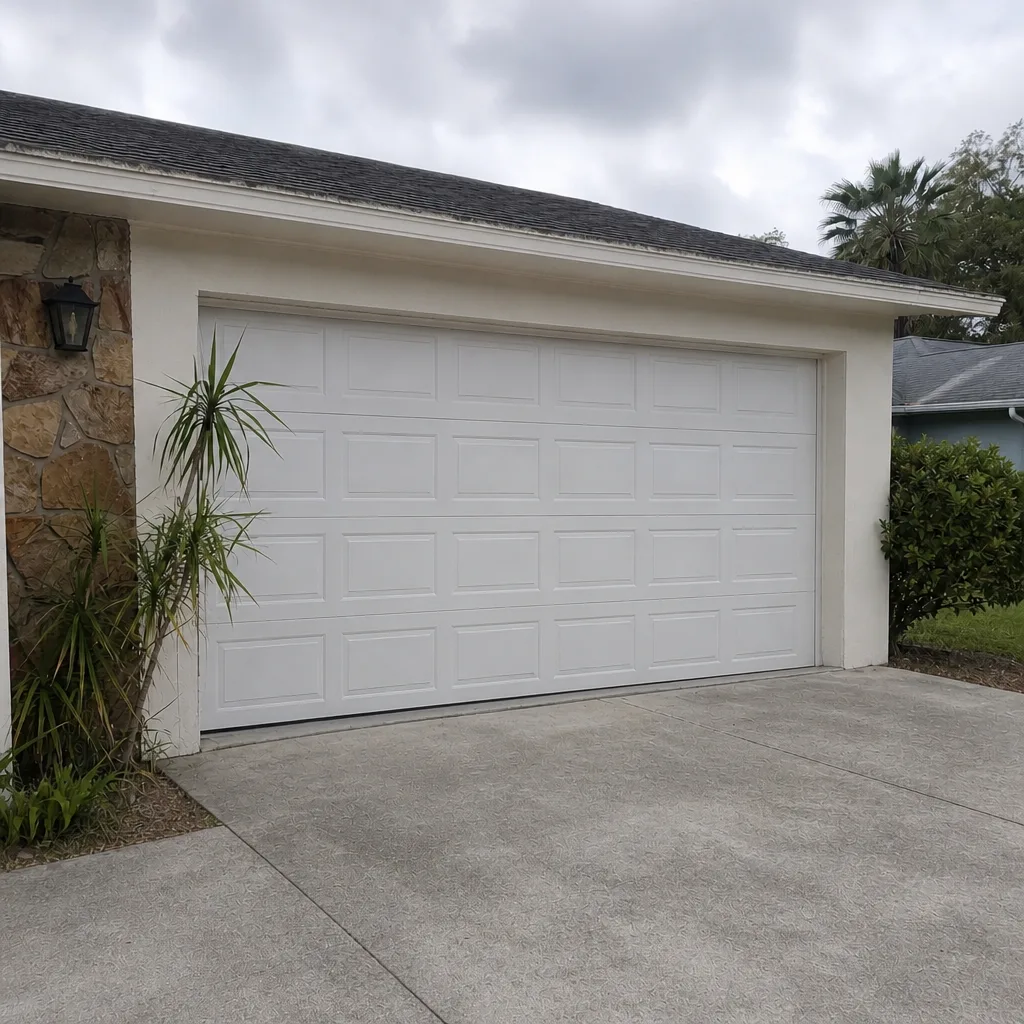 After